








Where to Find Reliable Wholesale Fighting Arcade Machine Suppliers?
Where to Find Reliable Wholesale Fighting Arcade Machine Suppliers?
Buying fighting arcade machines in bulk requires technical, logistical, and commercial due diligence. This guide answers six specific, often underaddressed long-tail questions beginners and small distributors face when sourcing wholesale fighting arcade machines, multi-game boards, joysticks and commercial cabinets from overseas factories.
1) How can I verify a wholesale fighting arcade machine supplier's authenticity and production capacity remotely before paying a deposit?
Pain point: Buyers pay deposits, then face ghost factories or subcontractors who cannot deliver. A remote verification checklist reduces that risk.
Step-by-step verification you should require (documented and timestamped):
- Company credentials: official business license, export license, tax registration certificate. Verify these against the issuing country's official registry (e.g., China National Enterprise Credit Information).
- Factory site evidence: request a timestamped, high-resolution video tour showing production lines, cabinet assembly areas, PCB assembly/test benches, packing area, forklifts with visible load plates, and staff at work. Ask the vendor to display a current newspaper or a signed sheet with date to prove recency.
- Third-party inspection reports: ask for recent SGS, Bureau Veritas, or Intertek factory audit and product inspection reports. These organisations are widely used for supplier verification, and their certificates include valid ID numbers you can query with the inspector.
- Production capacity metrics: ask for actual monthly outputs by product SKU, backed by serial-numbered shipping manifests or photos of finished goods queued for shipment. A reliable arcade cabinet factory can show consistent assemblies per shift (e.g., X cabinets/day with Y full-time assemblers).
- References and client list: request contactable references (retailers or distributors) and sample order invoices. Follow up with direct calls or emails to references to confirm experiences on lead time, QA, and warranty handling.
- Factory audit by buyer’s agent: commission a one-time on-site audit through a local QA firm or freight forwarder. Typical checks include ISO or QA process documentation, assembly SOPs, and a photo-verified sample check.
- Sample rules and payment safeguards: negotiate a paid sample and a small pilot order (2–5 units) prior to full MOQ; use escrow or T/T with staged payments (e.g., 30% deposit, 70% prior to shipment) and a signed sales contract with penalties for late delivery.
Why this matters: timestamped video + third-party audit + references significantly reduce fraud risk versus relying on a product page or Alibaba listing. Always get production and packing photos that show serial numbers or internal factory stamps so machines can be traced to a production run.
2) What exact electrical and connector standards should I specify (JAMMA vs JVS vs VGA, mains voltage, coin acceptors) to ensure machines work in my market without expensive field mods?
Pain point: Received cabinets that boot but have incompatible video sync, wrong mains voltage, or non-standard harnesses requiring expensive local rewiring.
Key technical specifications to lock in the contract:
- Power input and PSU: specify the mains voltage (110–120V for US, 220–240V for EU/AU). For international shipments, request either a universal PSU (with internal switchable selection) or factory-fitted PSU to your target voltage. Ask the supplier to label PSU input plainly inside the cabinet.
- Connector standard for game PCBs: decide between JAMMA (the long-standing arcade harness standard) and newer JVS/Net/JAMMA+ formats. JAMMA harness (28/56-pin layouts) remains the baseline for many Neo Geo/MVS and classic PCBs and for most 2-player fighting cabinets. JVS (USB-like interface used by many Sega systems) requires a different wiring harness and power arrangement—specify clearly.
- Video signal and monitor type: specify CRT (15 kHz) or LCD (31 kHz/VGA/HDMI). Classic fighting PCBs output 15 kHz RGB sync (CRT). If ordering LCD cabinets, ensure the factory supplies a scaler board that accepts 15 kHz input or that your multi-game PCB outputs 31 kHz compatible signal. If you want to support both, require the factory to fit a switchable scaler with proper sync selection.
- Coin mechanism and cabinet mode: define coin-op vs freeplay. If coin-op, specify coin acceptor model, pulse voltage, and hopper or counter requirements. For export markets, clarify if machines should ship with coin boxes sealed (easier customs clearance) or functional coin mechanisms installed.
- Wiring harness and quick-disconnects: ask for standard 6.3mm spade terminals or 0.1 MOLEX connectors for easy replacement. For controls, demand high-quality 0.5–0.75 mm2 gauge wiring for durability and long runs inside larger cabinets.
- Safety & compliance: for EU markets require CE (EMC/LVD) documentation and for North America ask about UL/ETL design considerations. Many suppliers offer CE labeling and an EMC pre-test report; if you need official certification, budget for a third-party test on the finished machine.
Implementation tip: include a wiring diagram appendix in your purchase order showing pinouts (JAMMA pin map, audio, video, 5V/12V/GND, start/coin inputs). That prevents mismatches where factory uses a JAMMA+ or proprietary harness.
3) How do I compare PCB authenticity (original Neo Geo/Capcom CPS boards) versus modern multi-game JAMMA boards in bulk purchases to avoid counterfeit or low-durability units?
Pain point: A bulk pallet of ‘original’ boards that fail fast or a batch of cheap multi-game boards causing software glitches and short life.
What to look for and test:
- Visual and marking checks: original PCBs (Neo Geo MVS, Capcom CPS) have manufacturer silkscreen, revision numbers, serials and known ROM label styles. Many originals use DIP ROMs or CART connectors with known pins. Counterfeits may have poorly matched silkscreen, incorrect font, or missing ASIC markings.
- Protection/backup batteries: Some originals (e.g., CPS II) used backup batteries or security chips. Ask about battery replacement history; batteries can leak and damage boards. If supplier claims refurbished originals, request documentation of battery replacement and replaced electrolytic capacitors.
- Functional verification: require a 48–72 hour functional boot test video showing the exact board powering through a known game ROM (at commercial cabinet resolution), attract mode, audio levels, DIP/settings menu, and a recorded demo of high-input scenarios (rapid inputs, long rounds). For original boards, ask to see license labels or serials that match known lists where possible.
- Multi-game JAMMA boards: modern multi-game or flash-based JAMMA boards (FPGA-based or SoC emulators) vary widely in build quality. Ask for technical specs: flash memory type (eMMC vs SPI NOR), cooling (heatsinks, airflow), firmware update process, and expected mean time between failures (MTBF). Higher-quality boards will use industrial-grade components, heatsinks, and retain logs for boot failures.
- Durability tests: request a burn-in test (48–72 hours) with input stress and thermal cycles. Ask for capacitor ESR logs if the supplier refurbishes original boards; aged electrolytics are a common failure cause.
- Legal/IP risk: confirm licensing status—using unlicensed ROMs can expose you to IP claims. If you plan to sell cabinets with licensed titles (SNK, Capcom, Sega), request evidence of licensing agreements or use officially licensed multi-game platforms.
Practical approach: for commercial venues that demand uptime, choose verified high-quality FPGA/multi-arcade platforms from reputable vendors, or only buy originals if they’ve been refurbished and certified by a known refurbisher. Always require test videos tied to the serial number and a burn-in certificate.
4) What are realistic total landed cost components per 2-player upright fighting arcade machine when ordering 10–50 units from China to EU/US, and how do I calculate them conservatively?
Pain point: Lowball unit price leads to surprise costs in freight, duties, and local installation, erasing margins.
How to build a conservative landed-cost model (use these line items):
- Factory unit price (FOB): the supplier quote for the cabinet, controls (Sanwa/Seimitsu/Happ), monitor, multi-game board or original PCB, packaging. For a finished 2-player upright fighting cabinet this can vary widely depending on components: basic factory FOB ranges commonly fall between a lower-quality $600–$900 and a higher-quality $1,200–$2,000+ per unit as of recent market norms. (Use the quote your supplier provides; these ranges are industry-observed bands.)
- Packing and palletization: crates, foam, pallets and seals. Crate-packed cabinets add cost—estimate $50–$150 per unit depending on packaging standard and quantity.
- Freight: ocean freight for FCL (full container load) or LCL (less-than-container load). A 20ft container typically fits roughly 6–10 upright cabinets depending on packing (uprights are bulky). A 40ft container can carry roughly 12–22. Freight per unit depends on current ocean rates and container fill; allocate a conservative per-unit freight cost based on container cost divided by planned units plus inland pickup. If shipping LCL, expect higher per-unit rates and additional handling charges.
- Insurance and freight forwarding: freight insurance (0.3–0.6% of CIF), freight forwarder fees, and documentation (~$100–$400 per shipment depending on complexity).
- Import duties and VAT/GST: classify under HS code for video game machines (commonly in the 9504 series) and check your country rates—EU VAT typically charged at importation (varies by member state), US duties for arcade machines are often low (0–5%) but verify current tariff schedules. Use your local customs broker to confirm percentages for your exact HS code and declared value.
- Customs broker and handling: broker fees (~$100–$300), port handling, inspection fees if applicable.
- Inland transport and delivery: truck to warehouse, local liftgate or depot fees. Factor the per-unit cost for delivery to your facility and any assembly labor if machines are shipped disassembled.
- Pre-delivery inspection & setup: if you perform additional QA or customization on arrival (e.g., unit conversion to local voltage, coin mech calibration), estimate labor and parts cost per unit.
Conservative calculation method (example formula):
Per-unit landed cost = (FOB unit price + per-unit crate cost) + (container cost/units per container) + insurance + freight forwarder fees per unit + duties (duty rate x CIF) + VAT/GST (if recoverable or included) + customs broker + inland transport + QA/setup.
Why this approach: Freight volatility and small batch sizes drive per-unit shipping up dramatically. If ordering only 10–50 units, expect higher per-unit freight and packing costs than distributors who fill containers. Always compute both FCL and LCL scenarios and include a 5–10% contingency for exchange rate or freight variations.
5) Which control components (joysticks, buttons, microswitch types) give tournament-grade durability for commercial fighting arcade machines while remaining cost-effective for wholesale orders?
Pain point: Cabinets with cheap controls wear out fast under high-usage arcades or tournaments, causing customer complaints and high maintenance cost.
Best-practice recommendations (durability vs cost):
- Joysticks: Sanwa JLF (popular for Street Fighter-style inputs) and Seimitsu LS series are de facto standards for tournament play because of responsiveness and consistent throw. Sanwa offers a lighter, more sensitive feel favored by many players; Seimitsu is slightly stiffer and heavier-duty. For heavy commercial use, specify reinforced mounting plates and ensure replacement joystick shafts and collars are available.
- Buttons: Sanwa OBSF/OBSF-30 or Seimitsu PS-14 make for responsive gameplay; however, for coin-op durability consider micro-switch buttons from Happ/Suzo (longer travel but robust). LED illumination options increase lifetime when using high-quality LEDs; ask the supplier to specify LED life (e.g., 50,000+ hours standard for industrial LEDs) and whether the LEDs are driven by resistors or dedicated drivers.
- Microswitches: Ask for Omron or Kailh-branded microswitches where possible—these have documented lifecycles (millions of cycles). Avoid unbranded sub-1M cycle switches for commercial cabinets. Specify replaceable microswitch assemblies and accessible mounting for field maintenance.
- Encoders and wiring: use recognized USB encoder boards (e.g., Ultimarc, iPAC, or quality OEM equivalents) for PC/console conversions and ensure anti-ghosting and correct polling rates. Choose 22–24 AWG stranded wire for control harnesses with 0.1 quick-disconnects for fast field replacement.
- Cost-effective sourcing: for wholesale, negotiate a hybrid approach—use Sanwa/Seimitsu for joystick and top 6 buttons where inputs matter, and high-quality Happ-style buttons for coin/start/auxiliary buttons if you need extra robustness at lower cost.
Warranty and spares: require at least a 12-month parts warranty on controls and negotiate a spare-parts kit (extra microswitches, a pair of joysticks, 10–20 buttons) with each 10–50 unit order to simplify maintenance and reduce downtime in client venues.
6) What QA and burn-in tests should I require before accepting a bulk shipment of fighting arcade machines to minimize returns and on-site failures?
Pain point: Large numbers of returns due to early-life failures (dead pixels, PCB crashes, joystick failure) that kill ROI.
Essential pre-shipment QA and burn-in protocol to include in PO:
- Power-up and burn-in: minimum 48–72 hours continuous power-on burn-in in a controlled environment. During burn-in the machine should run attract/demo mode and exercise audio/LEDs/video and inputs. Record logs of failures and corrective actions.
- Input cycling test: automated or manual cycling of joysticks and buttons for a defined count (e.g., 100k cycles for buttons, 50k for joystick gates) to reveal early mechanical failures.
- Monitor inspection: full-screen uniformity test for LCD (backlight and dead pixel scan) or CRT geometry/brightness/CRT convergence checks. For LCDs, report any stuck/dead pixels outside acceptable class limits and list brightness/contrast measurements.
- PCB stress and boot test: repeated power-cycling tests (e.g., 10–20 cycles) to catch bootloader/firmware issues. Run several simultaneous inputs and sound stress tests to expose thermal or EMI-related faults.
- Environmental and connector test: test internal connectors under vibration or movement to ensure no loose wiring; check marquee LED and coin door operation; check JAMMA harness pin continuity; perform quick smoke test for bad solder joints.
- Packing inspection and serial number inventory: photograph each unit’s serial plate, internal PCB serials, and packing crate with serial number. Produce a QA report linking unit serials to test results and burn-in dates.
- Acceptance criteria and remedies: define acceptable failure rates (e.g., ≤1% DOA, ≤2% early-life failure within 30 days) and remedies (replacement, credit, or onsite repair). Include timeframes for parts shipment and RMA process in contract.
Documentation deliverables from supplier: signed QA checklist, burn-in log with timestamps, photo/video evidence of tests, and a packing list mapped to serial numbers. These materials help expedite any insurance claim or RMA.
Concluding summary: Advantages of buying from reliable wholesale fighting arcade machine suppliers
Working with vetted, reliable wholesale suppliers delivers measurable benefits: consistent build quality (reducing venue downtime), predictable lead times and scalable MOQ options, warranty and spare parts support, certified electrical/wiring standards (reducing local compliance costs), and cost control through proper containerization and packing. Reliable suppliers also provide clear QA artifacts (burn-in logs, serial-tracked testing) which cut returns and service incidents, protecting DINIBAO and margin.
Contact for a quote: For vetted, custom or OEM/ODM fighting arcade machines with full QA, CE/EMC guidance, and competitive wholesale pricing, contact www.dinibao.com or email game-machine@dinibao.com for a tailored quote and factory documentation package.
Recommended for you


Train Baby
Can the targets and scoring system be customized?
Yes, customization options are available upon request.
children's category
Do the machines support ticket redemption?
Yes, some models include ticket payout systems to encourage engagement and reward play. We also offer non-redemption versions upon request.
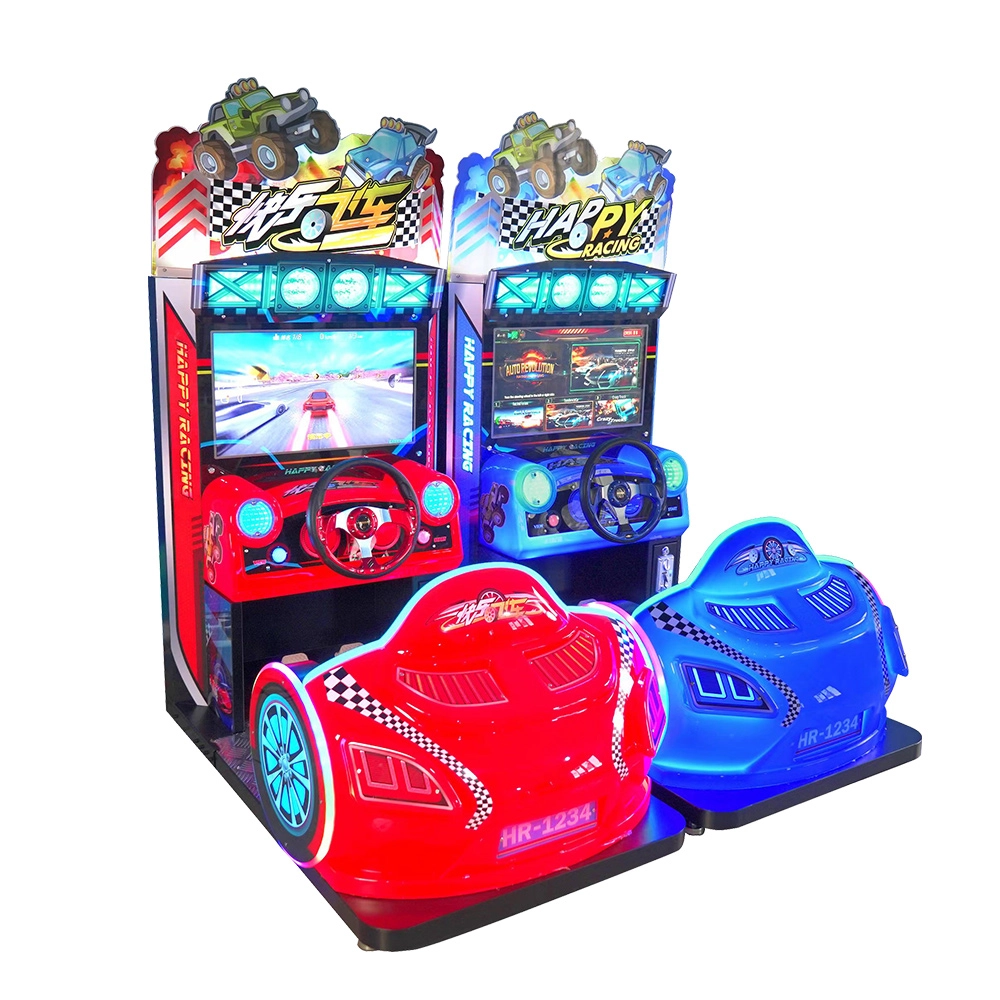
Happy Racing
Is Happy Racing suitable for all ages?
Yes, Happy Racing is designed to be family-friendly and is suitable for players aged 5 and above.
Super Speed Driving VR
Where can I purchase this VR arcade machine?
It is available from trusted VR arcade machine manufacturers and VR arcade game suppliers with global shipping options.
Boxing machine
How is the machine delivered and installed?
The machine comes fully assembled. Simply plug and play after placing it at your location.
Prize Machine
What’s the warranty period?
One year warranty on key components, with lifelong technical support.
You May Also Like

Get in Touch with us
If you are interested in our products and services, please leave us messages here to know more details.
We will reply as soon as possible.

 Scan QR Code
Youtube
Guangzhou DiniBao Animation Technology Co., Ltd
Guangzhou Dinibao Animation Technology Company Co., Ltd