





How Much Does a Commercial Racing Arcade Machine Cost to Buy?
Authoritative guidance for location operators and arcade buyers from Dinibao — experienced suppliers of commercial arcade machines. This article answers six specific, commonly neglected questions about purchasing a racing arcade machine (upright cabinets, sit-down cockpits, motion rigs). It embeds practical cost data, ROI math, compliance and maintenance realities so you can make an informed buying decision. For a custom quote, contact us at game-machine@dinibao.com or visit www.dinibao.com.
1) How much does a commercial racing arcade machine actually cost to buy (new vs used), including common add-ons and shipping?
Real purchase cost varies widely by cabinet type, brand, feature set and supply chain status. Use these market-validated ranges as a planning baseline (2024–2026 market conditions):
- New single-player upright arcade racing cabinet (commercial grade): $6,000–$15,000. These are durable coin/op or cashless cabinets with commercial monitors and force-feedback steering variants at the top end.
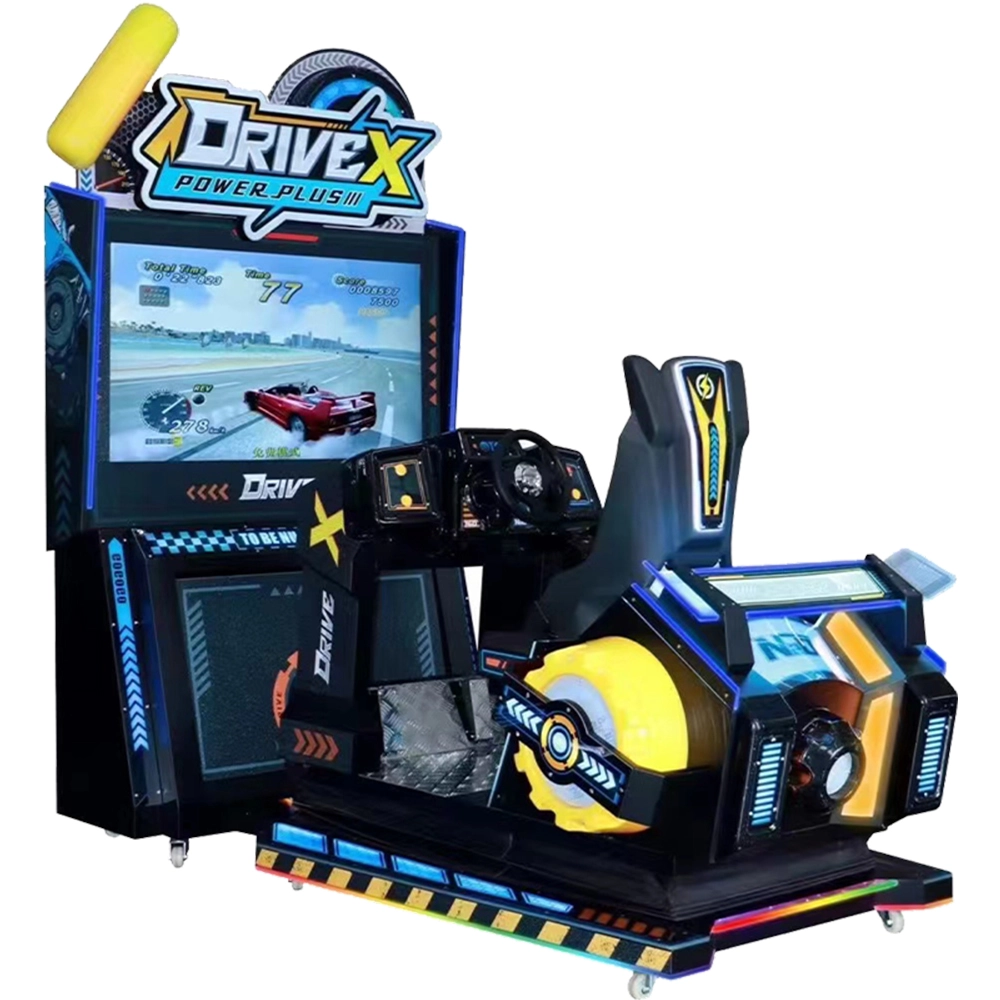
- New sit-down deluxe cockpit (enclosed seat, surround screens, stronger force feedback): $12,000–$40,000 depending on displays, motion actuators and licensed software.
- Large motion rigs or linked multiplayer systems (multi-station, hydraulics or actuators): $25,000–$60,000+.
- Used/refurbished commercial machines: $2,000–$12,000. Lower end is older, non-working units; higher end are fully rebuilt cabinets with new displays and controls.
Common add-ons that materially increase landed cost:
- Payment system upgrades (MDB coin/bill validators, cashless card or mobile readers): $300–$1,200.
- Licensed game/software updates or annual service agreements: $200–$2,000 per year depending on license model.
- Shipping & international freight: domestic pallet freight $200–$1,500; international container or LCL $800–$5,000+ depending on origin, destination and size. Heavy motion rigs trend to the top of this range.
- Customs duties & VAT: typically 0–15% of declared value depending on country — check local tariff schedule and HS codes for amusement machines (classification varies by market).
Practical takeaways: budget for 10–25% on top of the factory price to cover freight, duties and basic setup (varies if you're importing). Always request a delivered duty-paid (DDP) quote for true landed cost comparison.
2) What hidden recurring costs should I plan for (software licensing, replacement parts, payment processing, electricity)?
Hidden recurring costs are often the deal-breakers for ROI. Typical recurring expense categories and realistic annual estimates:
- Software licenses & updates: $200–$2,000/year. Some manufacturers charge ongoing fees for online leaderboards, network features or updated content.
- Parts & wear items: 5–12% of purchase price per year (higher for high-usage location). This covers steering wheels, pedals, motors, monitors, power supplies, and upholstery.
- Payment processing/cashless fees: If you use third-party cashless platforms, expect 2–5% + $0.05–$0.30 per transaction. MDB coin/bill hardware has lower variable fees but must be serviced.
- Electricity: Most racing cabinets draw 250–800 watts while in use. Example: 500 W average during 12 hours/day = 6 kWh/day ≈ 180 kWh/month. At $0.12/kWh = $21.60/month. Expect $10–$60/month depending on power draw, hours and local rates.
- Service visits / labor: $50–$150 per hour for a qualified technician. Plan for at least one preventive visit per year plus reactive repairs.
Example annual recurring cost for a $15,000 sit-down machine at a busy site: software $1,000 + parts (8% = $1,200) + electricity $300 + payment fees variable = ~$2,500–$3,000/year exclusive of technician labor for major failures.
3) How do I calculate realistic ROI and break-even time for a racing arcade machine at different venue types?
ROI depends on price per play, play count/day, location hours, revenue share, and running costs. Use this reproducible formula:
Monthly gross revenue = price per play × average plays per day × open days per month
Net monthly revenue = gross revenue − monthly recurring costs − revenue share/commissions
Break-even months = purchase price / net monthly revenue
Two practical scenarios:
- High-traffic family entertainment center (FEC): $2/play, 80 plays/day → $160/day → ~$4,800/month gross. After 20% venue revenue share and $300/month running costs → net ≈ $3,540/month. For a $20,000 deluxe machine → break-even ≈ 5.7 months.
- Moderate-traffic bar or mall kiosk: $2/play, 20 plays/day → $40/day → ~$1,200/month gross. After 30% share and $200/month costs → net ≈ $640/month. For the same $20,000 machine → break-even ≈ 31 months.
Key variables to stress-test: realistic play counts (measure similar machines at prospective sites), price elasticity (lower price yields more plays but lower margin), and whether you pay the operator a commission or a fixed rent.
4) What warranty, service and spare-parts expectations should I require before buying?
To protect uptime and value, require written commitments on these points:
- Base warranty: standard commercial terms are 6–12 months on electronics and mechanical parts. Extended warranties (1–3 years) are often available and advisable for high-use locations.
- Parts availability SLA: ask for explicit lead times for displays, power supplies, wheel assemblies and PCB boards. Good suppliers provide spares kits and 30–90 day lead times for common parts.
- Onsite repair or advanced replacement: clarify whether the supplier sends a technician or ships replacement parts. For international buyers, insured parts shipment with local service partners is a must.
- Remote diagnostics and software rollback: request remote support for firmware updates and the ability to revert software if an update causes instability (minimizes downtime).
Best practice: negotiate at least 12 months warranty with a stocked spare-parts kit (wheels, pedals, fuses, a spare display) or a parts credit. Verify the supplier has local or regional service partners.
5) What import, safety certification and electrical compliance pitfalls should international buyers watch for?
Import and compliance are commonly underestimated. Main items to verify before purchasing:
- Certification: ensure the cabinet has the required safety marks for your market (CE for EU, UKCA for UK, UL/ETL for North America, CCC for China). Non-certified machines may be blocked at customs or require costly retrofits.
- Electrical configuration: commercial machines are supplied for specific mains voltages (110–120V or 220–240V). Confirm PSU compatibility or pay for transformer/rewire service. Some motion cabinets draw significant inrush current — verify local breaker capability.
- HS code & duties: amusement machines are classified under specific HS codes which determine import duty and VAT. Duty rates typically range 0–10% but vary by jurisdiction. Use your customs broker to confirm landed cost projections.
- Safety & accessibility: public venues may require emergency stop switches, ADA-compliant access, and signage. Motion rigs sometimes need additional liability insurance and floor anchoring.
- Local regulations on gambling or prize redemption: if your machine offers betting-like mechanics or redemption elements, check local gaming laws.
Action checklist: request certification documents, electrical specs, recommended installation requirements and an HS code from the supplier before confirming the order.
6) How do I choose between upright, deluxe sit-down, and motion-cabinet racing machines for small to large venues?
Decision factors: footprint, throughput (turnover), maintenance complexity, target customer, and revenue potential.
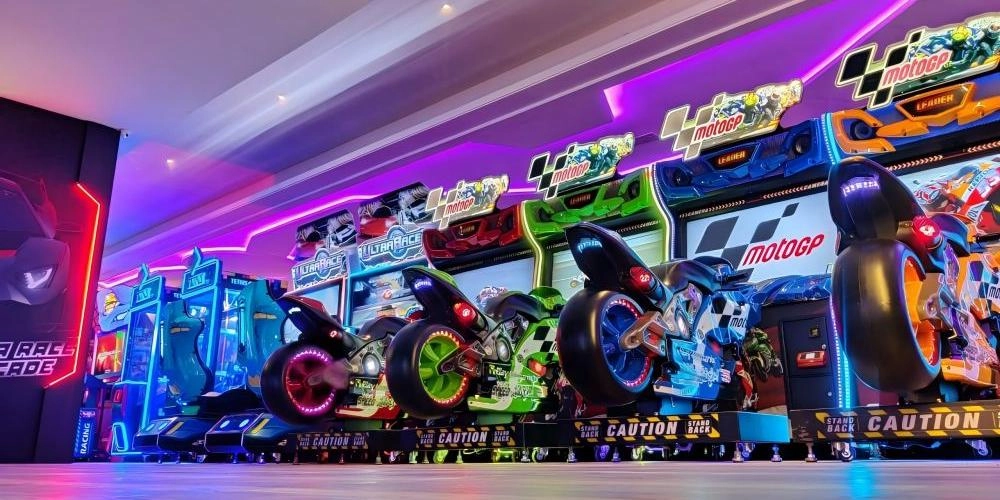
- Upright cabinets: Pros — lower cost, smaller footprint (1–2 m²), easier maintenance, lower electricity draw. Best for arcades with limited space or where multi-game lineups are preferred. Typical gross revenue per machine sits at the lower end but turnover can be high in tight spaces.
- Deluxe sit-down cockpits: Pros — higher perceived value, longer play sessions, higher price-per-play possible. Cons — larger footprint (2.5–4 m²), higher maintenance for seats, harnesses and stronger force-feedback motors. Best for FECs and family venues where a marquee attraction is needed.
- Motion rigs/multi-link systems: Pros — top-tier draw and High Quality pricing, great for anchor attractions. Cons — highest purchase price, complex maintenance (motion actuators), heavier shipping/duty, higher insurance. Best for theme parks, large FECs or high-end location-based entertainment (LBE) centers.
Selection rule of thumb: match cabinet class to your site’s dwell time and throughput objectives. If you want a high-value anchor experience with long sessions and can accept fewer plays/day, a deluxe or motion cabinet is justified. If you need multiple machines in limited floor space to maximize plays, choose uprights.
Dinibao recommendation: request an on-site audit or provide visitor counts and typical dwell times; we can model expected plays/day and suggest the ideal mix of upright vs. sit-down vs. motion to maximize ROI.
Concluding summary — advantages of owning commercial racing arcade machines
Commercial racing arcade machines are proven revenue drivers for FECs, arcades, bars and LBE venues. Advantages include strong customer pull as a signature attraction, flexible monetization (per-play pricing, events, leaderboards), a wide selection of form factors to match space and budget, and good resale/refurbishment value with proper maintenance. When sourced with transparent landed costs, solid warranty terms and a parts plan, a racing machine can pay back quickly and become a long-term profit center.
For a precise cost breakdown, ROI model customized to your venue and a formal quote — contact Dinibao at game-machine@dinibao.com or visit www.dinibao.com.
Recommended for you


Star Hero
How many coins are needed to play?
Players can insert 1–3 coins, with each coin granting one launch attempt.
Products
How do I install and operate the machines?
All machines come with manuals and video guides. We also provide online support.
Cyberpunx
How can I order Cyberpunx?
We provide wholesale purchasing, global delivery, and after-sales support as a trusted arcade machine supplier.
Hitting mouse machine
What is a Hitting Mouse machine?
It’s a classic arcade game where players use a soft mallet to hit randomly popping-up “mice” or characters to score points within a time limit.
Basketball machine
How many players can play at once?
Most machines support 1 player per unit, but multiple units can be linked together for competitive multiplayer modes (e.g., 2–4 players).
children's category
Do you provide installation or user guidance?
Yes, we provide detailed English manuals, operation videos, and online technical support to help with setup and troubleshooting.
You May Also Like
Get in Touch with us
If you are interested in our products and services, please leave us messages here to know more details.
We will reply as soon as possible.

 Scan QR Code
Youtube
Guangzhou DiniBao Animation Technology Co., Ltd
Guangzhou Dinibao Animation Technology Company Co., Ltd