








How to evaluate ROI on Gashapon machines for sale?
1. How do I calculate the payback period for a single-head gashapon machine in a mall food court when pricing at typical local rates?
Why this matters: Owners buy Gashapon machines for predictable, passive cash flow. Beginners often use simplistic math (cost divided by price) and miss real-world variables: plays per day, gross margin per play, downtime, fill and prize costs, and seasonality.
Step-by-step method:
- Establish average play price. Example market ranges: Japan commonly 100-300 yen; North America often 1-2 USD. Use your local rate.
- Estimate daily plays. Measure or benchmark by location type (mall food court well-placed machines often see 40-150 plays/day; a busy tourist spot can be higher). If you have no data, run a 7-day test or ask landlord for comparable vendor footfall.
- Calculate gross revenue per day = plays/day x play price.
- Determine prize cost per play (weighted average). Include capsules, toys, packaging: small novelty fills can cost $0.20-0.80 each depending on sourcing and license costs; High Quality items cost more.
- Compute gross profit per day = revenue per day - prize costs - small operating costs (capsules, electricity, capsule dispensers). Exclude amortized capex for now.
- Payback period (days) = purchase price / gross profit per day. For more conservative planning, include expected downtime and a reserve for restocking and repairs (add 10-30% to days).
Example scenario (illustrative): purchase price 600 USD, play price 1.00 USD, expected 60 plays/day, average prize cost 0.30 USD plus capsules 0.05 USD => gross profit/day = 60 x (1.00 - 0.35) = 39 USD. Payback = 600 / 39 = ~15.4 days. Adjust this with taxes, location commission, and seasonal dips. This shows small machines can have fast paybacks if location and prize mix are optimized, but results vary widely by market.
2. What is the true landed cost per machine when importing a batch of gashapon machines for resale or deployment?
Why this matters: Many buyers quote factory unit price but forget freight, duties, testing, and installation costs. Underestimating landed cost breaks ROI projections.
Cost components to include:
- Factory unit price: negotiated per-piece cost; expect lower per-unit price for larger orders (volume tiers).
- Packing and export fees: usually modest per unit but important for fragile cabinets.
- Freight: LCL, FCL, or air. For small bulk orders (5-50 machines), LCL or small FCL rates vary by route — ask freight forwarders for current quotes.
- Insurance: cargo insurance (recommended) typically 0.1-0.5% of FOB value.
- Customs duties and VAT: vary by destination and classification. Gashapon machines and toy contents may attract separate tariffs; check tariff schedules or consult a customs broker.
- Testing and certification costs: CE (EU), RoHS, or local electrical safety inspections if machines have lighting, motors, or integrated electronics. Toy safety testing (for prizes) may add per SKU costs.
- Local modifications and payment system integration: cashless readers, token hoppers, or coin mech replacement on arrival.
- Last-mile delivery, installation, and initial inventory of prize stock and capsules.
How to compute: landed cost per machine = (FOB total + freight + insurance + duties + testing + modifications + last-mile) / number of units, plus allocated initial prize inventory per machine.
Practical tip: request a total landed cost quote from suppliers like dinibao and your freight forwarder before finalizing ROI. Bulk order discounts often reduce per-unit landed cost meaningfully beyond factory price alone.
3. How should I structure prize tiers and capsule sizes to maximize repeat plays while keeping per-play gross margin healthy?
Why this matters: The prize mix drives perceived value, repeat plays, and unit economics. Many beginners either overfill with cheap low-value trinkets that reduce repeat plays or overspend on prizes that destroy margins.
Design approach:
- Segment prizes into three tiers: loss-leader (high frequency, low cost), mid-value (good novelty), and jackpot/rare (larger or branded item). A common ratio is 70% loss-leader, 25% mid, 5% jackpot, adjustable by location.
- Match capsule size and head compatibility: confirm head diameter and capsule dimensions with the manufacturer before ordering capsules and prizes. Not all heads accept larger capsule diameters—check machine specs.
- Price vs perceived value: aim for an average prize cost that keeps gross margin at your target (many operators target 60%+ gross margin per play after prize cost). Use the weighted-average prize cost formula to calculate this.
- Leverage non-branded novelty and high-appeal packaging: presentation matters. Upgrading a small toy’s packaging can boost perceived value without doubling cost.
- Use rare or branded items sparingly as jackpots to encourage repeat plays without excessive inventory expense—these can be rented, consigned, or returned unsold if necessary.
Operational tips: track SKU-level sell-through daily for the first 2-4 weeks, then adjust mix. Rotate mid-value prizes monthly and keep the jackpot novelty fresh to maintain curiosity and repeat play rates.
4. How do I compare expected ROI across different location types (mall kiosk, arcade, supermarket, tourist spot) using measurable metrics?
Why this matters: A machine that performs in one location may fail in another. Beginners rely on gut feeling instead of measurable location scoring.
Scoring framework (practical, spreadsheet-ready):
- Foot traffic estimate: obtain or observe hourly pedestrian counts during peak and off-peak.
- Conversion rate estimate: percentage of passersby who interact with the machine. Conservative ranges: 0.5-3% in open mall corridors, 3-10% in impulse-heavy zones near food courts or attractions. Run a short A/B test where possible.
- Average plays per converting visitor: often 1.0–1.6; tourists may play multiple times.
- Uptime: expected hours machine is accessible; account for hours of mall operation and any scheduled maintenance.
- Revenue per day = foot traffic x conversion x plays per converter x price per play.
- Place costs: location commission or rent share (sometimes 10-30% of takings), power, and security fees.
Score each location on these metrics and compute an estimated daily net profit. Rank by expected net profit and payback period. Prioritize locations with stable high foot traffic, favorable commissions, and low theft risk. Use a sensitivity analysis (best/worst case) to understand downside risk.
5. Which maintenance and anti-tamper upgrades on used gashapon machines are worth the upfront investment to reduce downtime and shrinkage?
Why this matters: Used machines can be cheap to buy but costly to maintain. Preventing downtime and tampering increases effective plays per day and protects revenue.
High-impact upgrades and maintenance priorities:
- Replace or service coin mech and token acceptor: reputable coin mechanisms reduce jam incidents. Cost vs benefit: fewer service calls and lost revenue.
- Install a secure steel coin box with tamper-proof locks and anti-pry plates; upgrade screws to tamper-resistant types.
- Add a cashless payment reader (NFC, QR code) to capture card and mobile payments. Cashless can boost average revenue per user and reduce theft; choose readers compatible with your POS and local payment platforms.
- Fit remote telemetry where possible: simple IoT counters that report plays, cash box levels, and coin jams allow preventive maintenance and better route planning.
- Check and replace worn springs, clutch assemblies, and plastics; maintain lubrication schedules (every 3-6 months depending on usage).
- Install clear signage and prize windows to reduce perceived tamper attempts and improve conversion.
Prioritize upgrades by expected uptime improvement and fraud reduction. For example, adding a cashless reader may cost more upfront but can pay back fast in high footfall, low-cash environments.
6. What are the legal and licensing costs I must include when selling branded character prizes and how will those fees affect ROI?
Why this matters: Branded prizes increase plays but come with licensing, testing, and labeling obligations. Beginners underestimate the cost and lead time for rights clearance and safety testing.
Key considerations:
- Licensing models: licensors may charge minimum guarantees, per-unit royalties (typical ranges often 5-20% of retail value), or a flat fee per SKU. Negotiate territory, term, and marketing allowances.
- Safety & testing: branded toy SKUs often require lab testing for lead, phthalates, small parts, and mechanical safety. Tests cost per SKU (hundreds to thousands of dollars depending on test scope and labs used) and must be renewed on substantial changes.
- Labeling and documentation: include required safety labels and keep technical files available for regulators (CPSIA in US, EN71 in EU, etc.).
- Insurance and recalls: branded products may need enhanced recall insurance or compliance programs—factor those costs into unit economics.
Impact on ROI: include per-unit royalty and amortized testing costs into the prize cost line of your ROI model. Branded prizes can significantly lift plays per day and price elasticity (you might charge more per play), but run a pilot to confirm uplift versus increased costs.
Concluding summary
Gashapon machines for sale offer a scalable, high-margin opportunity when you account for real landed costs, prize-mix economics, location scoring, and preventive maintenance. Key advantages include low floor space requirements, flexible capsule toy merchandising, fast potential payback in the right locations, and easy scaling via bulk purchase discounts and cashless upgrades. Careful prize sourcing, compliance with toy safety rules, and basic anti-tamper measures materially improve net returns and machine uptime.
For tailored quotes, landed-cost estimates, and model-driven ROI spreadsheets for bulk orders or single-unit deployments, contact us for a quote at www.dinibao.com or email game-machine@dinibao.com
Recommended for you


Soul Warp
How do I get support if something goes wrong with my machine?
Our customer service team provides full technical support via phone, email, and online assistance. We also offer spare parts and maintenance services to keep your machine in top condition.
car baby racing
Is the gameplay safe?
Yes. The car seat and steering wheel are built for child comfort and safety, with no risk of accidents.
children's category
Do you offer warranty and technical support?
Yes! All machines come with a 1-year warranty and lifetime technical support, including spare parts supply and online assistance.
Super Snail
How do kids earn tickets?
Tickets are rewarded based on distance pedaled, with extra points for tricks.
Speed Motor
Is Speed Motor safe for young kids?
Absolutely. The cabinet has soft edges, child-sized controls, and a stable design.
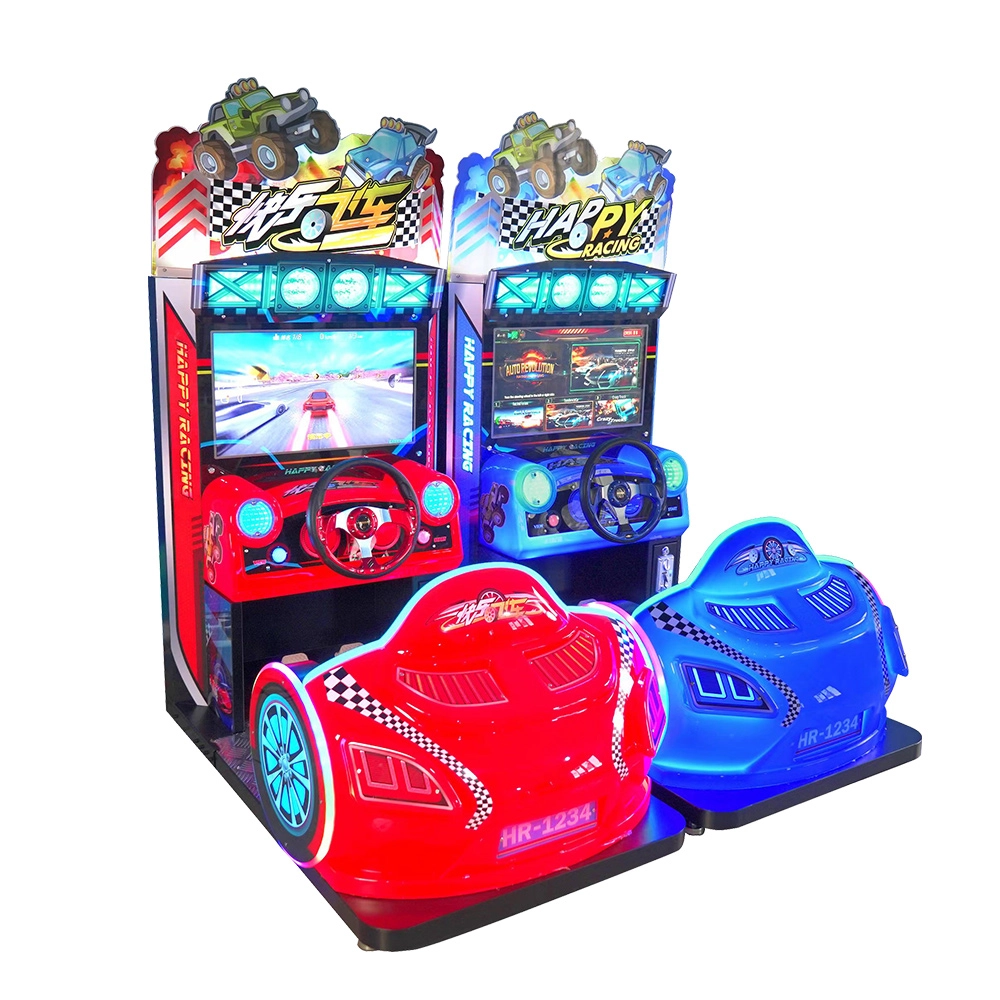
Happy Racing
Is Happy Racing suitable for all ages?
Yes, Happy Racing is designed to be family-friendly and is suitable for players aged 5 and above.
You May Also Like

Get in Touch with us
If you are interested in our products and services, please leave us messages here to know more details.
We will reply as soon as possible.

 Scan QR Code
Youtube
Guangzhou DiniBao Animation Technology Co., Ltd
Guangzhou Dinibao Animation Technology Company Co., Ltd