







Why choose new vs used Gashapon machines for sale?
As a seasoned arcade machine expert and consultant working with international gachapon machine suppliers and capsule toy distributors, I’ve helped dozens of operators choose the best capsule vending machines for sale for different budgets and locations. Below are six detailed, beginner-focused questions that buyers frequently ask but rarely get fully answered online. Each answer uses real industry practices and practical numbers you can use when evaluating new and used units. For a tailored quote, contact us at www.dinibao.com or email game-machine@dinibao.com.
1) What will a commercial Gashapon machine really cost once I factor in shipping, customs, taxes and installation?
Short answer: expect the landed cost to be 10–35% higher than the factory price for most international purchases, and up to 50% for small orders or expensive freight routes. Here’s how to calculate it in practice and what line items to check before you commit.
Breakdown and checklist:
- Factory/ex-factory price (FOB): the quoted price from the manufacturer or gachapon machine suppliers.
- Freight and insurance: for palletized floor machines, air freight is costly; sea freight is typical. Typical range: 5–15% of FOB for sea; 10–40% for air depending on weight and distance. Ask suppliers for gross weight and volume (CBM) to get an accurate freight quote.
- Import duties and VAT/GST: depends on your country. VAT/GST is usually applied to CIF+Duty. Duties can range 0–20% depending on tariff classification and your local rules.
- Customs clearance & local fees: broker fees, port storage, and local handling — typically $50–$300 per shipment for small orders.
- Electrical conversion & plug adapters: some machines require a small investment ($10–$80) for local cords, voltage conversion or CE/UL certification stickers if you need locally certified models.
- Installation and site modifications: floor anchors, coinbox security, pedestal or display add-ons can be $50–$300 per machine.
- DDP vs FOB: If you’re new to importing, negotiate DDP (Delivered Duty Paid) quotes. DDP simplifies cost predictability (supplier handles duties and shipping), but compare the DDP High Quality vs doing import yourself.
Practical example: a countertop 1-station new gashapon quoted at $450 FOB might add $60 sea freight, $45 customs clearance, 10% duty ($45) and 20% VAT on CIF+duty (~$120) — landed ~ $720. A floor-standing multi-unit at $1,800 FOB could land at $2,300–$2,600 depending on route and taxes. Always request a pro-forma invoice with weight/volume and ask suppliers for FOB and DDP quotes so you can compare.
2) What ROI can I realistically expect from a new 1-up machine vs a used one in a mall with medium footfall?
Operators want realistic timelines. ROI depends on price-per-play, average plays/day, product cost, and refill frequency. Use these conservative benchmarks for planning.
Key assumptions (typical mid-market mall):
- Price per capsule: $1.00 – $2.50 (local pricing matters)
- Average plays/day (medium footfall): 8–30 plays/day for a single countertop unit; 30–80 for well-placed floor units
- Toy cost per capsule: $0.20–$2.00 depending on bulk purchase and licensed items
- Refill & operating costs: freight for toys, staff time — budget $5–$20/month per machine
Example ROI math (conservative):
- New countertop machine landed cost: $720. Price per play: $1.00. Average 15 plays/day = $450/month gross. If toy cost average $0.40 per play and operating expenses $15/month, gross margin ~60% → ~$270/month. Payback ≈ 2.7 months.
- Used countertop machine bought locally for $350. Same revenue, similar margin but assume 10–20% higher downtime and $50 upfront refresh/repair. If monthly uptime and operations are similar, payback could be ~1.5 months — but residual costs and lower reliability can extend downtime and reduce effective ROI.
Takeaway: used machines lower initial capex, so short-term payback can be faster, but higher downtime and parts scarcity can reduce long-term profitability. For scaling (10+ units), new machines with warranty and consistent parts supply usually produce steadier ROI and lower maintenance overhead per unit.
3) What technical failures are most common within the first 12 months on used Gashapon machines, and what will repairs typically cost?
Beginners often underestimate repair needs on pre-owned units. These are the frequent failure points, inspection steps before purchase, and ballpark repair costs based on industry service data.
Common failure points and costs:
- Coin acceptor issues (jammed coins or misreads): cleaning or replacement $30–$150. Many older coin mechanisms are modular and replaceable.
- Drive motor or gearbox failures: motors for the turn mechanism or dispensing can fail — replacement motors $30–$120; gearbox servicing $20–$80.
- Worn dispensing cams or gaskets: mechanical wear causes inconsistent dispensing; parts $10–$60.
- Lock and coinbox tamper damage: new locks or reinforced coinboxes $20–$150 depending on quality.
- PCB/electronics faults (sensors, LED drivers): diagnosis $30–$120; replacement PCBs $50–$250 if obsolete models are rare.
- Acrylic window cracks or cosmetic repairs: $15–$120 depending on size and whether full replacement is required.
Inspection checklist for used machines (before purchase):
- Run 50+ test cycles with coins/credits and with empty and full capsule tubes to observe jams.
- Inspect coinbox and locks for evidence of tampering or corrosion.
- Check motors for abnormal noise and measure current draw if possible (excess draw indicates worn motor/gearbox).
- Ask for spare parts inventory or whether the seller can provide replacement cams, motors, and PCBs.
- Request photos of internal wiring and a short video of a full dispensing cycle.
Rule of thumb: budget 5–15% of the purchase price annually for maintenance and spare parts. For used fleets, establish a small spare-part stock (motors, cams, coin acceptors) to avoid long downtime.
4) Can I retrofit a Gashapon machine to accept cashless payments (QR, card, mobile wallet) and what are the best options?
Yes — cashless retrofit is a common and profitable upgrade, especially in markets where mobile payments dominate. There are two main retrofit approaches and practical considerations for each.
Options:
- External cashless terminal: install a small QR-code or card reader box on the machine’s body. This is low-cost ($40–$200), easy to install and requires only mounting and wiring for a vend signal or manual reconciliation.
- Pros: quick deployment, minimal modification to original mechanics.
- Cons: may require manual reconciliation or a simple solenoid trigger if integration is basic.
- Integrated MDB/comMSI retrofit kit: more advanced vending controller modules speak MDB or pulse protocols and can be wired into the coin acceptor line to fully emulate a coin input after payment success. Kits cost $120–$450 depending on features (Wi‑Fi, telemetry, remote price updates).
- Pros: seamless integration, remote pricing control, telemetry for sales monitoring.
- Cons: requires electrical work and some firmware setup; ensure compatibility with your machine’s existing control board.
Key practical points:
- Connectivity: choose Wi‑Fi, 4G or offline QR depending on location connectivity. 4G SIM modules add ~$3–$10/month for data but avoid unreliable Wi‑Fi.
- Payment fees and reconciliation: card and wallet providers charge transaction fees — analyze net margins. QR-based schemes sometimes have lower fees or promotional rates.
- Regulatory & tax reporting: cashless systems create digital sales records — ensure your accounting and VAT reporting align with local rules.
- Power draw and mounting: cashless modules need stable 5–12V supply. Confirm your machine’s power supply can support added electronics or add a small dedicated supply (cost $10–$40).
Recommendation: for pilots or single machines, a simple QR terminal is the fastest route. For fleets or franchised sites, invest in integrated MDB-capable controllers to get telemetry and remote price/control, which improves uptime and reduces manual cash reconciliation.
5) How do I choose capsule size, toy sourcing and safety compliance to maximize repeat customers and limit returns?
Product selection and capsule sizing directly affect sales velocity and customer satisfaction. Here’s a practical approach to matching capsule size and toy type to location and ensuring compliance with international safety standards.
Capsule sizes & product fit (common capsule diameters):
- 20–30mm capsules: small charms or blind-box micro collectibles. Lower cost per toy, but perceived value can be low in some markets.
- 40–50mm capsules: most versatile — small figurines, plush keychains, light-up toys.
- 60–80mm capsules: larger toys or plush, higher perceived value and margin but fewer items per tube.
Sourcing strategy:
- Buy bulk capsule toys from reputable capsule toy distributors or directly from factories to lower per-unit cost. Typical bulk prices range from $0.20–$3.00 per toy depending on complexity and licensing.
- Mix low-cost filler items with one High Quality collectible per tube to encourage repeat play and collectability.
- Rotate SKUs seasonally and use localized themes (regional mascots, trending IPs) to increase repeat customers.
Safety & compliance:
- Comply with local small-parts/age-warning laws. In most jurisdictions toys with detachable small parts must be age-rated (commonly not for children under 3). Ask suppliers for material safety data and testing certificates.
- For EU/UK sales, CE declaration of conformity is often required for toys. For the US, check ASTM F963 guidance for toy safety.
- Labeling: include safety labels in local language(s) and choking hazard icons where required.
Merchandising tip: capsule visibility and attractive demo samples increase conversion. Use sample displays beside machines showing the range of possible toys and clearly label price per play and capsule size.
6) New vs used: How do I evaluate warranty, spare parts availability and long-term value to decide which is best for my operation?
This is the core strategic decision many beginners struggle with. Choose based on scale, risk tolerance and available after-sales support. Below is a practical decision matrix and what to ask your supplier.
Decision factors:
- Scale and growth plans: for 1–5 pilot units, used machines can reduce upfront cost and let you validate location. For scaling to 10+ machines, new units with warranty and predictable lead times lower operational risk.
- Warranty and SLA: new machines usually come with 12–24 month warranty on parts and sometimes labor. Confirm what is covered (motors, PLC/PCB, coin acceptors). Used machines rarely have warranty beyond a short seller guarantee.
- Spare parts and consumables: ask if the supplier or local distributor stocks replacement cams, motors and coin mechanisms. Availability is a critical hidden cost—long downtimes hurt revenue.
- Software and upgrades: new models might support telemetry and cashless payment integration out-of-the-box; older used units may require costly retrofits.
Practical evaluation checklist before buying new or used:
- Request a spare-parts list and typical lead times for common items.
- Confirm the warranty length and what is excluded (cosmetic damage, misuse, shipping damage).
- Ask for a service manual or troubleshooting guide. Suppliers that provide documentation show better after-sales readiness.
- Check for a regional service partner or offer to hold a small parts kit to reduce downtime costs.
Summary guidance: buy used to test locations cheaply; buy new when you want predictable uptime, modern features (RGB lighting, cashless telemetry) and easier scaling. For mixed strategies, keep a 10–15% spare-part inventory and plan to replace used pilot units after 12–24 months if they show high revenue potential.
Concluding summary — advantages of new vs used Gashapon machines:
New Gashapon machines for sale: advantages are predictable reliability, manufacturer warranty (generally 12–24 months), modern features (cashless-ready controllers, telemetry), and easier parts availability — making them the best choice for operators who plan to scale and minimize downtime. Used machines: lower upfront cost and faster breakeven for pilots or low-risk tests, but expect higher maintenance, potential parts scarcity and shorter useful life. The best approach for many operators is a hybrid: start with a few used units to test locations, then deploy new, warrantied machines for high-performing sites while maintaining a spare-parts stock to keep uptime high.
If you want precise landed-cost calculations, model ROI for your exact location or get a quote for new or refurbished capsule vending machines, contact us for a free site-by-site quote and supplier options at www.dinibao.com or game-machine@dinibao.com.
Recommended for you
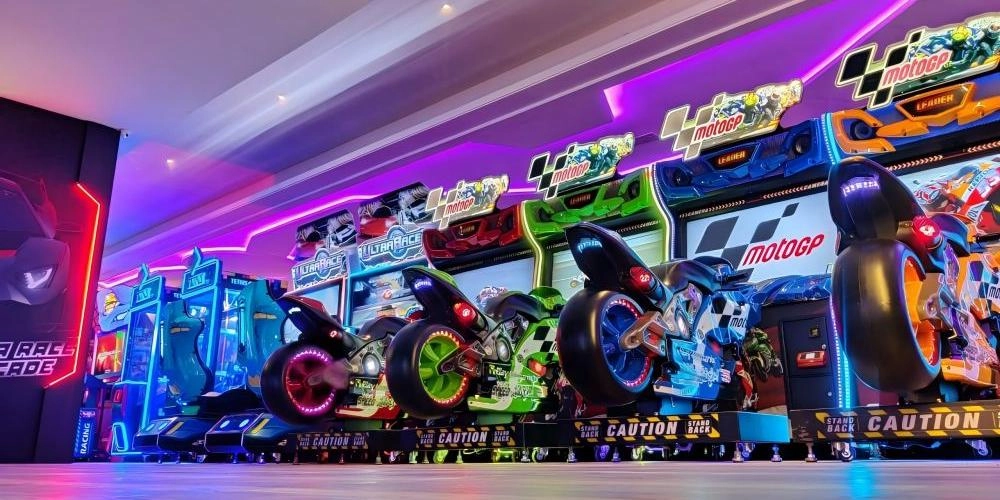


Piano Keys
Is this suitable for young children?
Yes. The large keys and simple gameplay make it accessible for children, but it remains challenging for adults.
Super Snail
Can I purchase this arcade machine in bulk?
Absolutely. As a leading arcade machine supplier, we offer wholesale pricing and global shipping.
Speed Motor
Can I order multiple units for my arcade?
Yes, we are a reliable arcade machine supplier and can provide bulk purchase packages with competitive pricing.
Lucky Pong
How many players can play at once?
Two players compete head-to-head for tickets.
Maze treasure hunter
What support do you provide after purchase?
We offer a 1-year warranty, lifetime technical support, and detailed manuals and video guides. Spare parts and remote troubleshooting are also available anytime.
Sports star
What’s the player capacity?
Sports Star is a single-player game but designed for quick turns, encouraging group play and competition.
You May Also Like

Get in Touch with us
If you are interested in our products and services, please leave us messages here to know more details.
We will reply as soon as possible.

 Scan QR Code
Youtube
Guangzhou DiniBao Animation Technology Co., Ltd
Guangzhou Dinibao Animation Technology Company Co., Ltd