








How can Gashapon machines for sale increase foot traffic?
1. What is a realistic monthly revenue and breakeven timeline for a single-head Gashapon machine in a mall food court?
Realistic revenue depends on three variables: play price, daily plays, and prize cost per play. Typical play prices range from $0.50 to $3.00 (local currency and market positioning matter). Daily plays vary dramatically: low-traffic secondary corridors may see 10–40 plays/day; primary food courts or tourist zones can see 60–200+ plays/day. Use this simple operator formula:
- Monthly gross = average plays/day × play price × 30
- Net per play = play price − (average prize cost + capsule & shipping cost + credit fees if cashless)
- Breakeven months = purchase price ÷ (monthly net profit)
Example conservative scenario (mall food court): 60 plays/day at $1.50
- Gross: 60 × $1.50 × 30 = $2,700/month
- Prize & capsule cost (blended): $0.30–$0.60/play → cost = $540–$1,080
- Net before opex: $1,620–$2,160
- Operating costs (refill labor, location commission 10–30%, maintenance, electricity): subtract 25–40%
- Operator cashflow: roughly $970–$1,620/month
If your machine cost (single-head new) is $900–$2,500, breakeven in this scenario could be 1–6 months. Key caveats: seasonal variations, prize desirability, and location commission have the biggest impact. Always run a 30–90 day pilot and track plays/day by time segment to refine projections.
Practical tips: price tests (A/B play price), optimize prize mix (see Q2), and negotiate location commission with revenue-share or fixed rent to manage cashflow risk.
2. How do I choose capsule sizes and a prize mix that maximize repeat plays while minimizing refill frequency?
Capsule sizing and prize economics are tightly linked. Capsule sizes commonly used in the industry range from very small (20–30 mm) for simple stickers/charms to medium (40–60 mm) for mini-figures and larger (70–90 mm) for novelty toys. Machine hoppers have different capacities depending on capsule diameter and machine model; smaller capsules allow higher capacity and longer time between refills.
Prize-mix strategy (practical rule-of-thumb for repeat plays):
- 60% common, low-cost items (stickers, low-cost blind-bag toys)
- 30% mid-tier items with perceived higher value (mini-figures, branded items)
- 10% rare/limited items (exclusive variants, larger toys)
Why this works: common items create instant wins and maintain velocity; mid-tier items increase perceived value and justify slightly higher play prices; rare items drive repeat attempts and social sharing. Track the redemption rate of rare vs common items—if the rare hit rate is too low, players will churn; if too high, margins erode.
Inventory planning for refill logistics:
- Calculate capsule capacity per machine model (consult manufacturer spec). If a machine holds ~400 small capsules, and average daily plays are 80, you need ~5 days between refills for single-head machines. Adjust for capsule size.
- Keep an SKU-level safety stock: maintain at least 2–3 days of demand per prize SKU per location plus 1–2 refill kits for popular SKUs to avoid stockouts.
Packaging and labeling: ensure toy safety labels and batch IDs are visible (see Q3). For branded/licensed prizes, maintain clear provenance and rights to sell to avoid legal issues.
3. What certifications and legal checks must I complete before buying Gashapon machines for EU/US markets?
Safety and regulation vary by region, but buyers must cover two areas: machine/electrical compliance and toy/product safety.
Key compliance checklist:
- EU: CE marking for electrical safety (if machine has electronics); toy safety under EN 71 series for items intended as toys (mechanical/physical, flammability, chemical migration tests). Labeling and warnings per EU requirements.
- UK: UKCA requirements post-Brexit mirror many CE rules—confirm with local guidance.
- USA: Consumer Product Safety Improvement Act (CPSIA) for children’s products (lead limits, phthalates), and ASTM F963 for toy safety tests. If machines include wireless or RF, check FCC equipment authorization.
- RoHS/REACH: for component materials and hazardous substances—important if manufacturing/importing.
- Local municipal vending permits and business licenses: many cities regulate coin-op and vending placement, require liability insurance, and may have age-restrictions or prohibited prize categories.
Operational controls:
- Keep Manufacturer Declarations of Conformity and test certificates for each prize batch and machine unit.
- If importing, ensure customs paperwork accurately lists toy classification codes and has accompanying test reports to avoid seizures.
Recommendation: Request certificates and lab test reports from your supplier (e.g., EN71, CPSIA) before purchase. When in doubt, work with a local compliance consultant or test lab to validate high-volume prize SKUs.
4. How can I retrofit older Gashapon machines with cashless payments (NFC/QR) and what ROI uplift should I expect?
Why retrofit: cashless payments reduce friction, increase average spend, and open the door for dynamic pricing, bundles, and loyalty integration. Implementation approaches:
- MDB/Peripheral retrofit: many coin-operated peripherals use MDB protocol—install a cashless module (Nayax, Telemetrix, etc.) that communicates with the machine controller and accepts contactless and mobile wallets.
- Custom controller: for very old mechanical-only machines, add a small controller to trigger the dispense motor upon receiving a cashless signal. This requires electrical power, a secure enclosure, and firmware integration.
- QR-only: cheapest option is a QR pay with operator-activated dispense (staff scans/payment confirmation), but this adds labor.
Technical requirements:
- 12V/24V DC power availability or an adapter
- Cellular data (4G/5G router or SIM-enabled payment module) or reliable Wi-Fi
- Secure mounting and tamper-resistant cabling
- Integration with telemetry for remote transaction logs and diagnostics
Commercials and ROI:
- Upfront hardware: cashless module costs vary widely ($150–$500+/unit) plus subscription/transaction fees.
- Uplift: many operators report 10–30% increases in transactions after enabling cashless, higher in tourist zones and locations with fewer coins in circulation. Cashless also reduces coin handling labor and shrinkage risk.
Operational benefits: remote sales telemetry, geo-fencing for promotions, dynamic price experiments (time-of-day pricing), and ability to accept higher price points easily.
5. For a small operator with 10 machines, what maintenance schedule and spare-part inventory is practical to minimize downtime?
Preventive maintenance keeps machines online and revenues steady. Use a weekly/monthly/quarterly cadence:
- Weekly: visit for cash collection (if cash), capsule refills, quick wipe/clean, check coin acceptor/validators, record plays/day.
- Monthly: deep clean hoppers and dispensing chutes, lubricate moving parts with manufacturer-approved lubricants, inspect wiring, check bolts and keys, update firmware or payment module settings.
- Quarterly: replace wear items (belts, gears, coin mech rollers), run full electrical check, pressure-test locks, validate telemetry data vs manual counts.
Recommended spare-part kit for 10 machines (minimum):
- 2–3 coin acceptors or validation modules
- 10 sets of keys and lock barrels (or master spare)
- 5–10 spare motors/drive assemblies (model-specific)
- 10 spare transparent hoppers or faceplates (high-impact parts)
- Assortment of screws, torque bolts, and seal gaskets
- 2 spare cashless payment modules or SIM-enabled routers (if used)
Staffing and logistics: schedule one weekly route for the highest-traffic sites and a rotating refill route for others. Track MTTR (mean time to repair) and maintain 95%+ availability as your KPI.
6. Buy vs lease: which is better for a multi-site rollout, and how should I structure supplier contracts to protect margins?
Decision factors:
- Capital: buying consumes CAPEX but preserves margin per play. Leasing spreads payments (OPEX) and may include maintenance, lowering operational overhead.
- Scale: for pilot rollouts (1–10 machines), buying is often more cost-effective; for 50+ machines, leasing or vendor-finance can improve cashflow and allow faster scale.
- Risk: leasing transfers some obsolescence and maintenance risk to the lessor when structured with SLAs.
Contract clauses to negotiate:
- Trial/return window: 60–90 day trial with limited penalty to evaluate location performance.
- Volume discounts and staged pricing: tiered discounts at 10/25/50+ units.
- Warranty & SLA: 12+ months warranty, 48-hour replacement for critical spare parts, defined MTTR.
- Spare parts lead times and consignment spares: keep a small consignment stock at your warehouse for fastest repair.
- Buyback or upgrade path: fixed buyback pricing or partial trade-in credit for future models.
- Exclusivity and territory rights: negotiate non-exclusive terms by default; limited exclusivity only in high-investment sites.
- Intellectual property and compliance: supplier must provide test certificates and warranty that prizes meet regional regulations.
Financial modeling: compare total cost of ownership (purchase price + expected maintenance + logistics) vs lease payments + reduced upfront cost + included services. Include scenario stress-tests (30% lower plays, damaged machines, seasonal drops).
Practical note: use a supplier with transparent shipping (FOB/CIF options), local service hubs, and accessible telemetry APIs for revenue verification (Dinibao offers supplier and OEM options—contact us for details at game-machine@dinibao.com).
Concluding summary
Gashapon machines for sale are compact, high-margin coin-op assets that drive foot traffic through impulse play, social shareability, and low space requirements. When you combine the right machine model, capsule sizing, prize mix, cashless payments, compliance, and a clear maintenance and contract strategy, you create a predictable revenue stream and a scalable attraction for malls, arcades, and retail high-streets. Advantages include low footprint, high repeat-play potential, adaptability to promotions, and strong operator margins when managed with data and disciplined logistics.
For a tailored quote, machine specs, compliance documents, or pilot program planning, contact us at www.dinibao.com or email game-machine@dinibao.com.
Recommended for you
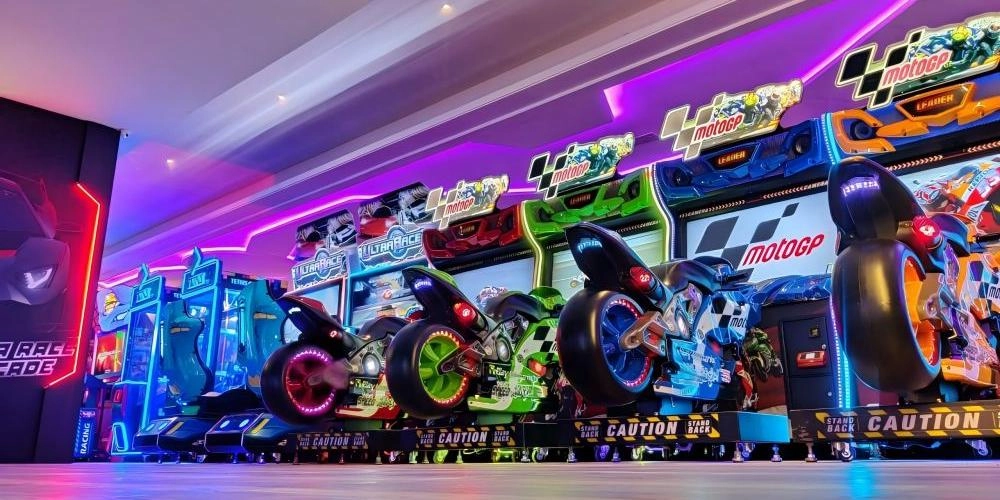


Speed Motorcycle
Can the music and lights be customized?
Yes, both features can be adjusted to fit venue requirements.
Happy Animo
Does it require heavy maintenance?
No, it’s low-maintenance with a strong build from trusted arcade game suppliers.
Super Snail
What ages is Super Snail suitable for?
It’s designed for children aged 3–12, with adjustable seating for comfort and safety.
Lucky Pong
Does the machine require much maintenance?
It’s built from high-quality materials and designed for minimal upkeep.
Parkour machine
Does the machine support ticket dispensing?
Yes, it’s a ticket redemption game. Players can earn tickets based on their in-game performance and distance covered.
Soul Warp
Is Soul warp suitable for all ages?
Yes, Soul warp is designed to be family-friendly and is suitable for players aged 5 and above.
You May Also Like

Get in Touch with us
If you are interested in our products and services, please leave us messages here to know more details.
We will reply as soon as possible.

 Scan QR Code
Youtube
Guangzhou DiniBao Animation Technology Co., Ltd
Guangzhou Dinibao Animation Technology Company Co., Ltd