








How to calculate ROI for an electronic basketball game for sale?
Buying an electronic basketball game for sale (arcade basketball machine for sale) can be profitable—but beginners often miss the fine-grain inputs that determine ROI. Below are six specific, pain-point questions frequently asked by operators and location buyers, with step-by-step answers, example calculations, and actionable checklists based on Dinibao sales experience and industry benchmarks.
1) What are realistic first-year net revenue and payback timelines for a dual-rack electronic basketball game in a high-traffic mall?
Why this matters: Many beginner buyers rely on optimistic “plays-per-day” guesses. You need line-item math to estimate first-year net revenue and payback timeline for a dual-rack, ticket redemption or cash prize config.
Typical input ranges (commercial dual-rack): retail purchase price $2,500–$5,000; price-per-play $0.50–$1.00; plays-per-day (high-traffic mall) 120–300 combined; electrical draw ~150–300W; uptime 12 hours/day; operator revenue share to mall 20%–40% (if revenue share model).
Example conservative projection (use this as template):
- Purchase price: $3,800 (new dual-rack, cashless-enabled)
- Price per play: $0.50
- Average plays/day: 150
- Gross revenue/day = 150 x $0.50 = $75
- Gross revenue/month (30 days) = $2,250; annual gross = $27,375
- Venue split (30%) = $8,212.50; operator gross after split = $19,162.50
- Operating costs (annual estimates): electricity $120; consumables & maintenance $600; cash handling or card fees $600; insurance & tax ~$400; collection/labor $1,200 → total ~$2,920
- Net first-year profit = $19,162.50 - $2,920 = $16,242.50
- Payback period = Purchase price / Net annual profit ≈ $3,800 / $16,242.50 ≈ 0.23 years (≈ 2.8 months)
Key caveat: This conservative example assumes strong placement and steady traffic. Lower footfall (e.g., 40–80 plays/day) stretches payback to 12+ months. Use the same template and plug in local plays-per-day to get realistic timelines.
2) How to calculate ROI for an electronic basketball game for sale? (step-by-step template you can reuse)
Why this matters: Operators need a reproducible ROI formula for decisions—new vs used, single vs dual rack, coin vs cashless.
Step-by-step ROI template:
- Estimate gross revenue per day = (plays/day) x (price per play).
- Annual gross revenue = gross per day x operating days per year (typically 330–365).
- Subtract venue revenue share (if any) to get operator gross revenue.
- Estimate annual operating costs = electricity + maintenance + cash/card fees + collection labor + insurance + software/license fees.
- Net annual profit = operator gross revenue - operating costs.
- ROI (%) = (Net annual profit / Purchase price) x 100.
- Payback period (years) = Purchase price / Net annual profit.
Worked example (single-player, used unit):
- Purchase price (used): $1,200
- Price per play: $0.50; plays/day: 60 → daily gross $30 → annual gross $10,950
- Venue split (20%) = $2,190 → operator gross = $8,760
- Operating costs = $400 electricity/maintenance + $360 card fees + $600 collection = $1,360
- Net annual profit = $8,760 - $1,360 = $7,400
- ROI = $7,400 / $1,200 = 6.17 → 617% annual ROI; payback ≈ 0.16 years (~2 months)
Important: ROI volatility comes mainly from plays/day and venue split. Create a sensitivity table (best / expected / worst) with plays/day at ±25–50% to see ROI range. For financial planning, use conservative occupancy (expected minus 20%).
3) What hidden operating costs reduce ROI (sensor failures, net replacement, ticket mech jams, software fees) and realistic annual estimates?
Why this matters: Hidden costs surprise new owners and degrade profitability if not budgeted.
Common hidden costs and typical annual budgets (industry ranges):
- Consumables (nets, balls, tickets): $100–$500/yr depending on redemption intensity.
- Sensors and electronics failures (optical sensors, PCB board repairs): $100–$800/yr. A single controller replacement or sensor assembly can be $80–$300 installed.
- Ticket mechanism jams & ticket dispenser replacement: $50–$400/yr.
- Cabinet wear & tear (laminate touch-up, decals): $50–$300/yr.
- Software/firmware updates, cashless platform subscription or transaction fees: $0–$600/yr. Cashless gateways charge transaction fees (2%–4% + $0.10 per transaction) which add up with high-card usage.
- Transport & collection (if you collect cash manually): $400–$1,200/yr depending on route density and labor.
- Downtime cost: factor 5–15% revenue loss margin if machine unavailable due to parts or servicing.
Recommendation: budget 5–15% of purchase price annually for maintenance and unexpected repairs, and maintain a spare-parts kit (sensors, connectors, ticket motor, 2–4 spare balls) costing $60–$200 to reduce downtime.
4) How to compare new vs used electronic basketball machines for ROI—what inspection checklist and depreciation rates should you use?
Why this matters: Used units can be great value, but hidden degradation (sensors, wiring harnesses, blower motors if present) shortens useful life and raises operating costs.
Inspection checklist before buying used (in-person or via detailed video):
- Electrical health: test all lights, sensors, scoreboard, ticket printer, and coin mech/card reader.
- Play mechanics: check rim alignment, net condition, ball return velocity, and any slippage in conveyor or return belts.
- Cabinet structural integrity: look for water damage, rust on internal metal frames, warped backboard or cracked fiberglass.
- PCB and firmware: ask for model/version and confirm availability of replacement boards and software updates.
- Replacement parts availability & lead times: verify that manufacturer or third-party parts exist for 3–5 years.
- Proof of uptime / usage history: ask seller for prior location details and average plays/day if possible.
Depreciation guidance for ROI: treat new commercial units with useful life 5–8 years (straight-line depreciation). For used units, shorten useful life proportional to age and condition—for a 3-year-old machine in fair condition, use 2–4 years remaining. Example economic depreciation annual adjustment: allocate 10–20% of purchase price per year for reinvestment if buying used.
5) Which payment and redemption systems (coin-op, card & ticket, cashless) maximize revenue and what are the fee structures affecting ROI?
Why this matters: Payment choice impacts throughput, conversion and fees—directly altering net revenue.
Payment modes and ROI impacts:
- Coin-operated: low platform fees but higher cash handling costs (collection labor, risk). Ideal in cash-heavy arcades. Coin mechs reduce payment friction for quick plays but limit price flexibility.
- Ticket redemption: increases perceived player value and dwell time; can raise average plays but increases consumable and maintenance costs for ticket motors. Redemption prize costs should be budgeted separately.
- Cashless (card readers, RFID, app-based wallets): typically increases plays-per-day by 10–40% due to convenience and ability to run promotions. Costs: hardware $100–$400 and transaction fees commonly 1.5%–4% + $0.05–$0.10 per transaction. Monthly platform fees $0–$30 may apply.
Example fee impact: If cashless increases plays/day from 100 to 130 at $0.50 per play, gross increases from $50 to $65/day. If transaction fees average 2.5% + $0.08 and average ticket is $2.00 (card use increases basket size), fee per play ≈ $0.02 + $0.08 = $0.10 netting $0.40 vs $0.50 for coin—still profitable due to higher plays and reduced collection labor. Run a breakeven test: additional plays x margin after fees must exceed extra hardware and subscription costs.
6) What location metrics and contract terms should I negotiate with venue owners to ensure projected ROI (footfall thresholds, revenue split, exclusivity, placement, contract length)?
Why this matters: Location agreement terms make or break ROI. A poor spot or onerous revenue share destroys returns even with solid gameplay numbers.
Location metrics to request and negotiate:
- Footfall reports: ask for hourly/daily pedestrian traffic counts and demographic data (family vs adult, peak hours). Most malls or arcades can provide monthly footfall or tenant reports.
- Placement specifics: request corner visibility, open sightlines, minimum 4–6 ft clearance front and side, proximity to restrooms, food courts or family attractions. Placement correlates strongly with plays/day—avoid back corridors or maintenance doors.
- Revenue share: typical ranges 15%–40%. For new machines or small operators, expect 25%–35%. Negotiate tiered splits (lower splits for first 3–6 months or a minimum guarantee).
- Minimum guarantees & exclusivity: request a minimum guaranteed net revenue for first 1–3 months or an exclusivity clause preventing competitor basketball arcades within a set radius (10–15 meters).
- Contract term and removal clause: prefer 12–36 month terms with 30-day removal/relocation clauses if revenue falls below agreed thresholds for consecutive months. Avoid long notice periods if machine underperforms.
- Utilities & power: confirm free access to power and nearest outlet; any landlord charges should be specified. Voltage drop or weak circuits can cause intermittent failure and lost revenue.
Negotiation tip: offer to share short demo period (2–4 weeks) where revenue split is more favorable to venue or with a minimum guarantee—this reduces perceived risk for landlords and can secure High Quality placement.
Conclusion — Advantages of Buying a Commercial Electronic Basketball Game
Commercial electronic basketball games for sale provide high dwell-time entertainment, relatively low energy consumption, and strong family appeal. When placed correctly and maintained proactively, they offer rapid payback, steady cash flow, and flexibility via coin or cashless monetization. New machines benefit from warranty and parts availability; used units offer lower upfront cost but require a stricter inspection and maintenance provision. Overall, the arcade basketball machine for sale is a durable asset for family entertainment centers, malls, and FECs when ROI inputs—plays/day, venue split, operating costs and payment systems—are modeled conservatively.
For a personalized ROI model, parts checklist or a quote on new and used commercial basketball arcade machines, contact us for a quote at www.dinibao.com or email game-machine@dinibao.com.
Recommended for you


Lucky Pong
Can I adjust the difficulty?
Yes, the game allows operators to modify timer length, scoring rules, and ticket payout.
Parkour machine
Is it suitable for kids?
Yes! It features simple joystick or button controls and colorful cartoon graphics, making it perfect for children and family entertainment centers.
Super Snail
Can I purchase this arcade machine in bulk?
Absolutely. As a leading arcade machine supplier, we offer wholesale pricing and global shipping.
Prize Machine
Can the machine be customized with our logo or colors?
Yes, we support OEM services for branding, colors, and prize customization.
Master Sniper
Is this game suitable for children?
Players under 16 must be supervised. It is not designed for small children due to gun weight and intensity.
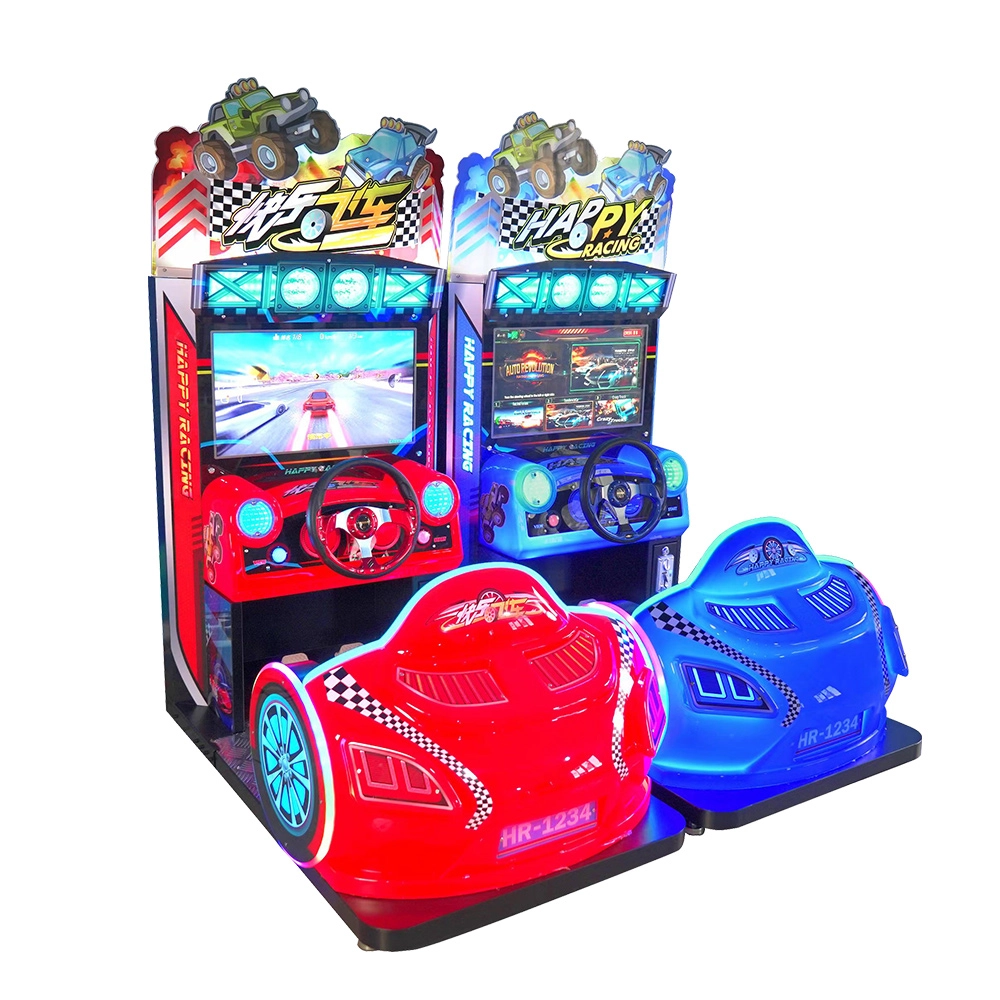
Happy Racing
Does Happy Racing require special installation or setup?
No, Happy Racing is easy to install and comes with clear instructions. If needed, our technical support team can assist with the setup.
You May Also Like
Get in Touch with us
If you are interested in our products and services, please leave us messages here to know more details.
We will reply as soon as possible.

 Scan QR Code
Youtube
Guangzhou DiniBao Animation Technology Co., Ltd
Guangzhou Dinibao Animation Technology Company Co., Ltd