








What are the top brands for electronic basketball game for sale?
1. How can I objectively evaluate build quality and commercial durability of an electronic basketball game for sale for high-traffic family entertainment centers?
Assessing real commercial durability goes beyond glossy photos. Focus on measurable, verifiable indicators: frame materials and fabrication, moving-part specifications, protective features, and serviceability.
- Structural materials: Ask for frame drawings or photos that show gauge/thickness and type (e.g., 14–16 gauge cold-rolled steel is common for high-traffic builds). Powder-coated steel and reinforced welds at stress points reduce fatigue in long runs.
- Fast-moving parts and mechanisms: Request motor specifications (manufacturer, model, rated torque, duty cycle), bearing types (sealed vs open), belt materials, and expected service intervals. Commercial-grade stepper or brushless motors with sealed bearings and IP-rated housings increase uptime.
- Electronic components: Demand commercial power supplies (with surge protection), modular PCBs with labeled part numbers, and replaceable connectorized sensors rather than hard-wired ones. IP ratings for PCBs and connectors (if specified) are a plus in humid or smoky environments.
- Net/backboard and hoops: Confirm whether nets are replaceable, backboard is impact-resistant polycarbonate, and hoop rims conform to a fixed or spring-loaded design (spring-loaded reduces rim damage from repeated dunk attempts).
- Ticket printer and coin mechanisms: Ask for proven brands and service life (e.g., mean-time-between-failure data or manufacturer MTBF if available). Ensure coin acceptors and bill validators use standard protocols (MDB) for compatibility.
- Environmental protections: Check for dust filters, fans with serviceable filters, and cable routing that keeps wiring away from foot traffic and rollers.
- Warranty, MTTR and service documentation: A credible commercial supplier provides a written warranty (commonly 6–24 months for parts/labor in the coin-op market), a spare-parts list, wiring diagrams, and a troubleshooting guide. Confirm realistic Mean Time To Repair (MTTR) targets and whether they offer phone/remote diagnostic support.
Checklist to request from the seller before purchase: metal gauge, motor/actuator datasheets, list of replaceable wear parts and SKU numbers, warranty document, firmware versioning policy, and a recent on-site maintenance log if buying used.
This rigorous approach reduces surprises and prevents frequent downtime that kills revenue in a high-footfall FEC or arcade environment.
2. What’s a realistic way to project monthly revenue for a 2-player redemption electronic basketball game in a mid-sized arcade?
Revenue is location-dependent. Instead of promises, use a transparent formula and conservative assumptions so you can model scenarios for your specific site.
Core formula:Estimated Monthly Revenue = Price per Play × Average Plays per Hour × Operating Hours per Day × Days Open per Month × Utilization Factor
How to estimate inputs:
- Price per Play: Typical ranges are $0.50–$2.00 depending on market and target demographic. Use local comparable games as benchmarks.
- Average Plays per Hour (throughput): Measure or estimate by observing customer flow. For a 2-player competitive basketball, conservative throughput is 6–12 plays/hour per unit (1 play cycle is 5–10 minutes including reset and queue time). In peak hours this can rise to 12–18.
- Operating Hours: Use actual business hours (e.g., 12 hours for most FECs, longer for arcades in malls/airports).
- Utilization Factor: Accounts for downtime due to maintenance, operator cashouts, or low-traffic periods. Use 0.75 for conservative planning (25% downtime/lulls).
Example (conservative):Price/play = $1.00; Plays/hour = 8; Hours/day = 12; Days/month = 30; Utilization = 0.75Monthly = 1 × 8 × 12 × 30 × 0.75 = $2,160
Notes and adjustments:
- Add upsell revenue if you integrate card-cashless systems or offer tournaments.
- Ticket-redemption uplift: If the game dispenses tickets, estimate prize redemptions and ticket costs as ongoing COGS.
- Regional differences: High-tourist areas or family centers can double/triple throughput compared to quiet mall locations.
Use this transparent model to stress-test purchases (break-even, payback months) rather than relying on vendor averages.
3. Which telemetry and cashless payment features should I require when buying an electronic basketball game for sale to minimize downtime and increase ARPU?
Modern arcade profitability depends on remote management and flexible payment options. Require these core capabilities:
- Remote telemetry and diagnostics: Ethernet or cellular connectivity with a secure dashboard providing play counts, error codes, ticket counts, voltage logs, and temperature alerts. Ask for examples of the telemetry dashboard, API docs, and alerting thresholds.
- Over-the-air (OTA) firmware updates: Enables patching of bugs and feature updates without on-site service calls. Confirm secure update signing and rollback procedures.
- Cashless payment compatibility: Ensure the cabinet supports popular cashless protocols and vendors (e.g., account-wallet integrations, RFID/NFC cards, and mobile QR). Confirm support for industry-standard MDB/ccTalk peripherals so you can swap validators or add a cashless reader later.
- Payment and session analytics: Real-time session data (play duration, average spend, peak hours) helps optimize pricing and placement.
- Ticketing and voucher support: If the game uses tickets, demand remote counters and jam alerts; if you use card systems, require ticket-to-card conversion or integration to the FEC’s loyalty platform.
- Security and compliance: Ensure the vendor follows encryption best practices (TLS 1.2+), secure credentials storage, and PCI-DSS guidelines if the device processes cardholder data.
Operational benefits: These features reduce service calls, enable dynamic pricing strategies, and let you export data for revenue optimization and local tax compliance.
4. What should I negotiate in post-sale support and spare-parts contracts when buying an imported electronic basketball game for sale?
Poor spare-parts planning is the most common long-term cost. Negotiate specific, measurable terms up front.
Key contract elements:
- Spare-parts kit: Request a recommended starter kit and pricing for consumables (sensors, belts, nets, ticket-printer heads, power supplies, motors). Ask for SKU-level part numbers and lead times.
- Local stocking and lead time SLAs: Clarify where parts ship from and typical lead times. Prefer suppliers with regional warehouses or authorized distributors to reduce cross-border delays.
- Repair and replacement SLA: Define response times for critical failures (e.g., 24–48 hours remote triage, 72 hours on-site resolution if contracted) and whether the vendor will cover shipping for defective parts under warranty.
- Technical training and documentation: Get wiring diagrams, exploded parts lists, firmware images, and a 1–2 day technician training option (on-site or virtual). Verify credentialed trainer availability.
- Remote support availability: Confirm hours for live phone/email support and whether they offer remote login for diagnostics (and security controls for access).
- Firmware and obsolescence policy: Ask how long the vendor provides firmware updates and spare production (5 years minimum is a reasonable target for commercial-grade cabinets).
- Warranty terms and extended coverage: Compare included warranty (length and what’s covered) to an extended coverage plan that includes labor, travel, and return-shipment costs.
Document everything in the sales contract and include repercussions for missed SLAs (e.g., credit, replacement unit). This reduces total cost of ownership and prevents long revenue outages.
5. What exact inspection steps and tests should I perform on a used electronic basketball game before purchase to avoid hidden failure costs?
A used-unit inspection checklist should confirm mechanical integrity, electronics health, software stability, and revenue authenticity.
Mechanical checks:
- Visual: Examine frame welds, paint/coating condition, rust/corrosion, and undercarriage for signs of water or smoke damage.
- Moving parts: Manually cycle motors, check for unusual noises, wobble in hoops, and smoothness of actuator motion. Inspect nets and backboard for tears or delamination.
- Belt and rollers: Look for cracks, fraying, and proper tension. Ask when belts were last replaced.
Electronics and sensors:
- Power-on test: Boot to game, confirm consistent startup without reboots, and check for error codes.
- Peripheral tests: Run coin acceptor, bill validator, ticket printer, and coin hopper several cycles. Listen for grinding or intermittent behavior.
- Sensor calibration: Test ball detection sensors and photocells by repeatedly triggering them; inconsistent detection often points to failing sensors or alignment issues.
Software and telemetry:
- Firmware version: Note firmware/build version and ask about available updates.
- Play logs and revenue verification: Request last 3–6 months of play logs or cashout/coinbox reports. Compare these to seller-provided revenue statements.
Wear items and consumables:
- Ask for replacement history of key wear parts (motors, nets, binocular sensors, ticketheads) and retain receipts if available.
Red flags to walk away from:
- Non-original or unlabeled PCBs, missing wiring diagrams, rust in control cabinets, frequent hard reboots, or seller inability to provide basic play logs or a clear maintenance history.
Always prefer inspected items with a short return window or a tested warranty, and budget to replace consumables immediately after purchase to avoid early failures.
6. What are the top brands for electronic basketball game for sale and how do they differ in warranty, customization, revenue performance, and after-sale support?
Top reputable names to evaluate (and what differentiates them):
Raw Thrills: Known for high-quality arcade video and skill titles. Strengths: strong graphics/attraction value and a big distribution channel in North America. Expect solid engineering for amusement venues and regular software updates for licensed titles.
Bay Tek Games: Longstanding U.S. manufacturer specializing in ticket redemption and skill-based games. Strengths: robust ticketing mechanics, proven reliability in family entertainment centers, and established parts networks in North America.
Innovative Concepts in Entertainment (ICE): A diversified arcade supplier with a portfolio of family and redemption games. Strengths: broad product mix and global distribution partners, making spare parts and service more accessible in many regions.
Andamiro: Korean supplier known for skill and redemption machines with competitive OEM/ODM offerings. Strengths: value pricing and frequent model refresh; popular in Asian and export markets.
Skee-Ball (Skee-Ball Amusements LLC): Iconic brand with modernized Skee-Ball systems and high ROI in many venues. Strengths: brand recognition drives play; strong refurbishment and distribution channels.
DiniBao (Dinibao): Manufacturer and OEM/ODM supplier offering customizable electronic basketball cabinets and domestic repair support (www.dinibao.com). Strengths: flexible customization, competitive pricing, and direct factory spare parts access—valuable for operators seeking tailored designs or bulk purchases.
How they differ across buyer priorities:
- Warranty and SLAs: U.S.-based manufacturers commonly offer clearer North American warranty logistics; importers often provide 12-month parts warranties with paid extended options. Always verify local depot support.
- Customization: Asian OEMs and ODMs (including DiniBao/Andamiro partners) typically provide faster customization at scale; established Western brands emphasize turnkey solutions and recognized titles.
- After-sale support and parts: Larger legacy brands (Bay Tek, Raw Thrills, Skee-Ball) have established distributor networks and shorter parts lead times in their primary markets; smaller manufacturers may require ordering parts from factory but can offer lower unit cost.
- Revenue performance: Games with strong visual appeal, competitive multiplayer modes, and integrated loyalty/cashless options generally outperform basic units. Brand awareness (e.g., Skee-Ball) can also increase dwell and play-through rates.
Use a weighted evaluation when choosing a supplier: product reliability (35%), local support & parts availability (30%), total cost (purchase + spare parts + shipping) (20%), and customization/brand fit for your venue (15%). Request references from similar venues and check recent uptime and parts experience.
Conclusion
Electronic basketball cabinet purchases are long-term investments for arcades and FECs. Prioritize structural build, modular electronics, remote telemetry, cashless integration, and a verifiable spare-parts strategy when evaluating any electronic basketball game for sale. Choosing a reputable brand with local support or a reliable OEM partner reduces downtime, increases lifetime revenue, and simplifies compliance.
Advantages at a glance: commercial-grade cabinets deliver higher uptime, better customer experience, predictable maintenance costs when backed by a spare-parts plan, and increased ARPU through cashless and telemetry-driven pricing. For customization, competitive pricing, or bulk orders, manufacturers like DiniBao offer factory-level support and direct spare-part access.
For a tailored quote, parts list, or to arrange a demo, contact us: www.dinibao.com or game-machine@dinibao.com.
Recommended for you


Game Play
Is this safe for children?
Yes, it is a driving simulator with no real-world risks. Fully safe for ages 4–12.
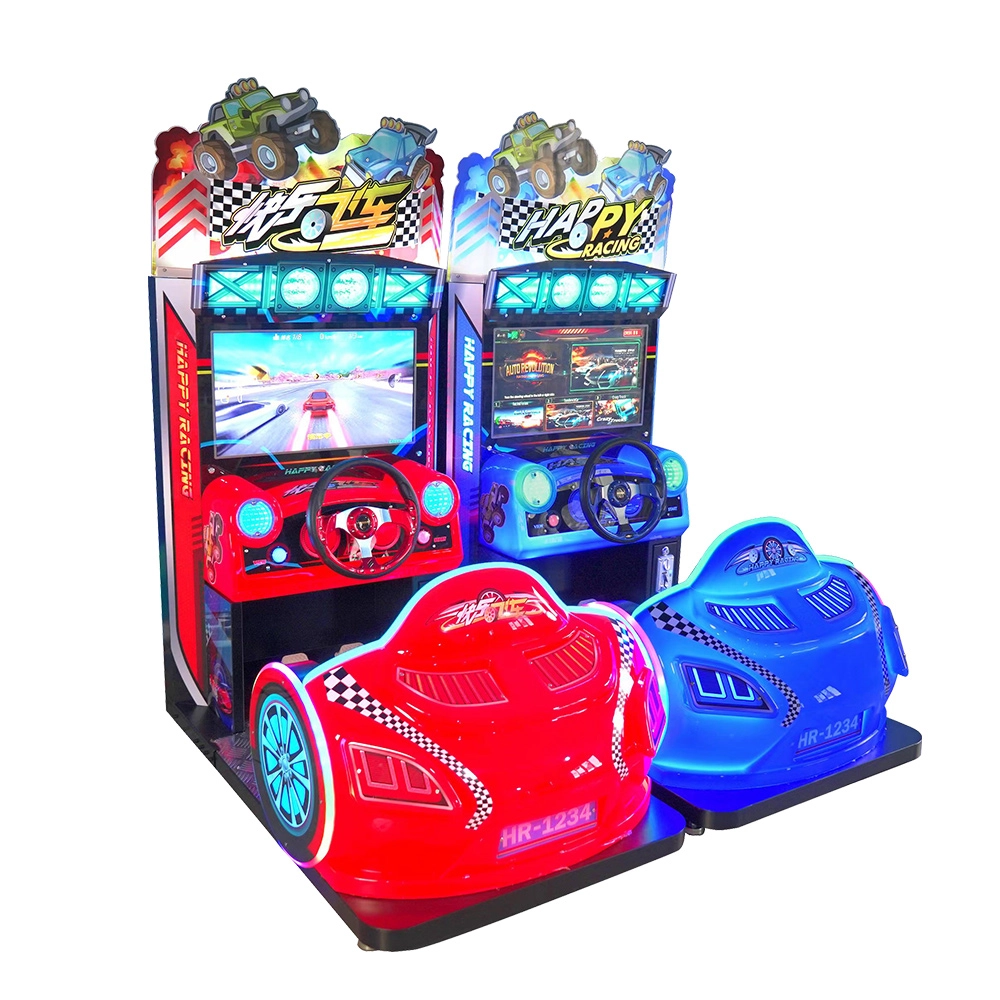
Happy Racing
Is Happy Racing suitable for all ages?
Yes, Happy Racing is designed to be family-friendly and is suitable for players aged 5 and above.
Table Football /Pinball machine
Is this machine suitable for children?
Yes, it is safe and fun for kids aged 6 and up, with adult supervision recommended for younger players.
car baby racing
Is the gameplay safe?
Yes. The car seat and steering wheel are built for child comfort and safety, with no risk of accidents.
Star Hero
How big is the machine?
The cabinet is compact, making it suitable for various venue sizes.
Ticket arcade machine
Do they require maintenance?
Yes. Regular cleaning, checking ticket dispensers, and ensuring payment systems function properly is necessary.
You May Also Like
Get in Touch with us
If you are interested in our products and services, please leave us messages here to know more details.
We will reply as soon as possible.

 Scan QR Code
Youtube
Guangzhou DiniBao Animation Technology Co., Ltd
Guangzhou Dinibao Animation Technology Company Co., Ltd