








How to Maximize ROI with a Fighting Arcade Machine in Arcades?
As an operator or buyer evaluating a fighting arcade machine for your arcade, bar, or family entertainment center, you need actionable steps you can apply immediately. Below are six specific, pain-point questions beginners and small operators frequently ask — each answered with measurable tactics, formulas, and vendor/operational considerations you can use when purchasing, deploying, and operating a fighting arcade machine.
1. How many daily plays and what price point do I need to break even on a fighting arcade machine in a mid-traffic mall location?
Why this matters: Operators need a simple, repeatable break-even model rather than vague averages. Use this step-by-step formula to calculate your break-even and test scenarios.
Step 1 — Gather your inputs:
- Purchase cost (C): purchase price or depreciated lease-in cost of the fighting arcade machine including delivery and installation.
- Monthly fixed operating costs (F): electricity, internet (if networked), flooring/space cost allocation, insurance, and amortized license/subscription fees.
- Variable cost per play (V): coin/credit collection fees (if using cashless providers), token processing, and proportionate parts wear & maintenance averaged per play.
- Price per play (P): set price for a single round or match (commonly 50c–$2 in many markets).
- Average daily plays (D): measured or estimated plays per day.
Step 2 — Monthly revenue and net income:
Monthly Revenue = P * D * 30
Monthly Variable Cost = V * D * 30
Monthly Net Income = (P * D * 30) - (V * D * 30) - F
Step 3 — Payback period (months) = C / Monthly Net Income (use positive net income only).
Example calculation (hypothetical, change inputs to your site): C = $5,000; P = $1.00; V = $0.05; D = 40; F = $150/month.
Monthly Revenue = 1.00 * 40 * 30 = $1,200
Monthly Variable Cost = 0.05 * 40 * 30 = $60
Monthly Net Income = 1,200 - 60 - 150 = $990
Payback = 5,000 / 990 ≈ 5.1 months
Actionable tips to increase D or P (and reduce payback): optimize cabinet placement to high-visibility zones, enable cashless payment for micro-transactions, host weekly tournaments, use high-quality controls (better controls increase session length and replay), and reduce F by negotiating lower space allocation or using energy-efficient monitors.
2. How can I legally source authentic fighting game software and PCBs for an arcade cabinet without risking IP infringement?
Why this matters: Many beginners resort to unlicensed ROMs and face legal, reputational, and uptime risks. The correct approach protects your business and supports longevity.
Legal sourcing routes:
- Buy new or refurbished licensed arcade cabinets directly from manufacturers or authorized distributors. This ensures licensed software, warranty, and parts support.
- Purchase licensed commercial PCBs or vendor-authorized multi-game JAMMA boards. Suppliers list licensing status; request proof of license if unclear.
- Use official digital platforms and paid commercial conversions (eg. developers' commercial arcade releases or authorized digital-to-arcade builds) that provide licensed builds for arcade hardware.
- Avoid ROM dumps, freeware conversions, and unlicensed digital images—they expose you to takedown notices and legal liability. If considering a conversion kit, ensure it includes a vendor license transferable for commercial use.
Checklist for purchase:
- Obtain written confirmation of software licensing and transferability for commercial operation.
- Ask about firmware and patch support—licensed vendors provide updates and bug fixes.
- Ensure the vendor provides source-of-parts and a supply chain for replacement PCBs, power supplies, monitors, and control panels.
3. Which cabinet customizations (controls, monitor type, audio) yield the largest measurable revenue uplift for a fighting arcade machine?
Why this matters: Small, targeted upgrades can increase repeat rate and play duration. The wrong upgrades waste capital.
High-impact customizations:
- Controls: Install tournament-grade joysticks and buttons (Sanwa/Seimitsu-style) with reinforced microswitches. Better feel increases session length and player satisfaction, especially for competitive players.
- Button layout: Provide full 6–8 button layouts and a clear start/select arrangement; an ergonomic layout decreases disputes and speeds up matches.
- Monitor: Use a low-latency LCD with appropriate scan conversion or a professional arcade monitor for authentic feel. CRTs are nostalgic but harder to maintain; modern LCDs with low input lag retain player experience and uptime.
- Audio/Headphones: Strong front-facing speakers and optional headphone jacks for local tournaments. Clear, loud audio attracts passersby and draws social crowds.
- Cashless systems and player cards: Enable stored-value cards or QR payments to increase spend per visit and reduce coin handling costs.
Quantifying ROI for upgrades: measure baseline plays per day and session length before upgrade, implement upgrade, and track delta in plays and revenue for 30–90 days. If upgrade cost / incremental monthly net revenue < desired payback months (commonly 3–12 months), upgrade is justified.
4. How should I structure fighting-game tournaments and promotions to boost weekday revenue without cannibalizing casual pay-per-play sessions?
Why this matters: Poorly designed events can cannibalize daily income or drive away casual customers. You need sustainable, repeatable formats that increase overall net revenue.
Best practices:
- Time slots: Hold tournaments during historically low-traffic windows (weekday evenings or mid-afternoons) to lift baseline traffic without taking away prime weekend casual plays.
- Entry structure: Use small buy-ins or ticketed brackets with tiers (free prelims, paid finals). Offer limited seats to avoid displacing casual players.
- Revenue mix: Combine buy-ins with sponsor-provided prizes, merch, or in-store credit so prize payouts don’t fully erode machine revenue.
- Promotion: Use local social channels, in-venue signage, and community groups to build a repeat player base. Link tournaments to loyalty or stored-value cards to track incremental spend.
- Measurement: Track incremental revenue by comparing gross takings for tournament day vs. typical day and subtract fixed tournament costs (prizes, staff hours) to compute net uplift.
Operational safeguards to avoid cannibalization:
- Limit tournament freeplay time; keep machines on normal pay-per-play outside tournament windows.
- Use one cabinet for tournaments if you have multiple machines; if only one exists, schedule short tournaments and promote on off-peak days.
- Consider temporary price modifiers (discounted prelim rounds) that incentivize casual players to spectate and spend on food or other games while watching.
5. What predictive maintenance schedule and spare parts inventory will minimize downtime for a busy fighting arcade machine?
Why this matters: Downtime is lost revenue. Beginners understock common wear parts and lack a maintenance cadence tied to actual play counts.
Common failure points:
- Joysticks and microswitches
- Button assemblies and contact pads
- Power supplies and capacitors
- Monitor backlights or LCD panels
- Coin door and hopper (if used)
Predictive schedule and inventory guidelines:
- Install a play counter or telemetry (many modern cabinets support networked reporting). Use play counts to forecast wear rates.
- Weekly: clean control surfaces, tighten fasteners, inspect coin door and input points.
- Monthly: test microswitch response, verify monitor calibration, check audio levels, and run a full system diagnostic.
- Quarterly or per-100k plays: replace joystick microswitches and high-wear buttons proactively based on telemetry.
- Spare parts stock: keep 2–3 spare joysticks, 20–30 microswitches, sets of button assemblies, and a spare PSU or monitor module depending on cabinet age and uptime requirements. For high-traffic sites, maintain a full control-panel spare for swapouts to minimize downtime.
Use vendor service contracts where available; contracted technicians often reduce mean time to repair (MTTR) and can provide parts forecasting based on manufacturer failure curves.
6. How do I choose between upright, sit-down/cocktail, and linked head-to-head fighting cabinets for different venues (bar, mall, family entertainment center)?
Why this matters: Cabinet type affects footprint, per-play pricing tolerance, accessibility for tournaments, and target demographics.
Venue-specific recommendations:
- Bars and pubs: Upright or sit-down two-player face-to-face cabs with stools often perform best. They require small footprints, encourage social gambling-style dives (quick rounds), and benefit from beverage cross-sales. Consider louder audio and cashless payment to increase spend.
- Malls and arcades (mid-traffic): Upright linked pairs or dual-cabinet setups are ideal to encourage head-to-head play and spectator crowds. Offer tournament nights and loyalty cards to build repeat foot traffic.
- Family entertainment centers (FEC): Consider multi-game cabinets with a fighting-game mode or sit-down cockpit that is comfortable for longer sessions. FECs often monetize through bundle packages and wristbands; integrate the fighting game into package pricing while also retaining pay-per-play for walk-ins.
Footprint and pricing considerations:
- Upright cabinets: typically lower cost and flexible placement; good for high-rotation pay-per-play.
- Sit-down/cockpit: higher comfort, higher perceived value, supports higher price per play or longer sessions (good for bars and FECs).
- Linked head-to-head: best for competitive scenes and tournaments; increases dwell time and spectator engagement.
Decision matrix approach: score your venue on foot traffic, target demographic (competitive vs. casual), average dwell time, and available footprint. Weight each factor and choose the cabinet type with the highest weighted score to maximize revenue per square meter.
Concluding summary — advantages of owning a fighting arcade machine
Fighting arcade machines deliver repeated, high-engagement plays and can become community hubs that drive foot traffic, ancillary sales, and loyalty. Proper legal sourcing, targeted cabinet customizations (controls, monitor, cashless systems), predictive maintenance, and well-structured tournaments substantially reduce payback time and increase lifetime value. With the right placement, pricing strategy, and event programming, a fighting arcade machine becomes both a revenue engine and a marketing tool that promotes repeat visits and higher per-visit spend.
For a tailored ROI projection, parts list, or to request a quote, contact us at www.dinibao.com or email game-machine@dinibao.com.
Recommended for you
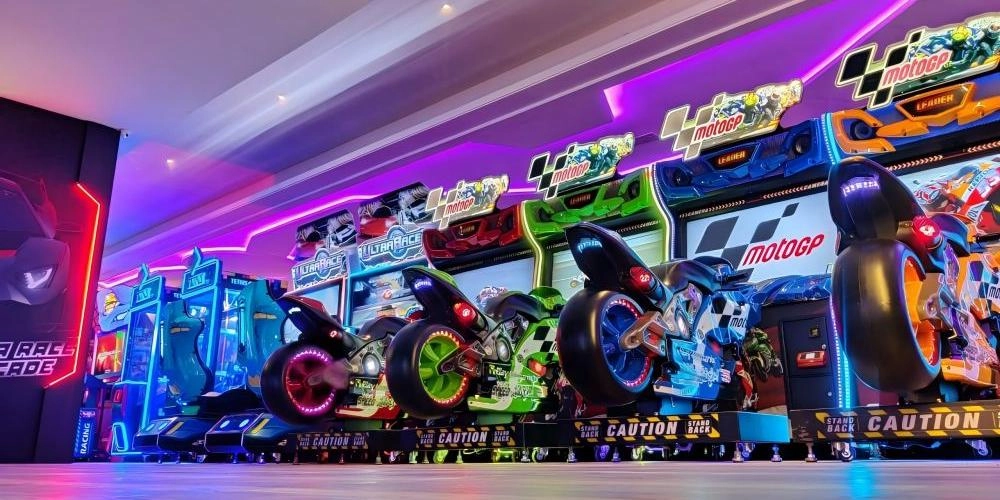


Speed Motorcycle
Is Speed Motorcycle easy to maintain?
Yes, it is built with durable materials and supported by our after-sales service.
Hitting mouse machine
How is the score calculated?
Players earn points by accurately hitting the targets as they light up. The faster and more accurate the hits, the higher the final score and ticket output.
Sports star
How is durability ensured?
It’s manufactured by leading amusement games manufacturers using high-quality components for long-term performance.
Master Sniper
Does the machine support card payment or coin only?
Default is coin-operated, but card systems (WeChat, NFC, QR code) can be integrated on request
Cyberpunx
What age group is Cyberpunx suitable for?
Cyberpunx is designed for children aged 5–12 years old.
children's category
Are the machines easy to maintain?
Yes. All machines are designed for low maintenance, with simple internal structures and easily replaceable parts. User manuals and support videos are provided.
You May Also Like

Get in Touch with us
If you are interested in our products and services, please leave us messages here to know more details.
We will reply as soon as possible.

 Scan QR Code
Youtube
Guangzhou DiniBao Animation Technology Co., Ltd
Guangzhou Dinibao Animation Technology Company Co., Ltd