


Arcade Games Machine Market: Size, Trends & Growth Outlook
The arcade games machine market is evolving with the growth of family entertainment centers, location-based entertainment, competitive social gaming, and more immersive out-of-home experiences. While market-size estimates depend on research methodology, recent industry data consistently points toward continued investment in redemption games, simulation equipment, interactive technology, and modern arcade venues.
Arcade Games Machine Market Size
Grand View Research provides one of the most recent public estimates for the global arcade games machine market.
The research estimates that global revenue will increase from USD 11.8 billion in 2026 to USD 31.0 billion in 2033. Research and Markets distributes the same Grand View Research dataset and reports a 2025 value of USD 10.99 billion and the same 14.8% forecast CAGR.
What Is Driving Market Growth?
The strongest driver is the expansion of location-based entertainment (LBE). Consumers already have access to sophisticated games at home, which means commercial venues increasingly need to provide experiences that are difficult to reproduce on a console, PC, or smartphone.
Large cabinets, physical movement, multiplayer competition, motion systems, redemption rewards, and social interaction all give arcade venues a different value proposition.
Grand View Research identifies increased demand for out-of-home and location-based entertainment as a major driver of the arcade games machine market. It also points to AR, VR, motion simulation, haptic feedback, large-format displays, IoT diagnostics, cloud monitoring, and cashless payment technology as important product developments.
Fortune Business Insights similarly identifies the growth of commercial gaming facilities and technological improvement as market drivers, while noting that higher maintenance costs can restrict adoption.
For operators, this means a new machine should not be judged only by how impressive it looks. Revenue potential also depends on how easily guests understand the game, how many players it can serve, how well it fits the venue, and how reliably it can be operated and maintained.
FECs and LBE Venues Are Reshaping Demand
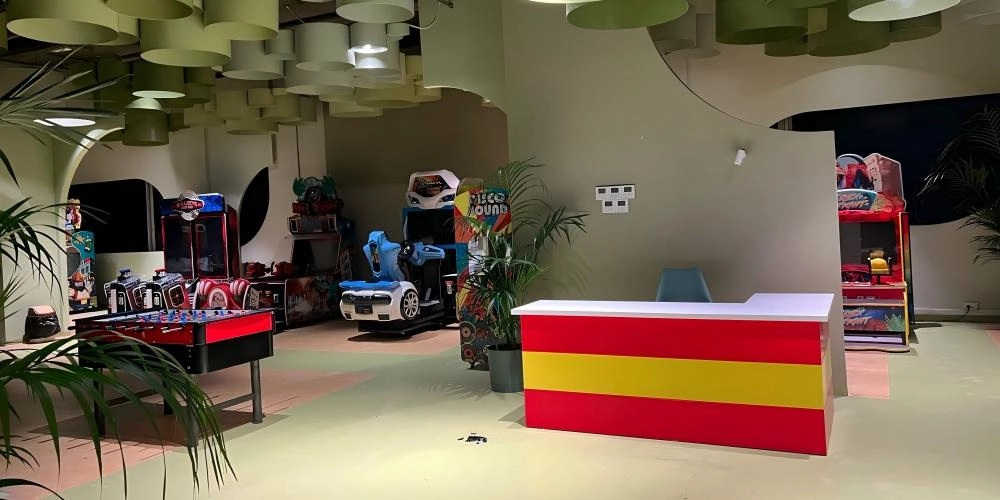
The growth of family entertainment centers is changing what an arcade floor looks like. Modern FECs frequently combine arcades with bowling, laser tag, children's attractions, food and beverage, immersive games, social competition, and event spaces.
IAAPA describes FECs and LBE venues as increasingly diverse entertainment environments that include immersive arcades, interactive attractions, and other complementary experiences.
A 2025 IAAPA feature on Game On Social Hub, for example, describes a 34,000-square-foot FEC combining more than 70 arcade games with augmented reality, laser tag, bowling, axe throwing, dining, and event space.
Grand View Research also reports that indoor specialty centers were the leading application segment in 2025, supporting the connection between FEC development and machine demand.
For manufacturers and buyers, this changes product planning. The relevant question becomes not only “Which machine is popular?” but also “What role will this machine play in the total venue?”
Redemption Games Remain Commercially Important
Redemption games accounted for 29.2% of global arcade game machine revenue in 2025, making them the largest product segment in the Grand View Research dataset.
Their commercial strength comes from the fact that gameplay does not necessarily end when the round finishes. Tickets or digital credits connect individual games to a larger prize system, encouraging guests to continue playing across multiple machines.
This gives redemption games a different role from a standalone video game. They support a broader venue economy involving game cards, ticket balances, prize counters, repeat play, and reward progression.
Buyers evaluating this part of the market can review DINIBAO's arcade ticket machine range for examples of equipment intended for redemption-oriented venues.
Simulation and Immersive Games Are Expanding
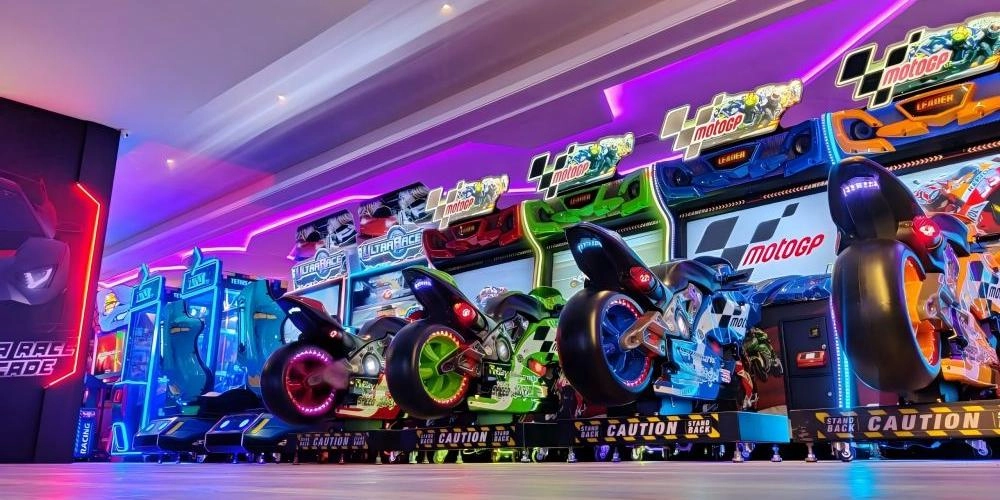
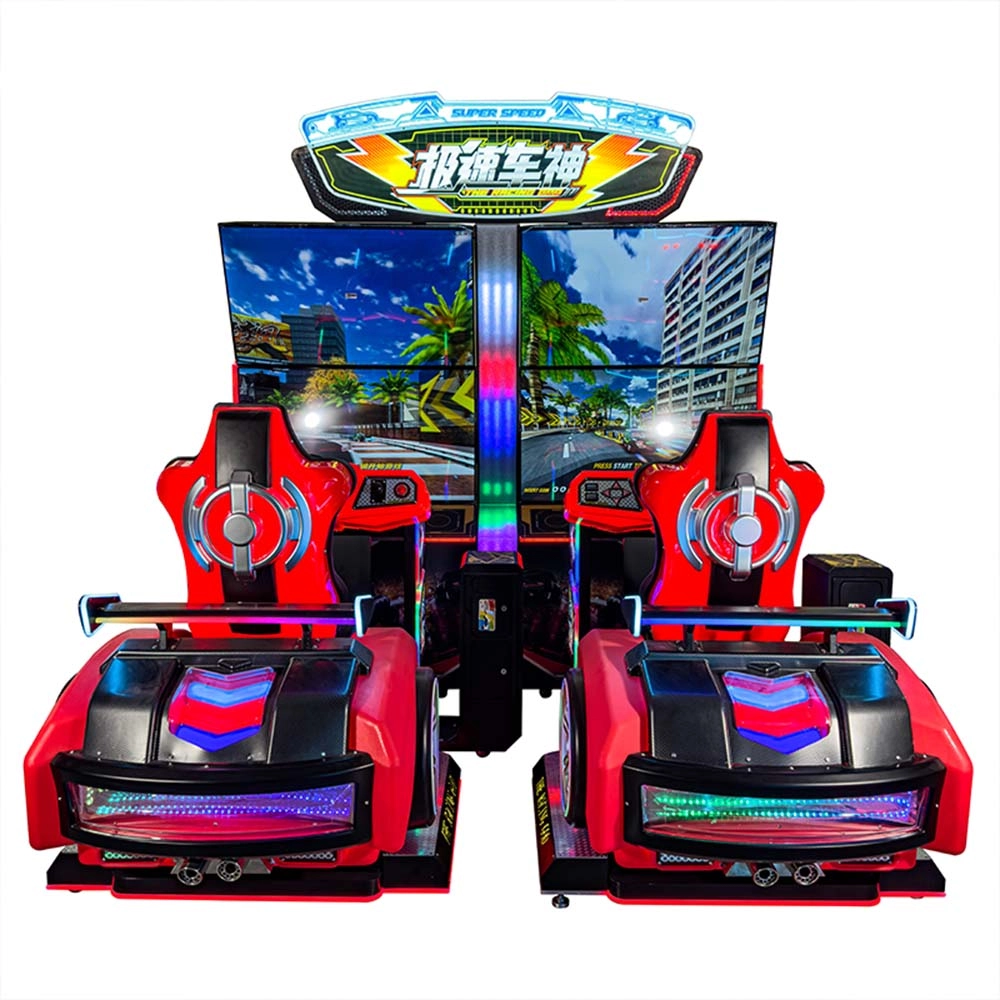
Another important direction in the arcade games machine market is the move toward experiences that cannot easily be recreated at home. Racing simulators, motion systems, interactive shooting games, VR attractions, haptic seats, and large-format displays create physical and social experiences that are different from conventional home gaming.
Grand View Research specifically identifies simulation and AR/VR technology as an important growth area, while IAAPA Expo 2025 highlighted new attraction technology involving VR, motion seating, haptics, large LED displays, and other immersive systems.
This does not mean traditional games are disappearing. A balanced commercial floor can use high-impact simulators to attract attention while relying on basketball, redemption, air hockey, skill games, and other accessible attractions to serve a wider age range and maintain player throughput.
Buyers researching physical sports games can also read DINIBAO's basketball arcade machines guide, which compares commercial basketball formats, venue fit, payment options, and redemption requirements.
Cashless Systems Are Changing Arcade Operations
Modern arcade venues increasingly use RFID cards, digital credits, integrated point-of-sale systems, and cloud-connected management tools instead of relying entirely on coins or tokens.
Grand View Research identifies cashless payment systems and connected machine monitoring among the technologies changing arcade operation. The operational value goes beyond convenience: a connected system can make it easier to manage game pricing, player credits, redemption balances, machine performance, and promotional activity across a venue.
Grand View Research's separate arcade games center research also reports that card and digital payment systems were the leading revenue-model segment in 2025.
For equipment buyers, payment compatibility therefore deserves consideration before purchase rather than after machines arrive on site.
Regional Outlook
North America remained the largest regional market in 2025, accounting for 39.3% of global arcade machine revenue in Grand View Research's analysis.
Its North American dataset estimates revenue of approximately USD 4.32 billion in 2025, rising to around USD 11.67 billion by 2033, with a projected CAGR of 14.2%.
Asia Pacific is identified by the same research as the fastest-growing regional market, while Fortune Business Insights also expects strong Asia-Pacific growth and points to the region's gaming culture, competitive gaming activity, and technology adoption as supporting factors.
These regional differences matter because the right arcade product mix is unlikely to be identical across markets. Venue size, customer age, payment habits, prize culture, local regulations, labor costs, and entertainment preferences can all affect equipment selection.
Which Arcade Machine Categories Benefit From These Trends?
A family-oriented FEC may need a combination of children's equipment, sports games, redemption, prize machines, and a few high-impact simulators. A competitive social venue may put more emphasis on multiplayer sports, racing, and skill-based attractions.
This is why the headline growth of the arcade games machine market matters less to an operator than selecting the right mix for a specific audience.
What the Growth Outlook Means for Buyers
A larger market does not guarantee that every machine will perform well.
IAAPA's arcade operations guidance emphasizes that operators need to think about both game mix and layout. Its 2025 arcade-operation education session noted that guest movement through a game room should be considered deliberately, with new engagement opportunities appearing as players move through the venue.
For commercial buyers, that translates into practical questions: Does the machine serve the intended audience? Does it add something different from nearby attractions? Can the venue support its footprint, electrical needs, payment system, maintenance, and spare parts? Does it support the venue's revenue model?
The better approach is to build a portfolio in which different machines serve different roles—traffic attraction, competitive play, redemption, children's entertainment, premium simulation, and direct-prize engagement.
A Note on Market Forecasts
Market forecasts should be used carefully. The arcade games machine market is not measured by one global reporting authority, and research companies may use different definitions and models.
Even reports with similar titles may include different combinations of video games, redemption equipment, electro-mechanical machines, simulation systems, claw machines, and commercial venues.
The more reliable conclusion is directional: multiple industry sources point toward continued investment in location-based entertainment, technology-enabled attractions, modern FECs, and more diversified commercial entertainment concepts.
DINIBAO and Commercial Arcade Projects
DINIBAO supplies multiple categories of commercial amusement equipment for arcade and FEC projects. Buyers planning a mixed game floor can explore its arcade machine product range rather than evaluating every category in isolation.
This type of multi-category sourcing is most relevant when a project requires a combination of sports games, racing, shooting, redemption, children's machines, prize equipment, and other attractions.
For specific machine selection, project buyers should still compare product specifications, venue fit, payment requirements, maintenance needs, logistics, and after-sales support before making a purchasing decision.
Conclusion
The arcade games machine market is being shaped by several connected trends: the expansion of location-based entertainment, continued strength in redemption games, growth in simulation and immersive technology, wider adoption of cashless systems, and the development of more diversified FECs.
Grand View Research estimates the market at approximately USD 11.0 billion in 2025, growing to about USD 31.0 billion by 2033, while industry material from IAAPA supports the broader shift toward technology-enabled, mixed-attraction, and experience-focused entertainment venues.
For operators, distributors, and project developers, the most useful takeaway is not the headline market size. It is that future arcade investment is increasingly about building the right combination of machines, technology, venue layout, and player experiences for a specific business model.
Frequently Asked Questions
How large is the arcade games machine market?
Grand View Research estimates the global arcade game machines market at about USD 11.0 billion in 2025 and forecasts it to reach approximately USD 31.0 billion by 2033. These are market-research estimates, not audited industry totals, and figures can vary by methodology and market definition.
What is driving growth in the arcade games machine market?
Key drivers include the expansion of family entertainment centers and location-based entertainment, demand for social and immersive experiences, continued strength in redemption games, and wider adoption of cashless payment, simulation, AR/VR, and connected machine technology.
Which arcade machine segment has the largest market share?
In Grand View Research's 2025 dataset, redemption games represented the largest product segment, accounting for 29.2% of global arcade game machine revenue.
What should commercial buyers consider when selecting arcade machines?
Buyers should compare target audience, machine footprint, player throughput, payment and redemption compatibility, maintenance requirements, spare-parts support, electrical needs, and the role each machine will play in the overall venue mix.
Data referenced in this article comes from published material by Grand View Research, IAAPA, Fortune Business Insights, and related industry sources.
Recommended for you


You May Also Like

Get in Touch with us
If you are interested in our products and services, please leave us messages here to know more details.
We will reply as soon as possible.

 Scan QR Code
Youtube
Guangzhou DiniBao Animation Technology Co., Ltd
Guangzhou Dinibao Animation Technology Company Co., Ltd