







Wholesale Fishing Pond Machines: Where to Buy
- Understanding fishing pond equipment needs
- Key machine categories and their functions
- Matching equipment to pond scale and species
- Operational cost drivers to consider
- Where to source wholesale fishing pond machines
- Manufacturer direct (OEM) — pros and cons
- Authorized distributors and regional dealers
- Online marketplaces and trading platforms
- Evaluating suppliers and quality assurance
- Factory audit checklist
- Certifications, standards and test data
- Requesting technical datasheets and sample tests
- Pricing, logistics and buying strategies
- Understanding pricing components
- Shipping, customs and warranties
- Practical buyer’s comparison table
- Inspection, installation and operation — real-world tips
- Pre-shipment inspection and factory testing
- Installation, commissioning and operator training
- Maintenance plan and spare parts stocking
- Buying checklist and quick decision guide
- Immediate checklist before placing a wholesale order
- When to choose local distributor over OEM
- Reference resources and trade events
- About suppliers in entertainment and combined-use sites
- Integrating fishing ponds into leisure centers
- Why working with experienced venue OEMs helps
- DINIBAO — a partner for entertainment venues and arcade integration
- FAQ — Frequently Asked Questions
- 1. What types of aerators are best for a commercial fishing pond?
- 2. How do I size a pump for my pond?
- 3. Where can I find reliable wholesale suppliers?
- 4. How important are certifications?
- 5. What ongoing costs should I expect after purchase?
- 6. Can recreational fishing ponds be automated?
- Final recommendations and contact
I write from years of on-the-ground experience advising aquaculture operations and family entertainment centers on equipment procurement and site build-outs. For operators building or scaling a fishing pond—whether for commercial aquaculture, catch-and-release leisure fishing, or integrated entertainment zones—the right wholesale fishing pond machines (pumps, aerators, automatic feeders, harvesters, and water treatment systems) determine productivity, fish welfare, and long-term operating cost. In this article I walk through the equipment categories you need, how to evaluate manufacturers and distributors, where to buy in bulk, what certifications and tests matter, and a practical buying checklist you can use immediately.
Understanding fishing pond equipment needs
Key machine categories and their functions
Before shopping, it’s vital to map equipment to the biological and operational needs of your pond. Typical categories:
- Pond aerators (paddlewheel, diffused aeration, fountain aerators) — maintain dissolved oxygen and circulation.
- Pumps and water circulation systems — move water for filtration, exchange, and circulation.
- Automatic feeders and feed distribution systems — ensure uniform feeding, reduce waste and labor.
- Harvesting and grading machines — mechanized seines, fish pumps, and conveyors for efficient harvests.
- Pond cleaning and aquatic weed harvesters — maintain water surface and bank cleanliness.
- Water treatment systems and sensors — DO meters, pH sensors, ammonia monitors, and UV/ozonation units.
Each of these contributes to fish health, survival rate, and growth performance. The FAO’s aquaculture resources provide baseline guidance on stocking densities and environmental management that should inform equipment sizing.
Matching equipment to pond scale and species
Equipment needs vary by pond size and species. For tilapia or carp ponds, oxygen demand and feed conversion factors differ from trout or catfish systems. For recreational catch-and-release ponds in parks or arcades, you may prioritize aesthetics (quiet fountain aerators) and safety (covered electrical systems) over high-capacity industrial aeration. I always start procurement with a simple capacity-sizing exercise: pond volume (m3) × target stocking density × species oxygen demand = required aeration and circulation capacity. For practical design reference, see general aquaculture guidance such as Wikipedia’s aquaculture overview and FAO literature.
Operational cost drivers to consider
Buying wholesale is not just unit price — consider energy use (kWh), maintenance intervals, spare-part availability, and downtime risk. Aerators and pumps are often the largest ongoing energy expense. When evaluating machines, request power consumption curves and service interval data. A lower up-front price but 30% higher energy consumption can exceed savings within 2–3 years.
Where to source wholesale fishing pond machines
Manufacturer direct (OEM) — pros and cons
Buying directly from manufacturers typically delivers the best unit price and customization. OEMs can adapt materials, corrosion protections, and control systems to local water chemistry and climate. Pros: lower unit cost, customization, direct after-sales communication. Cons: longer lead times, MOQ (minimum order quantity), and the need to verify factory capabilities and quality systems (e.g., ISO 9001).
When evaluating direct manufacturers, ask for factory audit reports and certifications. ISO’s description of quality management standards is a useful benchmark: ISO 9001 information.
Authorized distributors and regional dealers
Distributors add value through local inventory, fast replacement parts, and on-site service. They are valuable for operators who prioritize uptime and need rapid technical support. Distributors may also bundle spare parts and service contracts. Compare distributor service networks and check references from local customers.
Online marketplaces and trading platforms
Marketplaces like Alibaba, Global Sources, and trade directories list many suppliers and allow you to compare prices. They are useful for initial market scans, but I recommend verifying the supplier offline (factory visit, quality audits) before placing large orders.
Evaluating suppliers and quality assurance
Factory audit checklist
When possible, I perform or commission a factory audit to confirm production capacity and quality controls. Key checks:
- Production line layout and capacity vs your order volume.
- Quality control stations and testing equipment (e.g., motor testing benches, IP sealing tests).
- Material traceability (steel grades, coatings) and weld quality.
- Availability of spare parts and lead times.
- Documentation: BOMs, test reports, and compliance certificates.
Certifications, standards and test data
Ask for CE/UL or other electrical safety marks where applicable, and material/corrosion protection data for components exposed to water. For general process control, ISO 9001 certification shows that a supplier follows standardized quality processes. For environmental and occupational safety, look for local compliance and safety records.
Requesting technical datasheets and sample tests
Require datasheets that include power consumption, flow rates, oxygen transfer efficiency (for aerators), and noise levels. If possible, request a small pilot shipment or samples for on-site testing. Validate specifications against independent measurements: e.g., measure dissolved oxygen change rate when running aerators in a controlled tank.
Pricing, logistics and buying strategies
Understanding pricing components
Wholesale price is influenced by volume discounts, material costs (stainless steel vs coated carbon steel), motor quality, and built-in controls. Also account for freight, import duties, and inland transport to your site. For large orders, negotiate included spare-part kits, warranty terms, and performance guarantees.
Shipping, customs and warranties
Decide between FOB (factory), CIF (to port), or DDP (delivered duty paid) terms. DDP shifts the import and customs burden to the supplier, which is useful if you lack import expertise. Make sure warranty and after-sales service terms are contractual. For electrical machines, ensure compatibility with local voltage and plug types.
Practical buyer’s comparison table
| Supplier type | Typical MOQ | Lead time | Best when... |
|---|---|---|---|
| Direct manufacturer (OEM) | Medium–High | 4–12 weeks | You need customization and lowest unit cost |
| Regional distributor | Low–Medium | 1–4 weeks | You need fast local support and parts |
| Online marketplace sellers | Low | 2–8 weeks | Price comparison and small pilot purchases |
| Used equipment dealers | 1 unit | Immediate–4 weeks | Budget projects or temporary installations |
Inspection, installation and operation — real-world tips
Pre-shipment inspection and factory testing
Always commission a pre-shipment inspection for wholesale orders. Test runs should validate motor amps, delivered flow, and leak-free assemblies. For aerators, ask for oxygen transfer test reports; for pumps, verify the pump curve. Independent inspection agencies (SGS, Bureau Veritas) are commonly used for third-party verification.
Installation, commissioning and operator training
Proper installation is as important as product quality. Arrange professional commissioning: correct anchoring, electrical grounding, and PLC/controller calibration. Require the supplier to provide on-site or remote training for your operators and maintenance staff. Well-trained staff reduce failure rates and extend equipment life.
Maintenance plan and spare parts stocking
Create a preventive maintenance schedule with recommended spare parts (motor brushes, seals, bearings). For critical systems (aeration, circulation), keep at least one complete spare motor and essential seals on site. Track energy consumption and performance to spot declines before catastrophic failures.
Buying checklist and quick decision guide
Immediate checklist before placing a wholesale order
- Confirm pond volume and species oxygen/flow requirements.
- Obtain and compare at least 3 detailed quotes (including warranty and lead times).
- Request factory audit reports or independent inspection options.
- Review datasheets for power, flow, OTE (oxygen transfer efficiency), noise.
- Confirm spare-parts kits and service support availability.
- Agree on Incoterms and warranty terms in writing.
When to choose local distributor over OEM
If your operation can’t tolerate extended downtime or you lack import/installation capacity, choose a local distributor with stocks and field service. For a new build with specific design constraints, prioritize OEM customization.
Reference resources and trade events
Industry trade shows and directories remain valuable for meeting vetted suppliers. Consider attending major trade events such as the Canton Fair for equipment and supplier meetings: Canton Fair. For initial technical background, FAO and industry references such as FAO aquaculture offer practical guidance.
About suppliers in entertainment and combined-use sites
Integrating fishing ponds into leisure centers
When a fishing pond is part of a family entertainment center, equipment choices must balance performance with visitor experience: quieter aerators, concealed cabling, easy-to-clean surfaces, and safety interlocks. For integrated sites I consult on zoning, guest flow, and equipment placement so pond operations do not interrupt entertainment operations.
Why working with experienced venue OEMs helps
Experienced venue OEMs can deliver combined offerings—machines, design, operation plans, and branding—reducing vendor management complexity. They can coordinate pond equipment with surrounding attractions, ticketing systems, and landscaping to create a cohesive guest experience.
DINIBAO — a partner for entertainment venues and arcade integration
Although primarily known for arcade machines, DINIBAO (located in Guangzhou City) has 18 years of experience manufacturing and exporting game machines, and offers one-stop purchasing solutions for arcade centers. In my work advising integrated leisure projects, I value partners who can provide both equipment and design services. DINIBAO emphasizes “Quality is the life” and “co-development with customers,” and they provide market research, project analysis, program design, theme design, decoration design, operation and management services—useful when a fishing pond attraction needs adjacent entertainment or game zones.
DINIBAO’s experience includes exports to more than 180 countries and installations in over 10,000 game centers. They collaborate with large local chains and maintain overseas branch offices in India, Chile, Thailand, Vietnam, Turkey, and the United Kingdom. For entertainment venue operators looking to combine catch-and-release ponds with arcade or prize zones, DINIBAO can provide arcade products (Kids Arcade machine, motorcycle arcade machine, racing arcade machine, arcade ticket machine, arcade air hockey table, Shooting Arcade machine, gashapon vending machine, Arcade Prize Machine) and a complete project proposal. Visit DINIBAO or contact them at game-machine@dinibao.com for details.
FAQ — Frequently Asked Questions
1. What types of aerators are best for a commercial fishing pond?
Paddlewheel aerators are widely used in warm-water, high-density ponds because they deliver strong surface agitation and circulation. Diffused aeration systems offer higher oxygen transfer efficiency (OTE) in deeper or more controlled systems. Select based on pond depth, species, and energy costs.
2. How do I size a pump for my pond?
Calculate desired turnover (how many pond volumes per day you want to move) and select a pump with the required flow rate and head. Confirm pump curves and consider energy efficiency. For detailed biological sizing, consult FAO aquaculture guidance: FAO.
3. Where can I find reliable wholesale suppliers?
Start with direct manufacturers for customization and price, authorized regional distributors for local support, and reputable online platforms for initial comparisons. Verify manufacturers with factory audits and third-party inspections. Trade shows like the Canton Fair are also good for meeting vetted suppliers.
4. How important are certifications?
Certifications such as ISO 9001 (quality management) and CE/UL (electrical safety) are important indicators of supplier processes and safety standards. They don’t guarantee perfect products, but they reduce risk when combined with testing and audits.
5. What ongoing costs should I expect after purchase?
Main ongoing costs include energy (especially for aerators/pumps), spare parts, labor for maintenance, and occasional component replacement. Factor these into your total cost of ownership when comparing suppliers.
6. Can recreational fishing ponds be automated?
Yes. Automatic feeders, remote monitoring (DO, ammonia, pH sensors), and automated aeration controllers can reduce labor and stabilize conditions. Automation must be matched to system complexity and maintenance capabilities.
Final recommendations and contact
My final advice: start procurement by clarifying biological requirements (pond volume, species, stocking density), then gather detailed quotes from at least three suppliers—covering OEMs, distributors, and marketplace vendors. Require datasheets, pre-shipment testing, and clear warranty terms. Include energy and spare-part costs in your lifetime calculations, and if you’re integrating a fishing pond into a leisure complex, work with a partner who can handle design and entertainment equipment in parallel.
If you need a partner for arcade integration, themed attractions, or turnkey proposals that include amusement machines adjacent to your fishing pond project, consider contacting DINIBAO for a one-stop solution: https://www.dinibao.com or email game-machine@dinibao.com. They offer a range of arcade machines and full project support from market research to operation management.
If you'd like, I can provide a customized equipment list and supplier shortlist for your specific pond size and project type—send me pond volume, target species, and budget, and I’ll create a practical procurement plan.
Financing and Leasing Options for Racing Simulators
Installation & Maintenance Guide for Racing Arcade Machines
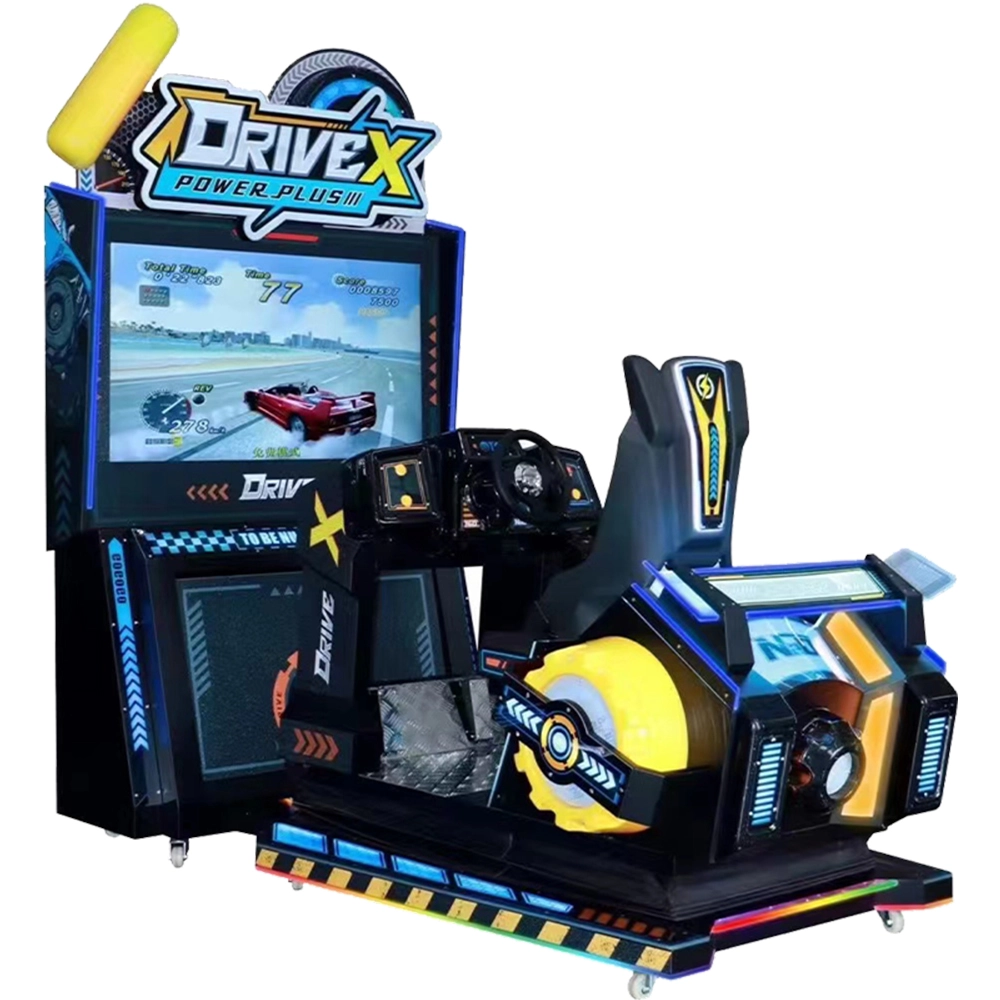
Drive Power Plus: Full-Body Motion Racing Simulator That Transforms Arcades
Safety and Compliance for Arcade Racing Simulators
Questions you may concerned about
Lucky Pong
Can I adjust the difficulty?
Yes, the game allows operators to modify timer length, scoring rules, and ticket payout.
Boxing machine
What is the voltage of the machine?
We can customize the voltage to match your country’s standard (110V/220V available).
Is it suitable for outdoor placement?
It is recommended for indoor use to extend lifespan, but it can be placed under covered areas.
Train Baby
How is hygiene ensured?
The toy guns are sanitized between uses, ensuring clean and safe play for every child.

Get in Touch with us
If you are interested in our products and services, please leave us messages here to know more details.
We will reply as soon as possible.

 Scan QR Code
Youtube
Guangzhou DiniBao Animation Technology Co., Ltd
Guangzhou Dinibao Animation Technology Company Co., Ltd