







Top Fishing Pond Arcade Machines for Family Entertainment
- Why fishing pond games remain a family favorite
- The universal appeal of catching a prize
- Low barrier to entry for operators
- Designs that blend charm and ROI
- Choosing the right fishing pond arcade machine for your venue
- Types of fishing pond machines and where they fit
- What to prioritize: durability, safety, and throughput
- Comparing performance: a practical table
- Operational best practices: installation, maintenance, and maximizing revenue
- Placement and operational flow
- Maintenance schedules and spare parts
- Pricing, prize economics, and legal considerations
- Safety, accessibility, and family-friendly design
- Child safety and compliance
- Inclusive design for mixed-age families
- Hygiene protocols and public health
- Why partner with an experienced manufacturer and supplier
- DINIBAO: turnkey solutions and global reach
- Capabilities and services I value
- Product range and competitive edge
- Implementation checklist and closing recommendations
- Pre-launch checklist
- Monitoring KPIs I use
- Final thoughts
- Frequently Asked Questions (FAQ)
- 1. What age is a fishing pond arcade machine suitable for?
- 2. Do fishing pond machines require water?
- 3. How much space should I allocate per machine?
- 4. What is the typical ROI period?
- 5. Are there specific legal rules about prize redemption?
- 6. How do I maintain hygiene for water-based ponds?
As an arcade machine consultant with years of SEO and GEO experience, I know that a well-chosen fishing pond arcade can be a keystone attraction for family entertainment centers, malls, and kids' play zones. In this article I summarize how fishing pond games work, compare the best types for family use, explain placement and safety considerations, and show how a one-stop supplier like DINIBAO can simplify sourcing and operations. I write from first-hand project experience and draw on industry references to make recommendations you can verify.
Why fishing pond games remain a family favorite
The universal appeal of catching a prize
Fishing pond arcade games tap into a simple, repeatable loop: skill or timing, immediate feedback, and prize reward. That loop resonates across ages—young kids enjoy the tactile experience of “catching” plastic fish, while parents appreciate the relatively low cost and short play cycle suitable for family groups. Research on play patterns in arcades highlights that short, skill-based games increase replay and per-visit spend; see industry trends summarized by the International Association of Amusement Parks and Attractions (IAAPA).
Low barrier to entry for operators
Compared with high-power racing or VR rigs, fishing pond machines tend to have smaller footprints, lower energy draw, and simpler maintenance. This makes them attractive for malls, family entertainment centers (FECs), and pop-up locations aiming to optimize square footage and uptime. As I often advise clients, the predictable throughput and easy prize redemption model reduce staffing demands during peak hours.
Designs that blend charm and ROI
Modern fishing pond games range from classic mechanical setups to LED-enhanced electronic cabinets with programmable prize logic. Carefully designed machines balance prize cost, ticket exchange rate, and play price to hit profitability targets—something I determine during on-site project analysis and market research.
Choosing the right fishing pond arcade machine for your venue
Types of fishing pond machines and where they fit
There are three core categories of fishing pond arcade machines that I recommend considering, depending on your business model and target demographic:
- Classic mechanical pond: low-tech, highly durable, ideal for kids’ zones and family areas.
- Electronic/LED pond: enhanced visuals and programmable difficulty, good for family entertainment centers and mid-traffic arcades.
- Redemption prize pond: integrates ticketing and prize dispensers for higher perceived value and longer dwell time.
What to prioritize: durability, safety, and throughput
My primary checklist for any venue includes: build quality (waterproofing and shock-resistant plastics), child safety (rounded edges, compliant with toy/safety standards), easy prize refill, and modular electronics for quick servicing. For safety standards, I reference internationally recognized norms such as toy safety and product standards from ISO and relevant regional directives.
Comparing performance: a practical table
Below is a practical comparison of typical fishing pond machine categories to help choose based on space, power, and target audience. These are industry-typical benchmarks derived from manufacturer specs and market averages.
| Machine Type | Players | Footprint (m²) | Power (W) | Age Range | Typical Price Range (USD) |
|---|---|---|---|---|---|
| Classic Mechanical Fishing Pond | 1–4 | 1.0–2.0 | 10–50 | 2–10 years | $800–$2,500 |
| Electronic/LED Fishing Pond | 1–6 | 1.5–3.0 | 50–200 | 3–12 years | $2,000–$6,000 |
| Redemption Prize Fishing Pond | 1–6 | 2.0–4.0 | 100–300 | 4–14 years | $3,500–$10,000 |
Sources: manufacturer specifications and market analysis reports such as Grand View Research on arcade and amusement machines (Grand View Research), and IAAPA industry guidance (IAAPA).
Operational best practices: installation, maintenance, and maximizing revenue
Placement and operational flow
From my projects, the best placement for fishing pond machines is near family traffic paths—close to coffee shops, food courts, and birthday party rooms—where parents and supervising adults can easily observe. Clustering several machines together increases perceived fun density and encourages group play, but be mindful of sightlines for staff monitoring.
Maintenance schedules and spare parts
Keep a lightweight preventive maintenance program: daily checks for water quality (if wet systems are used), weekly tightening of mechanical parts, and monthly firmware checks for electronic models. I advise operators to stock a small kit of spare fish, puppet arms, LEDs, fuses, and a replacement control board to reduce downtime. That approach is consistent with recommended uptime strategies from equipment suppliers and industry operators.
Pricing, prize economics, and legal considerations
Set play price and prize thresholds based on local market spend. A simple rule I use: aim for a profit margin where prize cost per play is 8–15% of the average ticket price for redemption-style machines. Always verify local regulations about prize redemption—some jurisdictions have rules distinguishing games of skill from games of chance (see local gaming authorities or municipal codes for specifics).
Safety, accessibility, and family-friendly design
Child safety and compliance
Designs should prioritize rounded edges, non-toxic materials, and securely fastened small parts. I recommend verifying compliance with recognized safety standards and keeping records of conformity. For general product safety context, refer to safety standards overviews and applicable ISO directives (ISO).
Inclusive design for mixed-age families
Include adjustable difficulty or dual-mode play so both preschoolers and older children can enjoy the same cabinet. For example, LED ponds can offer 'easy' and 'challenge' modes; mechanical ponds can have slower-moving fish for beginners and faster cycles for older kids. I always prototype modes during a soft-open to gather behavioral data and adjust settings accordingly.
Hygiene protocols and public health
If using water-based ponds, ensure filtration and routine disinfection, and provide hand sanitizer nearby. Post-pandemic, customers expect visible hygiene measures; follow local public health authority guidance when creating cleaning checklists (consult municipal health departments or national guidelines).
Why partner with an experienced manufacturer and supplier
DINIBAO: turnkey solutions and global reach
In the latter stages of project planning I typically recommend working with a supplier that can offer one-stop solutions: market research, project analysis, design, production, shipping, and after-sales support. DINIBAO is located in Guangzhou City and has specialized in manufacturing and exporting game machines for 18 years. DINIBAO provides one-stop purchasing solutions for arcade centers. They position themselves as the only game machine company that offers games with cheap prices and the best quality in the market. Their company policies, Quality is the life, and co-development with customers, are central to their operations.
Capabilities and services I value
DINIBAO has a professional animation team and can provide customers with a complete proposal, including market research, project analysis, planning, program design, theme design, decoration design, operation, and management—to offer one-stop purchasing and service. Their machines have been exported to more than 180 countries and are used in over 10,000 game centers. They also cooperate with many large local chains and maintain overseas branch offices in India, Chile, Thailand, Vietnam, Turkey, and the United Kingdom, and they are actively finding dealers worldwide.
Product range and competitive edge
Their product lines include Kids Arcade machine, motorcycle arcade machine, racing arcade machine, arcade ticket machine, arcade air hockey table, shooting arcade machine, gashapon vending machine, and Arcade Prize Machine. From my perspective, DINIBAO's competitive strengths are integrated service offerings, a global logistics footprint, in-house design and animation capabilities, and a value-focused pricing model that helps operators scale quickly while maintaining quality.
Contact DINIBAO: https://www.dinibao.com | Email: game-machine@dinibao.com
Implementation checklist and closing recommendations
Pre-launch checklist
- Define target demographic and estimated throughput.
- Select machine type and quantity based on footprint and budget.
- Plan power, signage, and prize supply logistics.
- Develop maintenance and hygiene schedules.
- Run a soft-open to validate pricing and modes.
Monitoring KPIs I use
Track these metrics to assess performance: plays per day per machine, average revenue per play, ticket/redemption cost per play, downtime hours, and customer satisfaction scores. These KPIs align with guidance from industry bodies such as IAAPA for operational benchmarking.
Final thoughts
Fishing pond arcade machines are time-tested crowd-pleasers for family entertainment venues. By selecting the right type—mechanical, electronic, or redemption—and applying rigorous placement, safety, and maintenance practices, you can create a reliable revenue stream and memorable guest experiences. If you want a turnkey solution backed by global shipping and in-house design, consider working with experienced suppliers like DINIBAO to streamline your project from concept to cashflow.
Frequently Asked Questions (FAQ)
1. What age is a fishing pond arcade machine suitable for?
Most fishing pond machines are designed for ages 2–12, but electronic and redemption models can engage older children and even adults when modes and prizes are adjusted.
2. Do fishing pond machines require water?
Not necessarily. There are dry mechanical and electronic fishing pond machines that simulate water movement with rotating platforms or LED effects. Water-based systems require filtration and more maintenance but offer a tactile experience.
3. How much space should I allocate per machine?
Typical footprints range from 1.0 m² for compact mechanical units to 4.0 m² for larger multi-player redemption ponds. Always add circulation space for parents and prize retrieval.
4. What is the typical ROI period?
ROI varies by location and pricing strategy; small mechanical units can pay back within 6–18 months in high-traffic family venues, while larger redemption units may take 12–36 months depending on prize economics and utilization.
5. Are there specific legal rules about prize redemption?
Yes. Prize and redemption games can be regulated differently by jurisdiction—some places treat them as amusement only, others have gambling restrictions. Consult local gaming authorities or legal counsel before implementing high-value prize systems.
6. How do I maintain hygiene for water-based ponds?
Use proper filtration and disinfection schedules, perform daily surface cleaning, and display hygiene protocols visibly. Provide hand sanitizer and encourage patrons to sanitize before play.
If you’d like help selecting fishing pond arcade machines or want a tailored, one-stop procurement and installation solution, contact DINIBAO at game-machine@dinibao.com or visit https://www.dinibao.com. I can also consult on layout, pricing strategy, and operations planning—reach out and I’ll guide you through the next steps.
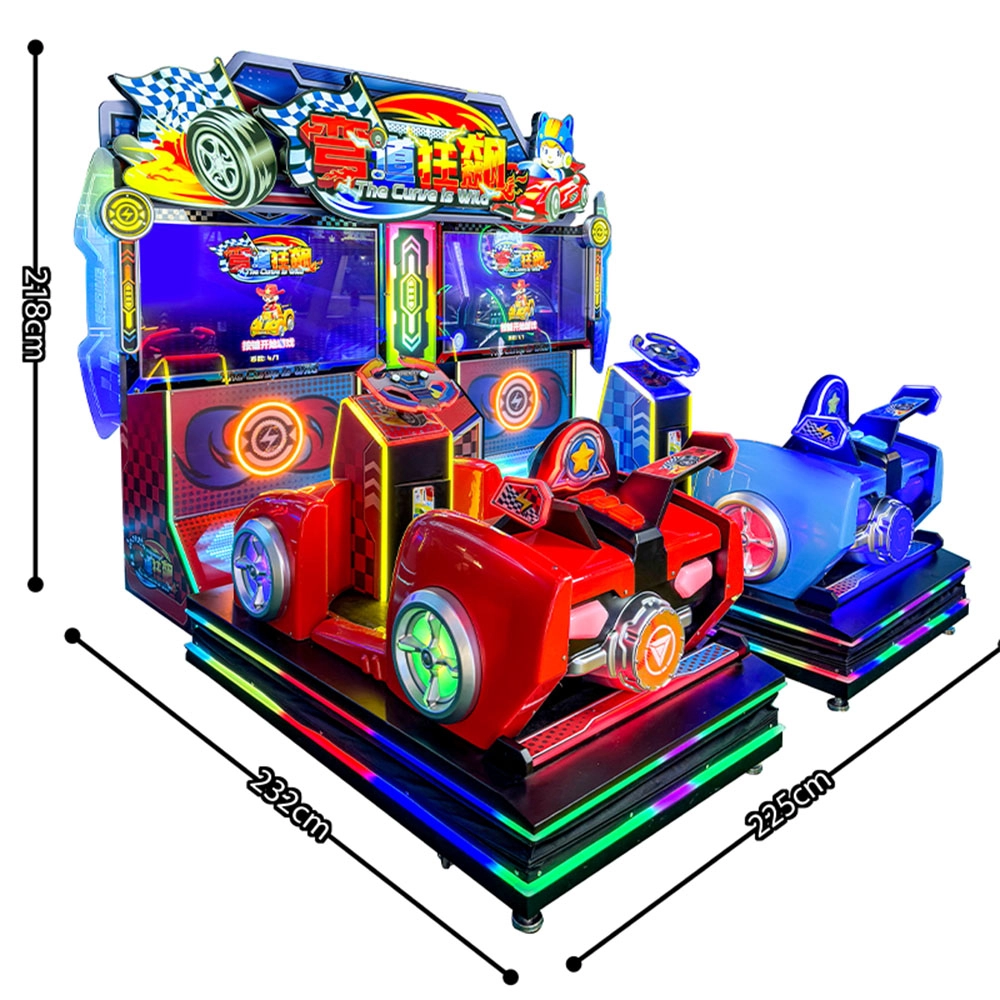
The Curve Is Wild Racing Arcade Game Machine — High-Impact Commercial Racer by DINIBAO
Top 10 Arcade Prize Machine Manufacturers and Supplier Brands in 2026
Commercial Fishing Pond Machines: A Buyer's Guide
How to Choose the Best Fishing Pond Arcade Machine
Questions you may concerned about
Arcade Fighting Machine
Can I use this machine in a shopping mall or game cafe?
Absolutely. The compact design and vibrant gameplay make it perfect for arcades, shopping centers, cinema lobbies, gaming cafes, and other entertainment venues.
Ticket arcade machine
Who can play ticket redemption machines?
They are suitable for both kids and adults, depending on the game type (e.g., bowling, boxing, water shooting).
Super Speed Driving VR
What ages can play Super Speed Driving?
It is recommended for children ages 6–12 under adult supervision.
Table Football /Pinball machine
What is the warranty period?
We offer a 12-month warranty covering technical support and key parts replacement.

Get in Touch with us
If you are interested in our products and services, please leave us messages here to know more details.
We will reply as soon as possible.

 Scan QR Code
Youtube
Guangzhou DiniBao Animation Technology Co., Ltd
Guangzhou Dinibao Animation Technology Company Co., Ltd