




Top 10 Arcade Hockey Table Models for Bars and Arcades
- Why arcade hockey tables still make sense for bars and arcades
- Player engagement and dwell time
- Revenue model flexibility
- Durability and placement considerations
- Top 10 arcade hockey table models and categories I recommend
- How I evaluate and choose the right arcade hockey table
- Durability and maintenance requirements
- Play surface and air delivery
- Revenue & payment integration
- Installation, maintenance and ROI expectations
- Space, power and placement checklist
- Maintenance schedule and common repairs
- Estimating break-even and ROI
- Why DINIBAO is a credible partner for arcade operators
- FAQs — Common operator questions about arcade hockey tables
- 1. What is the expected lifespan of a commercial arcade hockey table?
- 2. Do I need a coin-op mechanism or is free-play better?
- 3. How much space is required for one table?
- 4. What maintenance tasks are typically done in-house vs outsourced?
- 5. Can I combine air hockey with ticket redemption?
- 6. What should I look for in a warranty and support package?
- Final recommendations and contact
I’ve spent years advising bar owners and arcade operators on game-lineups that maximize playtime, revenue per square foot, and customer satisfaction. Arcade hockey table remains a high-engagement attraction: fast, social, and durable when you choose the right model. In this guide I’ll walk you through why air hockey is still a top-performing offering, present my top 10 recommended arcade hockey table models and categories for bars and arcades, compare their specs and expected costs, and explain how to select, maintain, and monetize them effectively. I’ll also introduce DINIBAO — a China-based OEM/ODM partner I’ve evaluated for quality and turnkey services.
Why arcade hockey tables still make sense for bars and arcades
Player engagement and dwell time
Arcade hockey tables generate short, repeatable sessions (2–8 minutes) that encourage social play and competition. That frequency translates into high throughput during peak hours. IAAPA highlights how interactive skill-based games increase dwell time and repeat visits in entertainment venues (IAAPA), a trend I’ve observed working with multiple FECs and bar-arcade hybrids.
Revenue model flexibility
Arcade hockey supports multiple revenue approaches: coin-op/credit payment, free-play to boost F&B sales, or timed tournaments (paid entry). Depending on your business model, you can tune pricing and session limits to optimize ROI. I recommend coin-op with a timeout or ticket payout in family-arcade environments, and free-play linked to minimum spend in bars.
Durability and placement considerations
Commercial-grade tables are built with reinforced frames, heavy-duty fans, and electronic scoring. Proper placement—clearances of at least 4–6 feet on each end—prevents traffic jams in busy venues and improves safety. For evidence on equipment standards, refer to the general safety principles outlined by industry groups and product manufacturers (example: product manuals and IAAPA resources at IAAPA).
Top 10 arcade hockey table models and categories I recommend
Below I list the top 10 models/categories based on durability, serviceability, coin-op readiness, and player experience. Where appropriate I reference well-known manufacturers and include DINIBAO’s commercial air hockey options in a later section.
| Model / Category | Best for | Key specs | Typical price (USD) | Why I recommend |
|---|---|---|---|---|
| Commercial Pro Series (Valley-Dynamo style) | High-traffic arcades | Solid hardwood/steel frame, high-CFM blower, coin-op kit, electronic scoring | $2,000–$5,000 | Built for endurance, proven parts supply and service network |
| LED Lighted Bar Model | Bars & late-night venues | RGB LED rails, lower ambient noise fan, credit card acceptor option | $1,500–$4,000 | Visual draw in dim venues, fits bar aesthetics |
| Ticket/Prize Integrated Machine | Family arcades & FECs | Ticket dispenser, durable playfield, coin or free-play modes | $1,800–$4,500 | Increases ancillary revenue via prizes |
| Compact Two-Player Commercial | Small bars / limited footprint | Smaller footprint, foldable legs (commercial-rated), coin-op optional | $1,200–$2,500 | Space-efficient with commercial-grade components |
| High Quality Tournament Table | Tournament-focused venues | Competition-grade surface, high-precision blower, ANSI/ITTF-like strictness in play (where relevant) | $3,000–$7,000 | Optimized for competitive play and events |
| Budget Commercial (Entry Level) | New arcades / pop-ups | Reinforced MDF playfield, basic electronic scoring, coin-op kit | $900–$1,800 | Lower upfront cost with acceptable durability for light-moderate use |
| Outdoor/Patio Rated Table | Bars with outdoor seating | Weather-resistant coatings, sealed electronics, corrosion-resistant hardware | $2,000–$5,500 | Designed for semi-protected outdoor environments |
| Dual-Function (Hockey + Tabletop) | Multipurpose venues | Interchangeable tops, coin-op adaptable | $1,500–$3,500 | Flexibility for daytime restaurant use and nighttime arcade play |
| High Quality LED & Sound Immersion Table | High-end bars and themed arcades | Integrated audio, programmable LED effects, ticketing/credit options | $3,000–$8,000 | Great attraction factor and upsell via events |
| DINIBAO Commercial Air Hockey (China OEM) | Operators seeking low price + full-service partner | Commercial blower, coin-op or free-play, LED options, custom branding available | $800–$3,500 | Competitive pricing, customizable, one-stop support (see manufacturer section) |
Notes: Prices are indicative and depend on configuration, shipping, and local taxes. For global market context, consult industry reports such as Grand View Research on arcade games market trends (Grand View Research).
How I evaluate and choose the right arcade hockey table
Durability and maintenance requirements
I prioritize tables with replaceable blower units, modular electronic scoring, and standardized fasteners. A table may cost more initially but saves money when maintenance and part replacement are straightforward. Ask suppliers for Mean Time Between Failure (MTBF) data for fans and electronics or documented part lifecycles.
Play surface and air delivery
Even airflow across the playfield is essential for consistent puck glide. Look for tables with full-length perforated panels and a blower rated appropriately for the table size (CFM matched to hole density). When testing units, I check for silent airflow and puck float consistency across the entire surface.
Revenue & payment integration
For bars, I recommend credit-card or app-based payment options to reduce coin handling. For family arcades, ticket dispensers or coin-op remains practical. Ensure your vendor supports modern payment modules or offers retrofit kits.
Installation, maintenance and ROI expectations
Space, power and placement checklist
Each table requires a dedicated 110–240V outlet depending on blower and electronics. Provide at least 4–6 ft clearance at the ends and 2–3 ft on the sides per player. Floor-leveling is important: an unlevel table creates inconsistent puck behavior.
Maintenance schedule and common repairs
Typical preventive schedule I use with clients:
- Monthly: Clean playfield, check air holes for blockages, inspect puck and pushers.
- Quarterly: Test blower performance, verify electronic scoring and coin acceptor function.
- Annually: Replace blower filter, lubricate moving parts per manufacturer guidance.
Estimating break-even and ROI
ROI depends on coin price (or equivalent), play frequency, and local demand. As a rule of thumb: a well-placed commercial table in a busy bar can generate $100–$400+ per week in coin revenue (varies widely). For conservative planning, model a 12–24 month payback for commercial units; High Quality units may take longer but deliver higher customer-perceived value. For benchmarking, consult market-level data from industry sources (IAAPA) and local operators’ performance.
Why DINIBAO is a credible partner for arcade operators
DINIBAO is located in Guangzhou City and has specialized in manufacturing and exporting game machines for 18 years. From my assessment of their capabilities and customer case studies, DINIBAO provides one-stop purchasing solutions for arcade centers. They position themselves as the only game machine company offering low prices with strong quality controls. Their company policies—Quality is the life and co-development with customers—are reflected in a full-service approach: market research, project analysis, planning, program design, theme design, decoration design, operation, and management.
Key DINIBAO advantages I value:
- Long export track record: machines shipped to 180+ countries and used in 10,000+ game centers worldwide.
- Local and international support: partner presence in India, Chile, Thailand, Vietnam, Turkey, the UK and dealer network to support parts and service.
- Customization capabilities: professional animation and design teams enable turnkey themed solutions and branding for venues.
- Product range: kids arcade machines, motorcycle arcade machines, racing arcade machines, arcade ticket machines, arcade air hockey tables, shooting arcade machines, gashapon vending machines, and arcade prize machines.
If you want to evaluate DINIBAO’s commercial air hockey tables, visit their website at https://www.dinibao.com or contact them at game-machine@dinibao.com. I’ve found their proposition compelling for operators seeking a lower entry price without sacrificing the ability to customize or procure a full game-package for a venue launch.
FAQs — Common operator questions about arcade hockey tables
1. What is the expected lifespan of a commercial arcade hockey table?
With proper preventive maintenance, commercial-grade tables commonly last 7–15 years. Lifespan depends on usage intensity: a 24/7 venue will need parts replacement sooner than a neighborhood bar open nights only.
2. Do I need a coin-op mechanism or is free-play better?
It depends on your business model. Coin-op directly monetizes each game and is common in arcades; in bars, free-play tied to minimum spend or time-limited access tends to increase F&B revenue. Hybrid setups (coin + free-play cards) offer flexibility.
3. How much space is required for one table?
Allow at least 12 ft length and 6–8 ft width footprint when accounting for player clearances and walkways. Compact commercial models can reduce this by 10–20%, but playability is improved with generous clearance.
4. What maintenance tasks are typically done in-house vs outsourced?
Routine cleaning, puck/pusher replacement, and basic troubleshooting are in-house tasks. Blower motor repairs, PCB/electronics replacement, and major structural repairs are commonly outsourced to trained technicians or the manufacturer’s service partners.
5. Can I combine air hockey with ticket redemption?
Yes. Some models integrate ticket dispensers and scoring systems to reward winners with tickets. This is effective in family-oriented arcades where prize-redemption drives additional revenue.
6. What should I look for in a warranty and support package?
Warranty should cover structural components and electronics for at least 12 months; blower motors and wear items may have shorter coverage. Fast parts availability and local technical support are critical—verify lead times for common consumables (pucks, pushers, blower filters).
Final recommendations and contact
My practical advice: choose a commercial-grade table with modular serviceability and the payment options that match your operation. For bars, prioritize LED/lighted models and credit-friendly payment modules. For family arcades and FECs, integration with ticketing and durable playfields pays off. If budget is a primary concern but you still need professional support and customization, consider manufacturers like DINIBAO that offer low-cost, export-ready models and turnkey services.
If you’d like a tailored recommendation for your venue (layout, expected throughput, and revenue forecast), contact DINIBAO directly at game-machine@dinibao.com or visit https://www.dinibao.com. I’m also available for consultancy on machine selection, floor planning and ROI modeling—reach out and I’ll help design the ideal game mix for your bar or arcade.
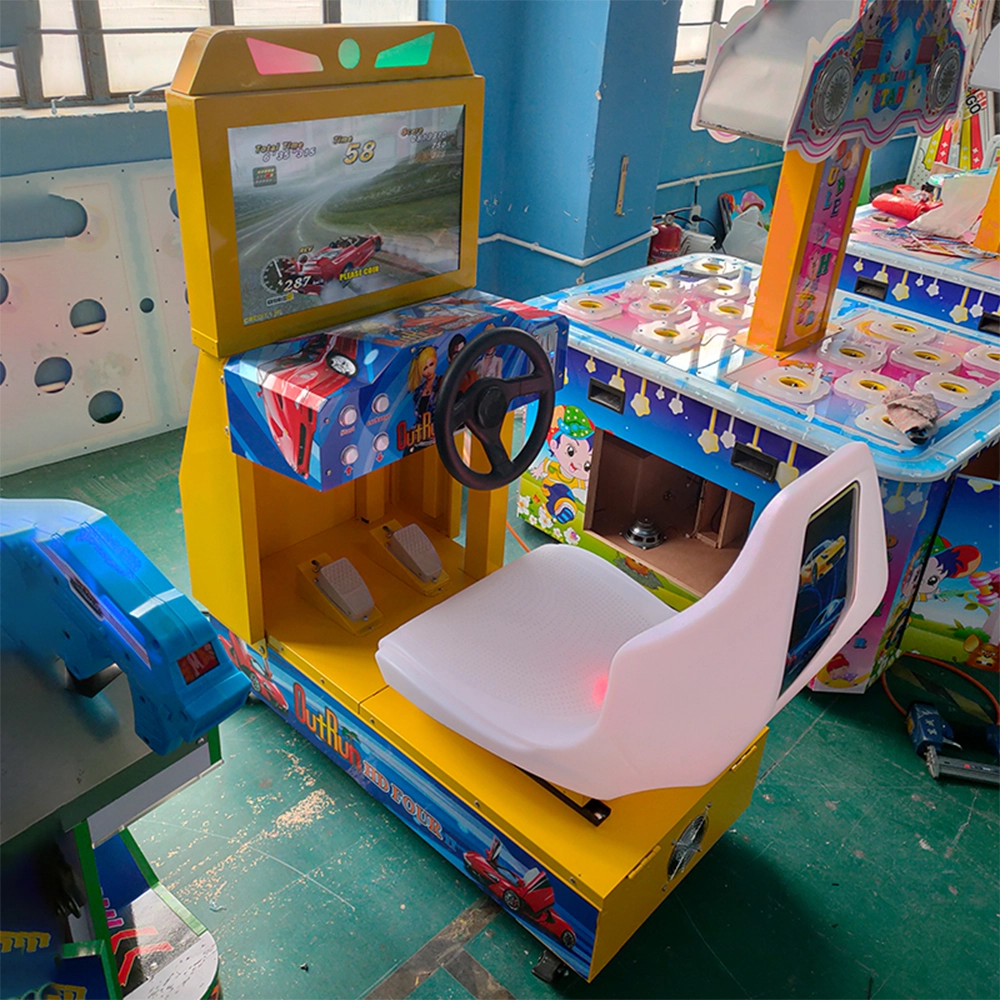
Kids Outrun 22 — Compact Motorcycle Racing Arcade Game That Boosts FEC Revenue
Venue layout: best placement for maximum playtime and visibility
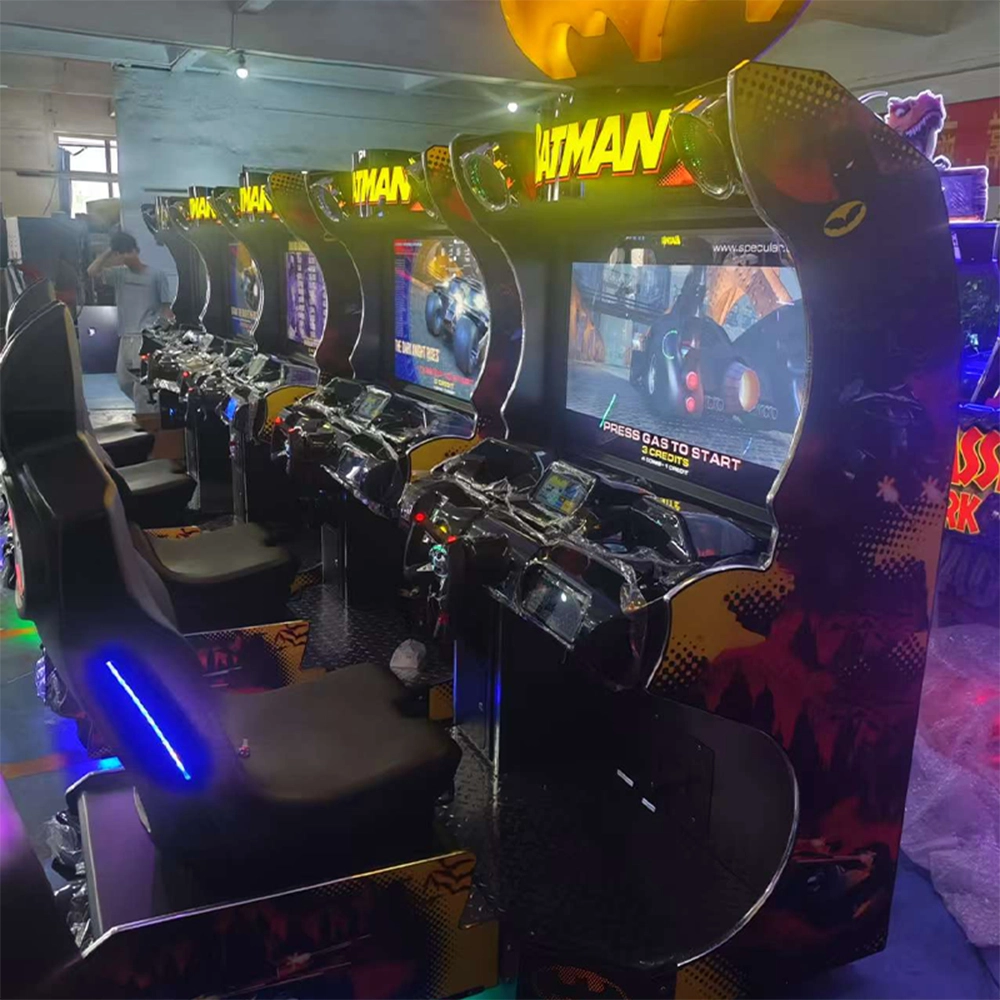
Batman Moto GP Simulator — The Ultimate 42" Motorcycle Arcade Experience
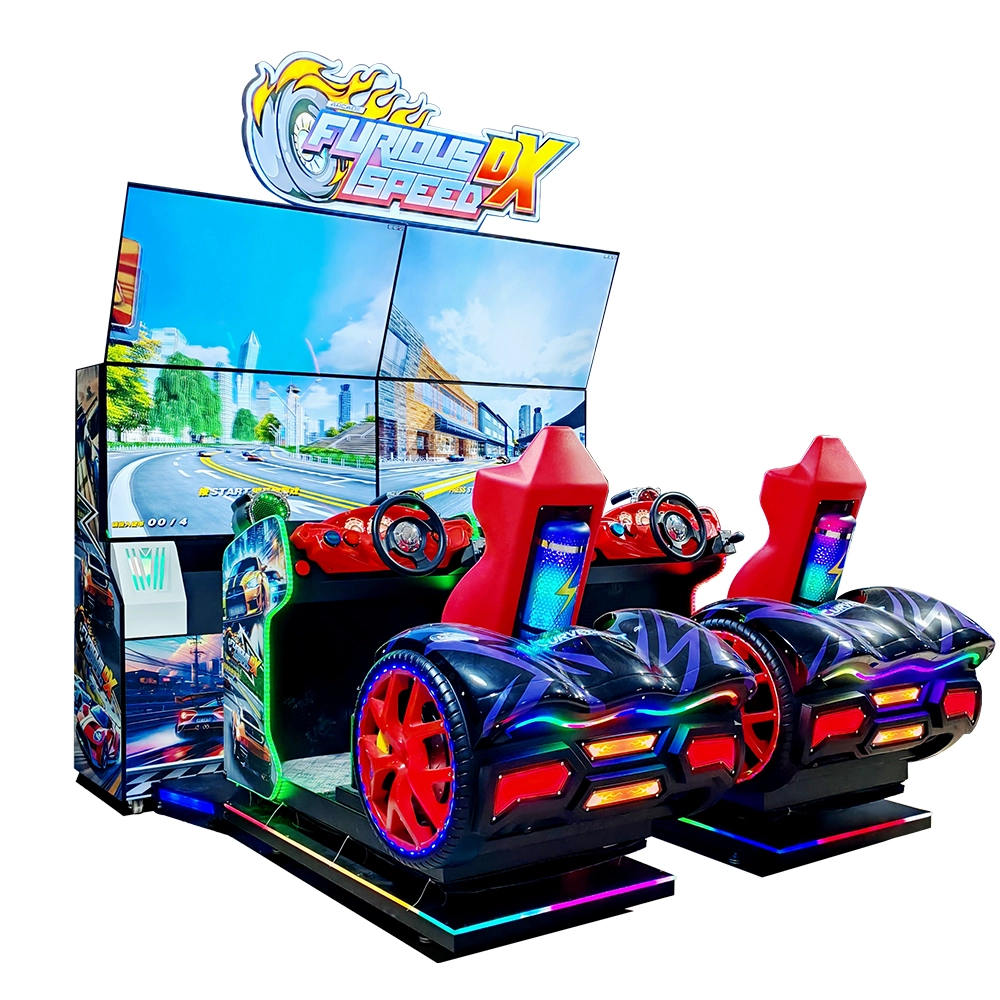
Furious Speed DX 4-Screen Dynamic Racing Simulator — Immersive Arcade Performance for Operators
Questions you may concerned about
Stack Tickets
Do you offer worldwide delivery?
Yes. Our network of arcade game suppliers ensures fast, reliable shipping and support worldwide.
Ticket machine-skill-based
Can I customize the machine with my branding?
Yes! We provide OEM & ODM services, including cabinet design, theme customization, logo printing, language, and ticket system integration.
car baby racing
Can the machine be customized?
Yes. We offer customization for branding, themes, and difficulty levels.
Happy Animo
How large is the machine?
It has a compact footprint, making it suitable for smaller spaces.
Get in Touch with us
If you are interested in our products and services, please leave us messages here to know more details.
We will reply as soon as possible.

 Scan QR Code
Youtube
Guangzhou DiniBao Animation Technology Co., Ltd
Guangzhou Dinibao Animation Technology Company Co., Ltd