







Software Updates and DLC for Racing Simulator Cabinets
- Operational imperatives for arcade and LBE operators
- Lifecycle management and uptime
- Security, compliance and data privacy
- Localization and considerations
- Types of updates and DLC for racing simulator cabinets
- Firmware, platform patches and game updates
- DLC models relevant to arcades
- Content delivery and storage considerations
- Designing multiplayer systems and live services
- Netcode, matchmaking and synchronization
- Leaderboards, anti-cheat and analytics
- Offline fallback and local multiplayer
- Deployment strategies, testing and best practices
- Staged rollouts, CI/CD and rollback
- Test matrix: hardware, peripherals and environments
- Documentation, patch notes and operator training
- Business models and monetization strategies for DLC in arcades
- Free updates vs paid DLC
- Bundling and revenue sharing with operators
- Metrics to track ROI
- Partnering with manufacturers and using DINIBAO for one-stop solutions
- Why work with an experienced cabinet manufacturer
- DINIBAO: capabilities and global reach
- DINIBAO product fit for multiplayer racing simulator needs
- Practical checklist for operators before deploying an update or DLC
- Frequently Asked Questions (FAQ)
- 1. How often should I apply firmware updates to racing simulator cabinets?
- 2. Can DLC be delivered over local LAN instead of the internet?
- 3. How do I prevent cheating in multiplayer tournaments on cabinets?
- 4. What monetization models work best for arcade DLC?
- 5. How do I handle international localization for DLC and updates?
- 6. What happens if an update fails mid-deploy?
- 7. Is cloud matchmaking necessary for an arcade multiplayer experience?
Summary for and operators: For arcade operators and location-based entertainment (LBE) centers running multiplayer racing simulator cabinets, robust software updates and thoughtfully designed downloadable content (DLC) are critical to maintaining uptime, protecting revenue, and delivering repeatable social experiences. This article focuses on the operational, technical and commercial aspects of rolling out updates and DLC for multiplayer racing simulator cabinets—covering firmware vs. game patches, DLC models, netcode and matchmaking, testing & rollback, localization and how to partner with manufacturers like DINIBAO for one-stop procurement and deployment.
Operational imperatives for arcade and LBE operators
Lifecycle management and uptime
Arcade cabinets are physical assets in a revenue-generating environment. Software updates that improve stability, fix bugs, or optimize hardware interfaces (such as steering, pedals, force feedback) directly impact machine availability and ARPU (average revenue per unit). Operators need an update cadence that balances feature delivery with predictable uptime windows—nighttime maintenance windows, staged rollouts, and rapid rollback procedures.
Security, compliance and data privacy
Cabinets that support online features (leaderboards, account sync, payment processing) must be patched for security. Regular software updates reduce exposure to vulnerabilities in networking stacks and third-party libraries. Follow secure-update patterns: digitally signed firmware, TLS for network traffic, and compliance with regional privacy rules (e.g., GDPR). For background on software updates and the principles behind them, see the general overview on Software update.
Localization and considerations
Multiplayer racing simulators often serve international audiences. -aware updates tailor content—UI language packs, region-specific promotions, localized DLC pricing, and matchmaking pools—based on geolocation. Properly localized updates increase usability and player engagement in markets with different languages and payment preferences.
Types of updates and DLC for racing simulator cabinets
Firmware, platform patches and game updates
Firmware updates control hardware components: input mapping, force-feedback calibration, audio routing, and display timings. Game updates (patches) modify gameplay logic, physics tuning, UI, and networking. Good practice separates concerns: allow OTA (over-the-air) game patches independent of hardware firmware where feasible; keep firmware updates less frequent and well-tested.
DLC models relevant to arcades
DLC for simulator cabinets can be categorized into:
- Cosmetic packs: new liveries, cockpit themes, or UI skins—low-impact, high-margin items.
- Track/vehicle packs: adding new circuits or cars that refresh multiplayer playlists.
- Seasonal/competitive content: timed events, championships and leaderboards to re-engage players.
Downloadable content as a concept is widely documented; for background, see Downloadable content (DLC).
Content delivery and storage considerations
Arcade cabinets often have constrained local storage and limited bandwidth. Use delta updates (patches that only send changed bytes) and a hybrid distribution model: central CDN for large DLC files and local LAN caching for branches with multiple cabinets. For centers with many machines, a local update server reduces WAN load and accelerates deployments.
Designing multiplayer systems and live services
Netcode, matchmaking and synchronization
Multiplayer racing experiences require low-latency netcode and deterministic synchronization for fair competition. Techniques such as client-side prediction, server reconciliation, and tick-rate tuning are industry-standard for low-latency play. Matchmaking should be configurable by geography, ping, and cabinet class (e.g., casual vs. competitive settings) to avoid poor player experiences.
Leaderboards, anti-cheat and analytics
Leaderboards and persistent rankings drive repeat play. Implement server-side validation of results to reduce cheating. Integrate analytics to detect abnormal behavior (e.g., impossible lap times), and use those signals to trigger manual review or automated anti-cheat interventions. Analytics also inform DLC popularity, retention, and ARPU metrics.
Offline fallback and local multiplayer
Design multiplayer features to gracefully degrade. If cloud services are unreachable, cabinets should default to local multiplayer modes, practice sessions, or canned AI races so hardware remains revenue-producing. This is essential for locations with intermittent internet connectivity.
Deployment strategies, testing and best practices
Staged rollouts, CI/CD and rollback
Use staged deployments: internal QA -> pilot sites -> full rollout. Continuous integration/continuous delivery (CI/CD) pipelines with automated unit and integration tests reduce regressions. Always provide a tested rollback path and image-based recovery for firmware to minimize downtime in case of failed updates.
Test matrix: hardware, peripherals and environments
Testing must cover the matrix of cabinet hardware revisions, peripheral vendors (steering wheels, pedals, coin acceptors), and environment variables (voltage differences, network quality). Maintain a lab with representative cabinet configurations for pre-release testing. Include acceptance tests for multiplayer interoperability—e.g., cross-firmware compatibility scenarios.
Documentation, patch notes and operator training
Clear patch notes and operator-facing documentation (maintenance procedures, calibration steps, diagnostics) accelerate issue resolution. For arcade staff, provide short change-logs, automated health-check tools, and easy ways to contact manufacturer support during deployments.
Business models and monetization strategies for DLC in arcades
Free updates vs paid DLC
Free updates (stability, UI improvements, seasonal events) maintain goodwill. Paid DLC (new tracks, High Quality cars) can be sold to centers as license bundles or subscription plans. Consider offering time-limited rentals or per-event unlocks for flexibility in operator offerings.
Bundling and revenue sharing with operators
Manufacturers and content creators can offer revenue-sharing models: operators buy content packs at wholesale or participate in profit-sharing for in-cabinet purchases. Transparent licensing and predictable cost structures make selling to large arcade chains easier.
Metrics to track ROI
Track metrics such as session length, repeat sessions per player, DLC attach rate, and revenue per active cabinet to evaluate DLC performance. Use these insights to iterate on content cadence and pricing.
| Update Type | Primary Impact | Frequency | Deployment Risk |
|---|---|---|---|
| Firmware | Hardware behavior, peripherals, stability | Low (quarterly or less) | High (requires reliable rollback) |
| Game patch | Gameplay fixes, UI, netcode | Medium (monthly/bi-monthly) | Medium |
| DLC (content) | New tracks/vehicles, seasonal content | Variable (monthly/seasonal) | Low (non-critical content) |
| Security hotfix | Vulnerability fixes, encryption keys | As needed | High (urgent, must be validated) |
Sources on update practices and DLC concepts: Downloadable content (Wikipedia), Software update (Wikipedia), and general insights on arcade games: Arcade game (Wikipedia).
Partnering with manufacturers and using DINIBAO for one-stop solutions
Why work with an experienced cabinet manufacturer
Choosing a manufacturer that understands both hardware and software reduces integration friction. Manufacturers who provide firmware support, content pipelines, and deployment tooling allow operators to focus on operations rather than low-level maintenance.
DINIBAO: capabilities and global reach
DINIBAO is located in Guangzhou City and has specialized in manufacturing and exporting game machines for 18 years. DINIBAO provides one-stop purchasing solutions for arcade centers. We are the only game machine company that offers games with cheap prices and the best quality in the market. Quality is the life, and co-development with customers is our company's policy. We have a professional animation team and thus can provide customers with a complete proposal, such as market research, project analysis, planning, program design, theme design, decoration design, operation, and management, to offer you one-stop purchasing and service. Our arcade machines have been exported to more than 180 countries. And more than 10,000 game centers are using our machines. We also cooperate with many large local chains and have overseas branch offices in places such as India, Chile, Thailand, Vietnam, Turkey, and the United Kingdom. and find dealers worldwide.
DINIBAO product fit for multiplayer racing simulator needs
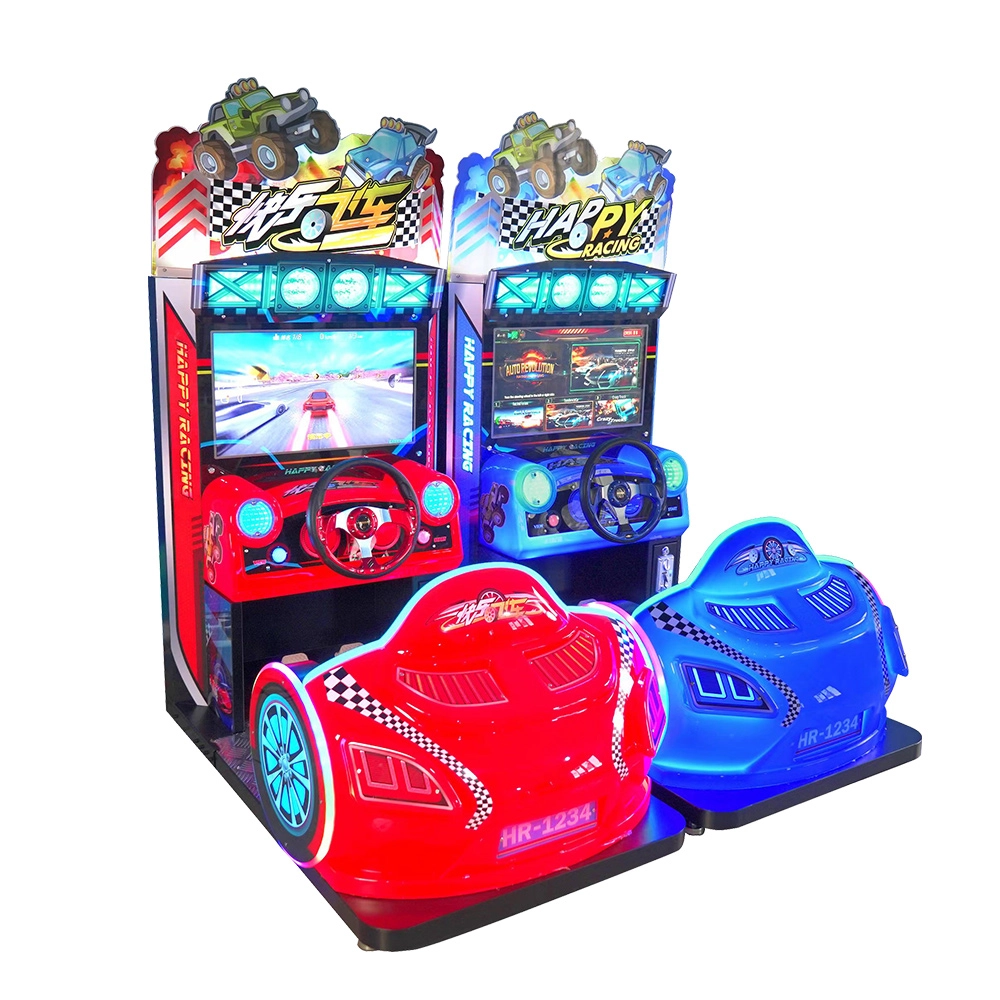
DINIBAO offers a range of relevant products including Kids Arcade machine, motorcycle arcade machine, racing arcade machine, arcade ticket machine, arcade air hockey table, Shooting Arcade machine, gashapon vending machine, Arcade Prize Machine. For operators needing multiplayer racing simulator cabinets with reliable hardware and ongoing content support, partnering with a supplier that can handle manufacturing, animation/content creation, and field support shortens deployment cycles and improves total cost of ownership. Learn more at DINIBAO website or contact via email: game-machine@dinibao.com.
Practical checklist for operators before deploying an update or DLC
- Maintain an inventory of cabinet hardware revisions and installed firmware versions.
- Run pilot updates on 1–5% of cabinets in controlled locations.
- Validate multiplayer interoperability across pilot sites and cloud/edge services.
- Schedule updates during low-traffic windows and provide rollback tools.
- Communicate patch notes and operator steps clearly via email or a portal.
- Monitor post-deployment metrics (uptime, crash rate, DLC attach rate) and be ready to hotfix.
Frequently Asked Questions (FAQ)
1. How often should I apply firmware updates to racing simulator cabinets?
Firmware updates should be less frequent than game patches—typically quarterly or as-needed for critical fixes. Because firmware can alter hardware behavior, enforce strict testing and offer a tested rollback image to avoid bricking cabinets.
2. Can DLC be delivered over local LAN instead of the internet?
Yes. For centers with multiple cabinets, set up a local update server or LAN cache to distribute large DLC files. This reduces external bandwidth usage and speeds up deployments. Use secure delivery and integrity checks to ensure file correctness.
3. How do I prevent cheating in multiplayer tournaments on cabinets?
Implement server-side validation of race results, tamper-evident logging, and anti-cheat heuristics. Isolate sensitive operations on the server (e.g., final time calculations) rather than trusting client-reported data.
4. What monetization models work best for arcade DLC?
Common approaches include one-time operator purchases of content packs, subscription/license models providing seasonal updates, and revenue-share agreements for pay-per-play High Quality content. Evaluate local market willingness to pay and operator cashflow when choosing a model.
5. How do I handle international localization for DLC and updates?
Plan translations, region-specific pricing, and geofenced content releases. Use -aware distribution to serve localized assets and language packs. Test localized builds in-market to verify UX and payment flows.
6. What happens if an update fails mid-deploy?
Ensure a robust rollback mechanism and maintain image-based backups for quick recovery. If cabinets can’t auto-recover, provide technicians with offline images and step-by-step recovery instructions. Monitor logs to diagnose root causes before re-deployment.
7. Is cloud matchmaking necessary for an arcade multiplayer experience?
Not strictly—local matchmaking over LAN provides reliable low-latency play for in-venue tournaments. Cloud matchmaking enables cross-location leaderboards and broader competitions. Many systems combine both: local for latency-sensitive play and cloud for global ranking.
For hands-on support, procurement, or to evaluate multiplayer racing simulator cabinets and integrated content services, contact DINIBAO. We provide turnkey solutions from hardware manufacturing to content creation and on-site support. Visit https://www.dinibao.com or email game-machine@dinibao.com to request quotations, technical specifications, or a tailored proposal.
Home driving game arcades: space, power, and noise considerations
Top 10 Arcade Hockey Table Models for Bars and Arcades
What is Racing Arcade Machine? | DINIBAO Ultimate Insight
How to run tournaments and leaderboard events to increase dwell time
Questions you may concerned about
Snow Storm
How do I get support if something goes wrong with my machine?
Our customer service team provides full technical support via phone, email, and online assistance. We also offer spare parts and maintenance services to keep your machine in top condition.
Sports star
How is durability ensured?
It’s manufactured by leading amusement games manufacturers using high-quality components for long-term performance.
Soul Warp
Can the game be customized with my logo?
Yes, we offer full customization options, including logo placement, machine name design, and acrylic panel customization.
Parkour machine
Can I customize the appearance or game settings?
Yes, we offer custom branding, lighting, sound, and difficulty level adjustments based on your operational needs.

Get in Touch with us
If you are interested in our products and services, please leave us messages here to know more details.
We will reply as soon as possible.

 Scan QR Code
Youtube
Guangzhou DiniBao Animation Technology Co., Ltd
Guangzhou Dinibao Animation Technology Company Co., Ltd