






Racing Arcade Machine ROI: Revenue, Maintenance and Lifespan
- Understanding revenue drivers for racing arcade machines
- Primary revenue components
- Placement and revenue-share models
- Ancillary revenue and promotions
- Modeling ROI: realistic scenarios and calculations
- Assumptions and variables
- Scenario table: revenue, costs, and payback
- Interpreting the numbers — practical takeaways
- Maintenance, uptime and realistic lifespan
- Typical maintenance tasks and frequency
- Lifespan estimates and failure modes
- Planned obsolescence vs upgrade strategy
- Sourcing, procurement and supplier considerations
- What to evaluate in a supplier
- Cost vs quality trade-offs
- DINIBAO — a one-stop procurement partner (manufacturing and support)
- Operational best practices to protect ROI
- Maintenance planning and warranties
- Data tracking and KPIs
- Customer experience and monetization strategies
- FAQ
- 1. How long does a racing arcade machine typically last?
- 2. What is the usual payback period for a new racing arcade machine?
- 3. How much should I budget for maintenance?
- 4. Is it better to buy new or refurbished?
- 5. What are the best places to put a racing arcade machine?
- 6. How do I negotiate placement agreements?
- 7. Where can I get reliable spare parts and support?
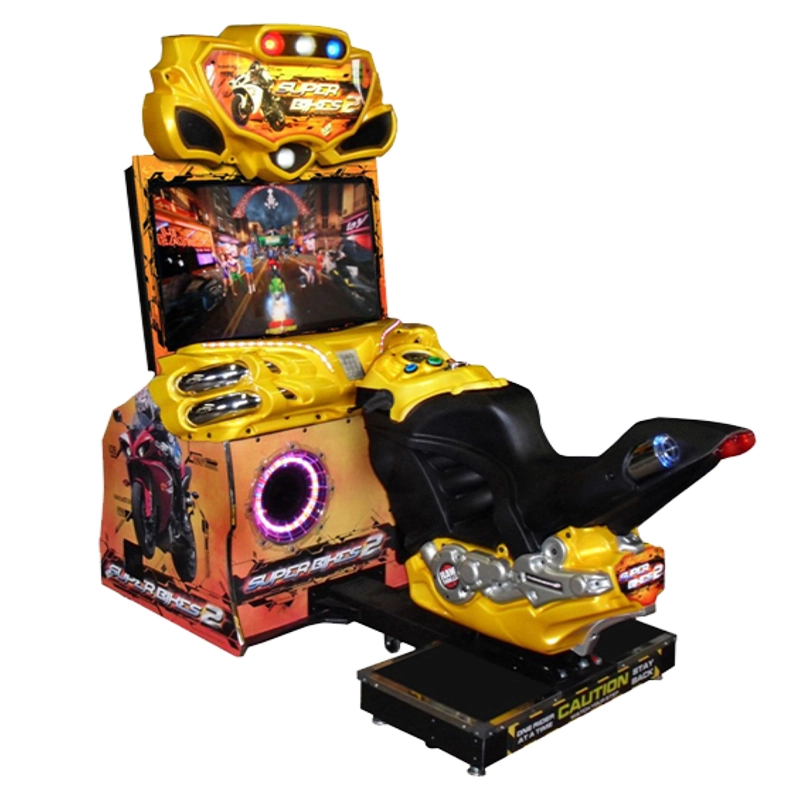
Racing arcade machine operators and investors need clear, verifiable ROI models that cover per-play revenue, placement agreements, operating costs, preventive maintenance, parts replacement, and expected useful life. This article provides scenario-based revenue tables, maintenance and lifespan guidance, and sourcing recommendations to help arcade centers, FECs (family entertainment centers) and route operators make informed decisions. Semantic keywords used throughout include racing arcade cabinet, driving simulator, coin-op, force feedback wheel, lap time leaderboard, redemption arcade, cabinet maintenance, and operator revenue share.
Understanding revenue drivers for racing arcade machines
Primary revenue components
Revenue for a racing arcade machine is generated primarily from individual plays (coin-op or card swipe), tournament and event play High Qualitys, redemption tickets (if applicable), and occasional sponsorship/advertising. The average price per play varies by market: $1.00–$2.50 is typical in many North American and European venues, while prices can be lower or bundled in centers elsewhere. For an industry overview of arcade games and business models see the Arcade game (Wikipedia).
Placement and revenue-share models
There are common business models that change realized revenue: owner-operated (100% of takings), revenue-share/placement (typical splits range from 50/50 to 70/30 in favor of the owner or the location depending on negotiation), and lease/rental setups. For larger venues or malls, a 60/40 split (operator 60%) is a common starting point. When modeling ROI you must clearly define which model applies because it affects payback and operating margin materially.
Ancillary revenue and promotions
Additional income can come from timed tournaments (higher entry fees), corporate events, and pairing machines with prize redemption systems. Cross-promotions (e.g., buy X plays get a ticket) increase throughput and lifetime value. Trackable KPIs include plays per day, average spend per customer, peak vs. off-peak utilization, and ticket redemption ratio.
Modeling ROI: realistic scenarios and calculations
Assumptions and variables
Use clear, conservative assumptions when estimating ROI. Key inputs used in the scenario table below:
- Average play price: $1.50 (adjust for local markets)
- Daily plays: Conservative 20, Typical 60, High 120
- Maintenance (monthly): Conservative $50, Typical $150, High $300
- Electricity: estimated $30/month (varies by local tariffs and machine power draw)
- Machine purchase price (capital expenditure): Used $3,000; New budget $6,000; High Quality $12,000
- Owner-operated share: 100%; Revenue-share placement: owner keeps 60%
These are modeling inputs — always tailor to your location and seasonality.
Scenario table: revenue, costs, and payback
| Scenario | Daily Plays | Gross Monthly Revenue ($) | Monthly Costs (maint + elec) ($) | Net Monthly (Owner 100%) ($) | Net Monthly (Owner 60%) ($) | Payback Months (Owner 100%) — New $6k | Payback Months (Placement 60%) — New $6k |
|---|---|---|---|---|---|---|---|
| Conservative | 20 | 900 | 80 | 820 | 492 | 7.32 | 12.20 |
| Typical | 60 | 2,700 | 180 | 2,520 | 1,512 | 2.38 | 3.97 |
| Busy | 120 | 5,400 | 330 | 5,070 | 3,042 | 1.18 | 1.97 |
Notes: Gross Monthly Revenue = Daily Plays × Price per Play ($1.50) × 30 days. Monthly Costs = Maintenance + Electricity. Net Monthly (Owner 60%) = 60% of Gross - Costs. Payback Months = Purchase Price / Net Monthly.
These example outcomes show how dramatically placement and utilization affect ROI. If you plan on placement (revenue-share), negotiate a better split for high-traffic locations or a graduated rate tied to performance.
Interpreting the numbers — practical takeaways
- Location is the single biggest driver of throughput. A well-located machine can shorten payback to months; a poor location can push payback to a year or more.
- Preventive maintenance and fast repair turnaround minimize downtime and protect income. Even a single week offline can cost hundreds of dollars in lost revenue.
- Tournament and event strategies can create spikes that improve average utilization and customer retention.
Maintenance, uptime and realistic lifespan
Typical maintenance tasks and frequency
Common maintenance work for a racing arcade machine includes:
- Weekly: cabinet cleanliness, coin box/card reader checks, seat and seatbelt inspections
- Monthly: firmware/software updates, calibration of steering and pedals, check force-feedback motor belts
- Annually: replace worn upholstery, re-lamp LED/lighting, check PCB connectors and power supplies
Having a spare parts inventory (belts, fuses, arcade buttons, a spare steering encoder, and a replacement LCD harness) reduces mean time to repair (MTTR).
Lifespan estimates and failure modes
The physical cabinet and structural components can last 10–20+ years with proper care; electronics (screens, motherboards, power supplies, motors) typically have shorter effective lives and may need replacement or upgrade in 5–10 years depending on usage. For context on arcade history and longevity of cabinets see the Arcade game (Wikipedia) overview. Key failure modes:
- Display failure (LCD/monitor) — driven by hours of use and manufacturer quality
- Mechanical wear — force-feedback motors, pedals and steering encoders
- PCB/software obsolescence — older game boards may need emulation or replacement
- Vandalism and wear from high-traffic usage
Planned obsolescence vs upgrade strategy
Rather than waiting for complete end-of-life, many operators plan periodic upgrades: new seat covers, updated game ROMs, or swapping displays. The upgrade strategy can be significantly cheaper than buying a new cabinet and extends life while refreshing customer interest.
Sourcing, procurement and supplier considerations
What to evaluate in a supplier
When sourcing a racing arcade machine, evaluate:
- Build quality and materials (steel frame vs MDF; speaker quality; seat ergonomics)
- Availability of spare parts and service network
- Warranty terms and lead time for replacement parts
- Software licensing — are game updates included? Can you run custom content?
- References and track record (export markets, numbers of deployed units)
Check industry organizations like the International Association of Amusement Parks and Attractions (IAAPA) for trade events and supplier accreditation.
Cost vs quality trade-offs
Buying the cheapest unit can increase downtime and maintenance costs. Total Cost of Ownership (TCO) includes purchase price, average annual maintenance, downtime loss, and disposal or upgrade cost. Consider supplier-provided service contracts or local technicians to reduce risk.
DINIBAO — a one-stop procurement partner (manufacturing and support)
DINIBAO is located in Guangzhou City and has specialized in manufacturing and exporting game machines for 18 years. DINIBAO provides one-stop purchasing solutions for arcade centers. We are the only game machine company that offers games with cheap prices and the best quality in the market. Quality is the life, and co-development with customers is our company's policy.
Advantages and services from DINIBAO:
- Professional animation and design team able to provide full proposals: market research, project analysis, planning, program design, theme design, decoration design, operation, and management.
- Complete spare parts support and global export experience — machines exported to more than 180 countries and used in 10,000+ game centers.
- Global presence: cooperation with large local chains and overseas branch offices in India, Chile, Thailand, Vietnam, Turkey, and the United Kingdom, with worldwide dealer networks.
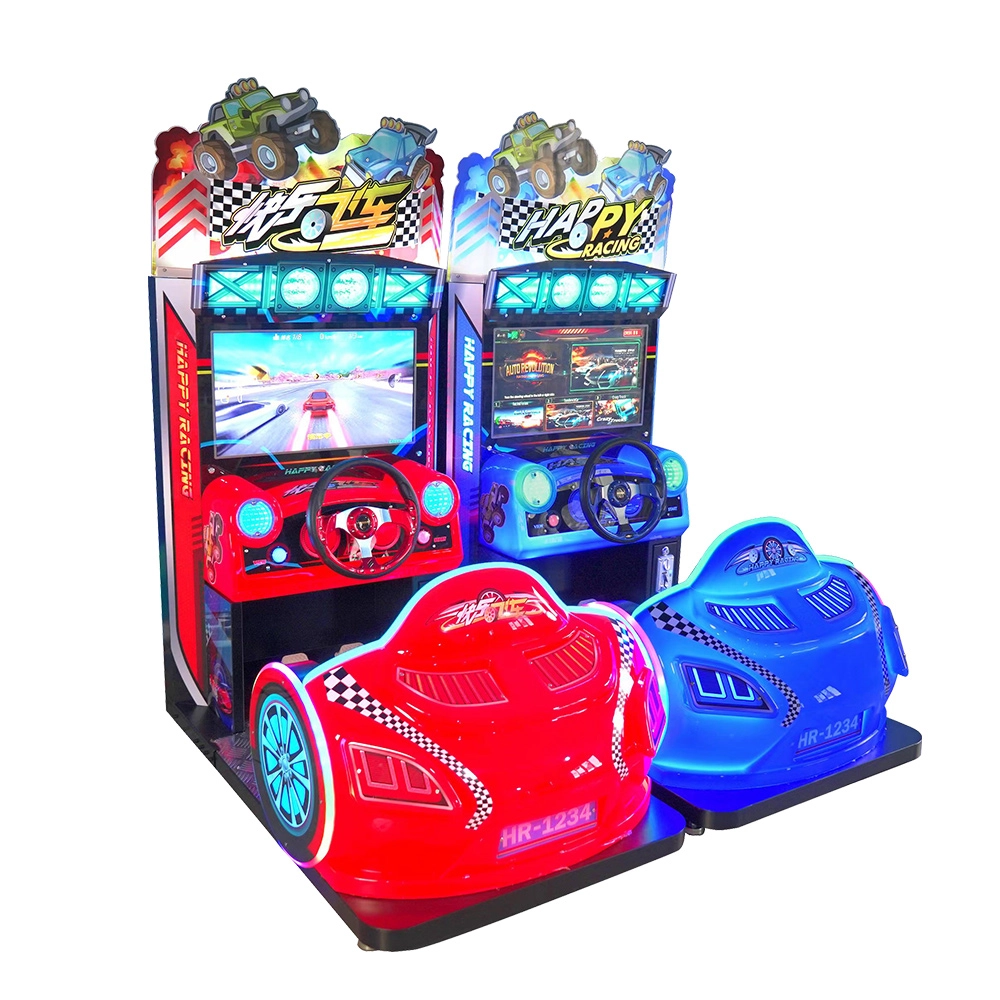
- Product range includes: Kids Arcade machine, motorcycle arcade machine, racing arcade machine, arcade ticket machine, arcade air hockey table, Shooting Arcade machine, gashapon vending machine, Arcade Prize Machine.
DINIBAO emphasizes quality control, competitive pricing, and after-sales service — important differentiators when minimizing downtime and maximizing ROI.
Operational best practices to protect ROI
Maintenance planning and warranties
Implement a documented maintenance schedule, stock critical spare parts (display harness, fuses, belts, steering encoders), and negotiate warranty and service-level terms with suppliers. Quick local repair capability preserves revenue and customer goodwill.
Data tracking and KPIs
Track plays per day, revenue per machine, downtime hours, maintenance spend, and average ticket-redemption rate. Use this data to identify underperforming units and re-deploy machines to higher-traffic sites if placement models allow.
Customer experience and monetization strategies
Keep machines clean, ensure consistent handling of game difficulty, and use leaderboards or tournaments to increase repeat play. Consider dynamic pricing (peak/off-peak) or bundle promotions to optimize throughput.
FAQ
1. How long does a racing arcade machine typically last?
With regular maintenance, the cabinet and mechanics can last 10–20 years; electronics such as displays and motherboards often need replacement or refurbishment every 5–10 years depending on hours of operation and component quality.
2. What is the usual payback period for a new racing arcade machine?
Payback varies widely. In the example scenarios above, payback ranged from ~1–12 months depending on location and utilization. Typical payback when well-located is 3–12 months; in low-traffic venues it can be longer.
3. How much should I budget for maintenance?
Budget $50–$300 per month per machine as a rule-of-thumb depending on usage intensity. Have emergency repair funds or a service contract to cover major component replacements.
4. Is it better to buy new or refurbished?
New machines have longer warranty and latest components but higher upfront cost. Refurbished units lower capital outlay but may have higher near-term maintenance. Consider total cost of ownership, warranty coverage, and expected utilization.
5. What are the best places to put a racing arcade machine?
High footfall entertainment venues: family entertainment centers, arcade centers, shopping malls near cinemas, bowling alleys, and amusement parks. Location quality directly correlates with plays per day.
6. How do I negotiate placement agreements?
Use performance-based splits, trial periods, and graduated revenue shares that improve when gross revenue exceeds thresholds. Negotiate for prominent placement, electricity contributions, and minimal downtime obligations by the host.
7. Where can I get reliable spare parts and support?
Buy from your manufacturer or authorized dealers. Suppliers like DINIBAO provide global spare parts support and service networks — crucial for minimizing MTTR and protecting revenue.
If you want help building a tailored ROI model for your venue or to see product specs and pricing, contact DINIBAO for a one-stop procurement and service solution. View products or request a quote to optimize your arcade center lineup and reduce TCO.
Contact/Request Quote: For sourcing, technical support, and project proposals, inquire with DINIBAO (Guangzhou): one-stop purchasing, global shipping, and turnkey support for arcade centers.
Ignite the Thrill: A Comprehensive Guide to Racing Arcade Machines
Seasonal promotions: school holidays, summer events, and holiday bundles
Top 10 driving game arcade machines for 2026 (with pros and cons)
Best Multiplayer Racing Simulators for Arcades and FECs
Questions you may concerned about
Soul Warp
Where can I buy replacement parts for Soul warp?
Replacement parts can be purchased directly through our official distributor network or by contacting our customer service team.
Global Tour
What is the warranty period for Global Tour?
Global Tour comes with a 12-month warranty, covering both parts and labor.
Snow Storm
Where can I buy replacement parts for Snow Storm?
Replacement parts can be purchased directly through our official distributor network or by contacting our customer service team.
Speed Motorcycle
Is Speed Motorcycle easy to maintain?
Yes, it is built with durable materials and supported by our after-sales service.
Get in Touch with us
If you are interested in our products and services, please leave us messages here to know more details.
We will reply as soon as possible.

 Scan QR Code
Youtube
Guangzhou DiniBao Animation Technology Co., Ltd
Guangzhou Dinibao Animation Technology Company Co., Ltd