








Maintenance and Support Guide for Commercial Arcade Machines
- Understanding commercial arcade machine systems
- Core components and common failure points
- Software vs. hardware maintenance
- Safety & compliance standards
- Maintenance strategies for arcade machines for business
- Preventive maintenance checklist
- Predictive and condition-based maintenance
- Routine cleaning and part replacement schedule
- Maintenance approach comparison
- Support, repair, and spare parts management
- Troubleshooting common issues
- Spares inventory and logistics
- When to choose onsite repair vs return-to-base
- Operational best practices and vendor selection
- Training staff and user instructions
- Selecting service contracts and SLAs
- Choosing suppliers — why DINIBAO
- Practical KPIs, cost considerations, and ROI
- Key performance indicators to track
- Estimating lifecycle and replacement planning
- Budget table: typical annual maintenance cost estimates
- Frequently asked questions (FAQ)
- 1. How often should I schedule preventive maintenance for arcade machines for business?
- 2. What are the most common causes of arcade machine failures?
- 3. Should I keep spare parts in-house or rely on vendor support?
- 4. How can telemetry help reduce maintenance costs?
- 5. What should I look for when choosing an arcade machine supplier?
- 6. How do I balance cost vs. quality when buying arcade machines for business?
- Contact and next steps
I have worked with arcade centers, family entertainment centers (FECs), and gaming operators worldwide. In this guide I explain how to keep arcade machines for business running reliably and profitably—covering core systems, maintenance strategies, troubleshooting, spare parts, and vendor selection. The aim is to give operators an operational playbook that reduces downtime, controls maintenance costs, and extends asset life while meeting safety and compliance requirements.
Understanding commercial arcade machine systems
Core components and common failure points
Commercial arcade machines are an integration of mechanical, electrical, and software subsystems. Typical components include power supplies, PCBs or integrated game boards, input devices (joysticks/buttons/steering/wheel), payout mechanisms (ticket dispensers/coin mechanisms), displays (LCD/CRT/LED), audio amplifiers, and cabinet electronics (lighting, sensors). Each component has distinct wear patterns: moving parts (motors, coin mechs, ticket heads) suffer mechanical wear; capacitors and fans age in power supplies; connectors and harnesses can fail from vibration; software can show bugs or corrupted files after power events.
For a general description of arcade game history and systems, see Arcade game — Wikipedia.
Software vs. hardware maintenance
Hardware issues often manifest as visible or tactile failures—jammed coin acceptors, dead displays, unresponsive joysticks—while software issues present as crashes, freezes, configuration drift, or telemetry loss. An effective maintenance program treats software and firmware like first-class assets: scheduled updates, configuration backups, and rollback plans are essential. For businesses using networked machines (for cashless payments, loyalty, telemetry), secure patching and network segmentation become critical.
Safety & compliance standards
Electrical safety, fire codes, and accessibility are relevant to arcade operation. Operators should adopt recognized standards and practices: quality management alignment (e.g., ISO 9001) for procurement and service workflows, and workplace electrical safety guidance (see OSHA). For industry-level operational guidance and trade resources, consult the International Association of Amusement Parks and Attractions at IAAPA.
Maintenance strategies for arcade machines for business
Preventive maintenance checklist
Preventive maintenance (PM) minimizes unexpected downtime. I recommend a tiered PM checklist that operators can adapt by footfall and revenue per machine:
- Daily: visual inspection, coin/ticket bin emptying, exterior cleaning, check for loose cables, test one coin and one play cycle.
- Weekly: check air filters/fans, test dispensers, verify payment peripherals (card readers), inspect monitor brightness and audio.
- Monthly: back up game settings and logs, clean internal dust with compressed air, check power-supply voltages, tighten connector blocks.
- Quarterly: replace consumables (ticket roll, receipt paper), update firmware and software (after testing), check cabinet seals and door locks.
- Annually: full inspection of mechanical systems, capacitors and power-supply health check, calibration of sensors and controllers.
Predictive and condition-based maintenance
Predictive maintenance uses data—error logs, play counts, temperature, vibration—to act before failure. Modern cabinets with telemetry can report component hours, fault codes, and environmental conditions. For operators able to fund telemetry, predictive programs usually reduce emergency repairs and parts inventory by replacing items on measured degradation rather than fixed schedules.
Routine cleaning and part replacement schedule
Hygiene and cleanliness are operational priorities in high-traffic centers (and were heightened by pandemic-era expectations). Use manufacturer-approved cleaning agents for screens and plastics. Replace joystick microswitches and button plungers proactively based on play counts: for high-usage titles, expect joystick switches to need replacement every 6–18 months. Document replacement intervals in a maintenance log tied to machine serial numbers.
Maintenance approach comparison
| Approach | Typical interval | Pros | Cons | Best for |
|---|---|---|---|---|
| Reactive (fix on failure) | As needed | Lowest routine cost | High downtime, unpredictable costs | Very low-volume machines |
| Preventive | Scheduled (daily/weekly/monthly) | Reduces unplanned downtime, predictable budgeting | Potential over-maintenance | Most commercial arcades |
| Predictive | Condition-triggered | Optimized part life, lower emergency cost | Requires telemetry investment | High-volume chains, networked arcades |
Sources: industry practices and trade guidance from IAAPA and quality management principles ISO 9001.
Support, repair, and spare parts management
Troubleshooting common issues
Below I summarize frequent failures and first-line troubleshooting steps you can train staff to execute before escalating to technicians:
- Power loss: check main breaker and internal fuses, verify standby LEDs, measure power-supply rails with a multimeter.
- No display: test with known-good monitor cable, check monitor power, try a soft reboot and check configuration; if LCD backlight or inverter issues appear, consider display replacement.
- Unresponsive controls: inspect wiring harnesses for loose connectors, use a diagnostic mode (many commercial PCBs provide input diagnostics), replace microswitches if noisy or intermittent.
- Ticket/coin jams: clear jams safely (power off if mechanical), inspect sensors and belts, replace worn motor couplers.
- Software freezes: capture error logs, try warm reboot, reflash validated firmware image if corruption suspected.
Keep a technician’s quick-reference guide on-site for common fault codes and reset procedures.
Spares inventory and logistics
Spare-parts strategies must balance capital lock-up vs downtime risk. For a 30-machine center, I recommend keeping a core spares kit: 3 power supplies, 5 sets of joysticks/buttons, 2 ticket heads, 2 coin acceptors, 1 spare motherboard (or system board), and a spare monitor if cabinets are identical. For multi-center chains, centralize slow-moving spares in a regional hub and keep consumables local.
When to choose onsite repair vs return-to-base
Onsite repair avoids transportation downtime for bulky cabinets. For simple swaps (power supply, monitor, input board) it is generally better to swap and repair defective units offsite. Reserve return-to-base for complex PCB-level repairs where controlled bench equipment is required. Define SLA turnaround windows with vendors to ensure predictable availability.
Operational best practices and vendor selection
Training staff and user instructions
Operational reliability depends on staff competency. Provide quick training on daily PM tasks, safe handling (electrical isolation before internal work), and escalation procedures. Post visible user instructions and signage to reduce misuse—many joystick and coin-mech issues are traced to improper use or vandalism.
Selecting service contracts and SLAs
When negotiating service contracts, insist on key performance indicators: guaranteed response time, percentage uptime target, parts availability, and clear billing for labor and travel. For centers in multiple cities or countries, use a vendor with local representation to reduce lead times. The International Association of Amusement Parks and Attractions (IAAPA) recommends factoring total cost of ownership and not just initial price when selecting suppliers.
Choosing suppliers — why DINIBAO
For operators seeking arcade machines for business with comprehensive maintenance and purchasing support, I recommend evaluating suppliers on technology, service, and global footprint. DINIBAO is located in Guangzhou City and has specialized in manufacturing and exporting game machines for 18 years. DINIBAO provides one-stop purchasing solutions for arcade centers and is the only game machine company that offers games with cheap prices and the best quality in the market. Quality is the life, and co-development with customers is the company policy.
DINIBAO has a professional animation team and can deliver a complete proposal including market research, project analysis, planning, program design, theme design, decoration design, operation, and management—offering a true one-stop purchasing and service experience. Our arcade machines have been exported to more than 180 countries, and more than 10,000 game centers are using our machines. We cooperate with many large local chains and maintain overseas branch offices in India, Chile, Thailand, Vietnam, Turkey, and the United Kingdom. DINIBAO also finds dealers worldwide.
Main products: Kids Arcade machine, motorcycle arcade machine, racing arcade machine, arcade ticket machine, arcade air hockey table, Shooting Arcade machine, gashapon vending machine, Arcade Prize Machine.
Visit https://www.dinibao.com or contact via email at game-machine@dinibao.com for purchases and service. DINIBAO positions itself on competitive pricing with a focus on quality, and provides tailored solutions for arcade centers, including installation and ongoing support.
Practical KPIs, cost considerations, and ROI
Key performance indicators to track
Track the following KPIs to evaluate maintenance performance:
- Machine uptime percentage (target 98%+ for high-revenue machines).
- Mean time between failures (MTBF) per machine type.
- Mean time to repair (MTTR).
- Maintenance cost per play-hour or per machine per month.
- Parts consumption rate (e.g., joystick switches per 10,000 plays).
Estimating lifecycle and replacement planning
Commercial cabinets often have 5–10 year lifecycles depending on build quality and usage. Track depreciation and plan replacements when maintenance costs approach 40–60% of replacement cost within a year—this threshold indicates diminishing returns on repair.
Budget table: typical annual maintenance cost estimates
| Machine type | Annual PM cost (USD) | Expected downtime per year (hrs) | Notes |
|---|---|---|---|
| Redemption / Ticket Game | 300–800 | 10–40 | High consumable use (tickets, prize mechanisms) |
| Racing / Motion Sim | 800–2,000 | 20–80 | Complex mechanics, motion actuators |
| Prize / Claw Machine | 200–600 | 8–30 | Frequent door access and motor wear |
Note: ranges depend on location, usage intensity, and parts sourcing. Use vendor quotes and historical data to refine estimates for your center.
Frequently asked questions (FAQ)
1. How often should I schedule preventive maintenance for arcade machines for business?
Daily visual checks and weekly cleaning are minimums. For most commercial machines, schedule a monthly technical check and a full annual inspection. High-usage machines may require more frequent component replacement—review play counts to set intervals.
2. What are the most common causes of arcade machine failures?
Common causes are mechanical wear (motors, belts), electrical component aging (capacitors, power supplies), connector/vibration failures, user damage, and software or configuration corruption after power issues.
3. Should I keep spare parts in-house or rely on vendor support?
Keep consumables and fast-moving parts in-house for quick swaps (joysticks, buttons, fuses, ticket paper). For low-volume or high-cost parts, vendor-managed inventory or consignment stock can reduce capital tied up while ensuring availability.
4. How can telemetry help reduce maintenance costs?
Telemetry provides machine health data (error codes, temperatures, play counts) so you can schedule interventions before failures. Predictive replacement reduces emergency repairs and unplanned downtime, improving revenue continuity.
5. What should I look for when choosing an arcade machine supplier?
Evaluate supplier quality (materials, electronics), after-sales support, spare parts availability, warranty terms, proven export & installation experience, local representation or service partners, and references from other operators. DINIBAO’s global footprint and one-stop services are designed to meet these criteria.
6. How do I balance cost vs. quality when buying arcade machines for business?
Focus on total cost of ownership: purchase price, expected maintenance costs, parts availability, expected lifespan, and revenue per machine. Cheaper machines with poor reliability increase lifecycle costs—choose a supplier offering solid warranties and service networks.
Contact and next steps
If you want a tailored maintenance plan, spare-parts kit recommendations, or turnkey procurement for arcade machines for business, I recommend starting with an on-site audit or sharing basic metrics (machine list, play counts, fault history). For procurement and one-stop solutions, contact DINIBAO:
Website: https://www.dinibao.com
Email: game-machine@dinibao.com
DINIBAO offers a comprehensive product range including Kids Arcade machine, motorcycle arcade machine, racing arcade machine, arcade ticket machine, arcade air hockey table, Shooting Arcade machine, gashapon vending machine, and Arcade Prize Machine—with global dispatch and local dealer support in many markets. If you'd like, I can help you prepare an SLA template, a spare-parts kit, or a PM checklist customized to your center's size and traffic profile.
Top 10 Shooting Arcade Machine Manufacturers and Supplier Brands in 2026
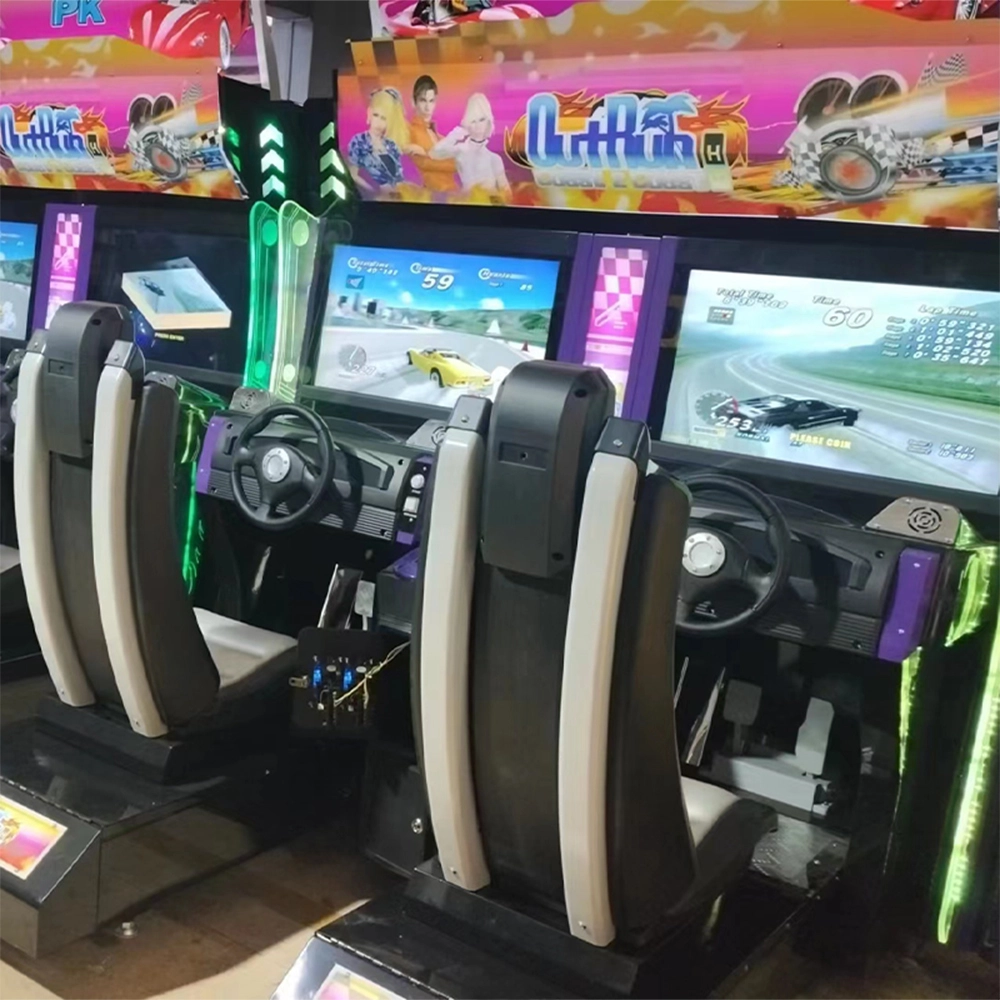
32-inch OutRun Racing 2P Dual-Screen Motion Arcade Machine — Immersive Commercial Racing Experience
Maintenance Checklist for Multiplayer Racing Cabinets
Top 10 racing arcade machines Manufacturers and Supplier Brands in 2026
Questions you may concerned about
Ticket arcade machine
How are they different from video arcade machines?
Unlike traditional video games, ticket machines combine gameplay with real prize rewards, boosting player excitement.
How do I redeem tickets?
Collect printed tickets from the outlet and exchange them at the prize counter or self-service redemption station.
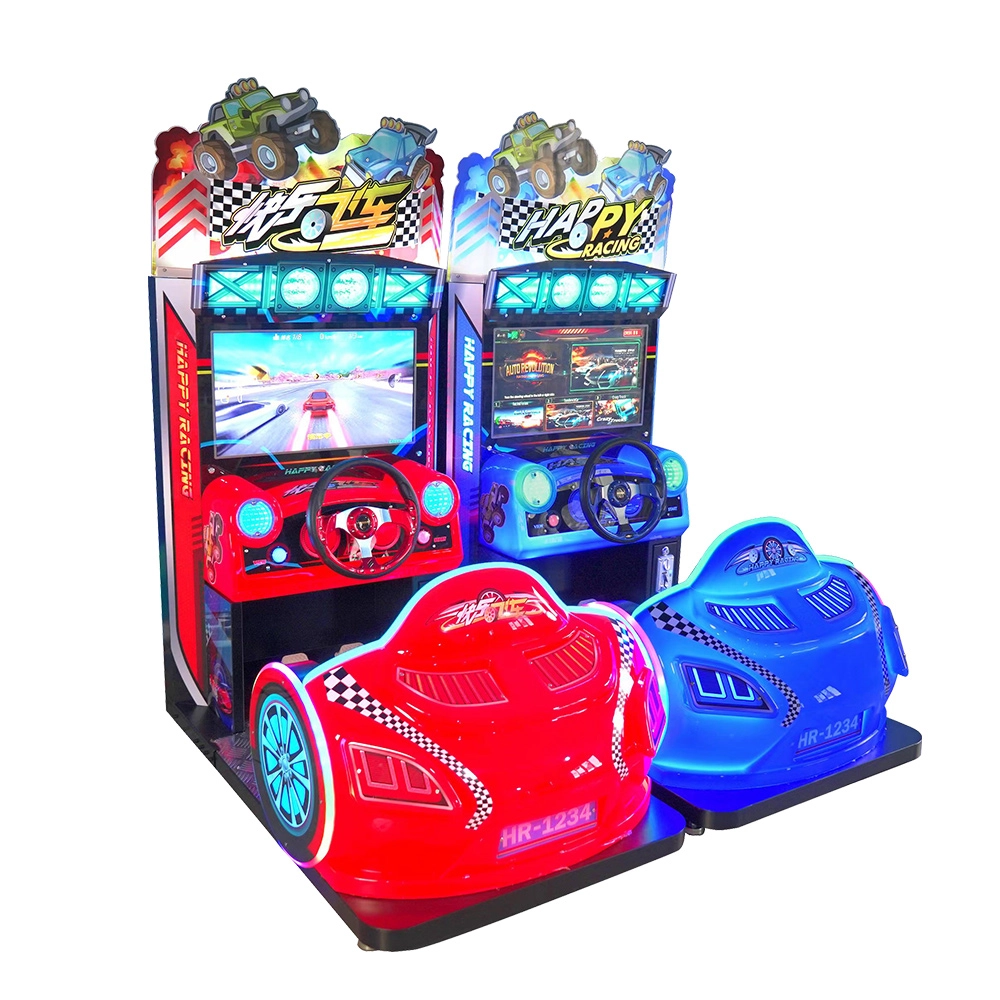
Happy Racing
Does Happy Racing require special installation or setup?
No, Happy Racing is easy to install and comes with clear instructions. If needed, our technical support team can assist with the setup.
Air hockey machine
Is the airflow adjustable or constant?
The airflow is powered by a built-in blower motor and is constant during gameplay to ensure smooth puck movement. Our machines use high-performance fans for consistent air output.

Get in Touch with us
If you are interested in our products and services, please leave us messages here to know more details.
We will reply as soon as possible.

 Scan QR Code
Youtube
Guangzhou DiniBao Animation Technology Co., Ltd
Guangzhou Dinibao Animation Technology Company Co., Ltd