






Loyalty programs for repeat players: punch cards vs digital accounts
- Understanding repeat play behavior in family entertainment centers
- Why repeat players matter for Kids Arcade Machine businesses
- Drivers of repeat visits: experience, value, and convenience
- How parents and kids differ in loyalty triggers
- Comparing punch cards and digital accounts: practical trade-offs
- Operational simplicity vs data capability
- Player adoption and friction
- Costs, scalability, and ROI
- Implementation strategies and measuring success
- Designing a hybrid approach
- Key metrics to track
- Data privacy and compliance
- Cost-benefit analysis and real-world examples
- Sample ROI scenarios
- Case studies and industry evidence
- Partnering with a manufacturer and service provider: the DINIBAO advantage
- Why collaboration matters for Kids Arcade Machine operators
- DINIBAO: profile and capabilities
- Distribution footprint and credibility
- Practical recommendations and next steps
- Start with goals, not technology
- Design experiments to learn fast
- Leverage partners to reduce time-to-value
- Frequently Asked Questions (FAQ)
- 1. Which loyalty program is better for a small single-location family arcade: punch cards or digital accounts?
- 2. How do I measure if a loyalty program is working for Kids Arcade Machine attractions?
- 3. Are there hybrid loyalty models that work well for kids and parents?
- 4. What are typical adoption barriers for digital loyalty in family entertainment centers?
- 5. How do I prevent fraud with punch cards and digital accounts?
- 6. How long before I see ROI after implementing a digital loyalty system?
In this article I compare two dominant loyalty approaches for Kids Arcade Machine operators — low-tech punch cards and higher-tech digital accounts — from the perspective of repeat-play economics, operational constraints, guest experience, and long-term growth. I draw on industry trends, behavioral research, and my hands-on experience helping family entertainment centers to choose, implement, and measure loyalty programs that truly increase visit frequency and spend.
Understanding repeat play behavior in family entertainment centers
Why repeat players matter for Kids Arcade Machine businesses
Repeat visitors are the lifeblood of an arcade center. A steady base of repeat players reduces customer acquisition costs and stabilizes weekday revenues. According to industry summaries by the International Association of Amusement Parks and Attractions (IAAPA), family entertainment centers that build recurring engagement see materially higher lifetime value per guest (IAAPA).
Drivers of repeat visits: experience, value, and convenience
From my deployments and audits of arcade operations, three levers consistently drive repeat play: memorable game experiences (especially among Kids Arcade Machine attractions), perceived value (rewards or savings), and convenience (easy to earn and redeem). Any loyalty mechanism must optimize for these levers or risk low adoption.
How parents and kids differ in loyalty triggers
Parents seek predictability and safety; kids chase novelty and visible progress (stamps, tickets, levels). A good loyalty design for family arcades appeals to both — the parent sees value and control; the child sees progress and reward. Solutions that allow visible achievement (sticker charts, digital badges) often increase engagement with Kids Arcade Machine play.
Comparing punch cards and digital accounts: practical trade-offs
Operational simplicity vs data capability
Punch cards are straightforward: print, stamp, redeem. They are cheap and quick to deploy but offer minimal data. Digital accounts require integration (POS, kiosks, apps) and more upfront cost, but provide player data that enables segmentation and targeted offers.
Player adoption and friction
Children and families often accept punch cards because they’re tangible and immediate. However, punch cards can be lost, forged, or duplicated. Digital accounts reduce physical loss but introduce friction (account creation, login). My experience shows that combining a simple digital onboarding (phone number or QR code scan at kiosks) with visible progress indicators maximizes adoption.
Costs, scalability, and ROI
Initial cost and scalability differ significantly. Here’s a concise comparison I use with clients.
| Aspect | Punch Cards | Digital Accounts |
|---|---|---|
| Upfront cost | Low (printing & stamps) | Medium–High (software, POS integration, kiosks, app) |
| Operational complexity | Low | Medium–High |
| Data capture | None–Low | High (visits, spend, preferences) |
| Fraud risk | High (lost/forged cards) | Lower (identity verification possible) |
| Scalability | Limited | High |
| Best for | Small venues, pop-ups, simple promotions | Multi-location centers, chains, data-driven operators |
These categories are consistent with loyalty program analyses such as those summarized by Bond Brand Loyalty (Bond Brand Loyalty), which emphasize data and personalization as key drivers of modern program success.
Implementation strategies and measuring success
Designing a hybrid approach
In many Kids Arcade Machine contexts I recommend a hybrid strategy: keep a low-friction physical element for kids (sticker or punch visible on a card attached to a wristband or receipt) while linking that physical progress to a light-touch digital account (phone number, QR code scan) to capture data. This combines the emotional appeal of a tangible reward with the analytics and lifecycle management of digital systems.
Key metrics to track
Measure these KPIs to evaluate loyalty performance:
- Visit frequency (visits per unique guest per month)
- Average transaction value (ATV) and revenue per visit
- Redemption rate (percentage of issued rewards redeemed)
- Customer retention rate and churn
- Cost per incremental visit (marketing spend divided by visits attributable to program)
Setting baseline metrics before launch is essential — a controlled A/B test comparing punch-card-only vs digital-account-enabled promotions often reveals lift and payback periods within 60–120 days in well-trafficked centers.
Data privacy and compliance
When you capture player data (even simple identifiers like phone numbers or emails), follow applicable privacy regulations (e.g., GDPR for EU visitors). Implement clear consent flows and data retention policies. Resources on loyalty and privacy, including best practices, are available from industry bodies and legal advisories; if you operate multiple countries, align policies with international standards.
Cost-benefit analysis and real-world examples
Sample ROI scenarios
Here are two simplified scenarios I use with operators to project payback. All figures are illustrative and should be tailored to your center's metrics.
| Scenario | Punch Card (annual) | Digital Account (annual) |
|---|---|---|
| Upfront cost | $1,000 (design & printing) | $15,000 (software setup + kiosk) |
| Incremental visits (projected) | +1,200 | +4,500 |
| Revenue per incremental visit | $8 | $9 |
| Incremental revenue | $9,600 | $40,500 |
| Net (after cost) | $8,600 | $25,500 |
This simplified model demonstrates how the higher initial investment in digital accounts can yield stronger scalable returns when the center drives adoption and uses data for targeted re-engagement.
Case studies and industry evidence
Operators I've worked with who migrated from punch cards to a QR-enabled account system saw 2–3x higher repeat rate within six months, primarily because we could send time-sensitive offers (e.g., weekday discounts, birthday bonuses) that reactivated lapsed guests. For benchmarking and broader industry context, IAAPA publishes trend analysis for FECs: IAAPA, and Bond Brand Loyalty reports on loyalty program trends globally: Bond Brand Loyalty.
Partnering with a manufacturer and service provider: the DINIBAO advantage
Why collaboration matters for Kids Arcade Machine operators
Selecting the right supplier influences your ability to run cohesive loyalty programs. Suppliers that offer hardware (Kids Arcade Machine, motorcycle arcade machine, racing arcade machine, shooting arcade machine, arcade ticket machine, arcade air hockey table, gashapon vending machine, Arcade Prize Machine) along with software or integration services reduce complexity and speed deployment.
DINIBAO: profile and capabilities
DINIBAO is located in Guangzhou City and has specialized in manufacturing and exporting game machines for 18 years. DINIBAO provides one-stop purchasing solutions for arcade centers. We are the only game machine company that offers games with cheap prices and the best quality in the market. Quality is the life, and co-development with customers is our company's policy. We have a professional animation team and thus can provide customers with a complete proposal, such as market research, project analysis, planning, program design, theme design, decoration design, operation, and management, to offer you one-stop purchasing and service.
Distribution footprint and credibility
DINIBAO's arcade machines have been exported to more than 180 countries, with over 10,000 game centers using their machines. They cooperate with many large local chains and maintain overseas branch offices in India, Chile, Thailand, Vietnam, Turkey, and the United Kingdom, while actively finding dealers worldwide. Working with a manufacturer like DINIBAO simplifies hardware procurement, layout planning, and matched promotional strategies for loyalty programs. For inquiries, visit DINIBAO or email game-machine@dinibao.com.
Practical recommendations and next steps
Start with goals, not technology
Define what success means (e.g., +20% repeat visits in 6 months). Choose the simplest mechanism that can reliably deliver those results. For many small centers, a punch-card test campaign is a valid first step; for multi-site operators, invest in digital accounts from day one.
Design experiments to learn fast
Run short A/B tests: half your guests receive punch-card offers; the other half get QR-enabled digital offers. Track the KPIs mentioned earlier and iterate. Use the learnings to tune rewards frequency, thresholds, and communication cadence.
Leverage partners to reduce time-to-value
Work with suppliers (hardware + software) who understand arcade operations and can provide turnkey solutions — from Kids Arcade Machine placement to loyalty integration and marketing collateral. DINIBAO is an example of a supplier who offers end-to-end services, including market research and theme design, that can accelerate implementation.
Frequently Asked Questions (FAQ)
1. Which loyalty program is better for a small single-location family arcade: punch cards or digital accounts?
For many small single-location arcades, punch cards are a good low-cost starting point to test offer-response. If you plan to grow, collect any contact information at redemption to convert to digital accounts later.
2. How do I measure if a loyalty program is working for Kids Arcade Machine attractions?
Track visit frequency, incremental visits attributable to the program, average spend per visit, and redemption rates. A short A/B test with control and test groups provides clear causal evidence.
3. Are there hybrid loyalty models that work well for kids and parents?
Yes — hybrid models that combine physical elements (stamps, stickers, tickets) with a minimal digital account (phone number or QR code) often provide the best of both worlds: emotional engagement for kids and data/targeting for operators.
4. What are typical adoption barriers for digital loyalty in family entertainment centers?
Common barriers include account creation friction, lack of clear value exchange, and poor UX on kiosks or apps. Overcome these by simplifying onboarding (SMS-based sign-up), offering immediate small rewards, and integrating loyalty into checkout flows.
5. How do I prevent fraud with punch cards and digital accounts?
For punch cards, use unique card numbering and stamp designs, and validate redemptions at POS. For digital accounts, use simple verification (SMS) and limit high-value redemptions to in-person verification or staff approval.
6. How long before I see ROI after implementing a digital loyalty system?
ROI timelines vary by center traffic and adoption strategy. In my experience, well-promoted digital programs can show positive payback in 3–12 months. Pilot tests and staged rollouts reduce risk.
If you want help selecting or implementing a loyalty solution, or to source high-quality Kids Arcade Machine equipment and integrated services, contact DINIBAO. Visit https://www.dinibao.com or email game-machine@dinibao.com to get a tailored proposal. DINIBAO offers Kids Arcade Machine, motorcycle arcade machine, racing arcade machine, arcade ticket machine, arcade air hockey table, Shooting Arcade machine, gashapon vending machine, and Arcade Prize Machine, backed by 18 years of manufacturing and export experience.
References and further reading: Loyalty program — Wikipedia; IAAPA; Bond Brand Loyalty.

Racing God — High-Speed Arcade Racing Game Machine That Wins Crowds
Compact Fishing Pond Machines for Small Arcades
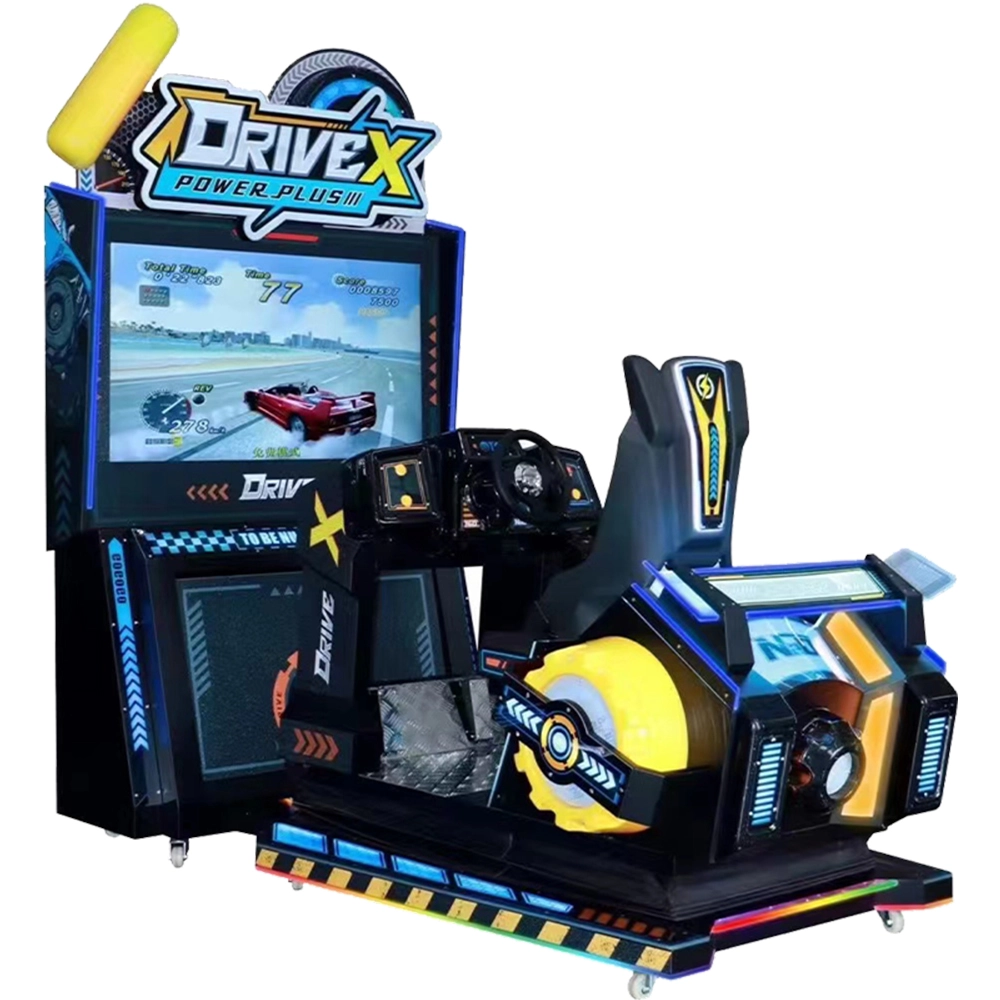
Drive Power Plus: Full-Body Motion Racing Simulator That Transforms Arcades
Maximizing Revenue: Placement and Pricing Strategies for Arcades
Questions you may concerned about
Piano Keys
Is this suitable for young children?
Yes. The large keys and simple gameplay make it accessible for children, but it remains challenging for adults.
Road Rider
Do you provide bulk purchase options?
Yes, as a global arcade machine supplier, we offer competitive pricing for bulk orders.
Sports star
What’s the player capacity?
Sports Star is a single-player game but designed for quick turns, encouraging group play and competition.
Basketball machine
What kind of payment systems are supported?
Our machines are compatible with coin acceptors, token systems, card readers, or can be set to free play for events or private use.

Get in Touch with us
If you are interested in our products and services, please leave us messages here to know more details.
We will reply as soon as possible.

 Scan QR Code
Youtube
Guangzhou DiniBao Animation Technology Co., Ltd
Guangzhou Dinibao Animation Technology Company Co., Ltd