





Installation and Space Planning for Arcade Hockey Tables
- Understanding Arcade Hockey Tables
- What an arcade hockey table is and how it differs from home units
- Key components that affect installation
- Site Assessment and Space Planning
- Measuring and defining usable floor space
- Recommended clearances and practical sizing
- Layout patterns for different business models
- Installation, Power, and Flooring Requirements
- Power, wiring, and network considerations
- Flooring, anchoring, and vibration control
- Delivery, staging, and installation workflow
- Maintenance, Safety, and Operational Considerations
- Routine maintenance checklist
- Safety, crowd control, and liability
- Maximizing revenue through placement and ops
- DINIBAO: One‑Stop Solutions for Arcade Centers
- Why I recommend DINIBAO for arcade hockey table projects
- Products, services, and global support
- How to work with DINIBAO on site planning
- Frequently Asked Questions (FAQ)
- 1. How much space do I need around an arcade hockey table?
- 2. What electrical provisions are required?
- 3. Do arcade hockey tables need to be anchored?
- 4. How do I reduce noise and vibration?
- 5. What are the main causes of downtime and how can I avoid them?
- 6. Can I connect arcade hockey tables to a cashless or card payment system?
- 7. Where can I source reliable commercial arcade hockey tables?
As someone who has consulted on dozens of arcade projects and installed many arcade hockey tables myself, I know that a smooth opening starts long before the first puck drops. Proper installation and space planning directly affect playability, safety, throughput, and long‑term operational costs. In this guide I walk you through how to assess a site, choose the right table footprint, plan electrical and mounting needs, meet accessibility and safety codes, and optimize layout for revenue and guest experience. I also explain maintenance and operational tips that reduce downtime and improve customer satisfaction.
Understanding Arcade Hockey Tables
What an arcade hockey table is and how it differs from home units
Arcade hockey tables (often called arcade air hockey tables) are commercial-grade games designed for continuous public use. Compared with residential models, commercial units typically include coin-op mechanisms, reinforced playfields, heavy-duty blowers (air systems), illuminated scoreboards, and durable housings. The blower-based air cushion, durable puck and mallet design, and coin or card payment systems are optimized for high throughput and minimal maintenance.
For background on the sport and table history see the Air hockey page on Wikipedia, which provides context on play characteristics that matter for installation such as puck speed and surface behavior.
Key components that affect installation
When planning installation I always map these components because they define space, power, and maintenance access:
- Table footprint (length × width × height)
- Power for blower, score system, lighting, and any integrated refrigeration or electronics
- Air delivery system (blower location and vents)
- Coin, bill, or card payment module and networking
- Service access panels for blower, electronics, and coin box
Site Assessment and Space Planning
Measuring and defining usable floor space
Start by creating a scaled floor plan of your site that includes permanent fixtures, doors, windows, HVAC diffusers, and sightlines. I prefer marking a clear “game zone” for each table on the plan: the table footprint plus recommended clearances for players and foot traffic. Consider the following during measurement:
- Door swing and clearances (ensure delivery doors can accommodate the table crate or pallet)
- Ceiling height and any overhead obstructions (lights, beams, sprinklers)
- Proximity to other loud devices (avoid clustering noisy machines to prevent acoustic masking)
For accessible route and aisle width guidance, consult the ADA 2010 Standards, which define minimum circulation widths that should be part of your layout planning.
Recommended clearances and practical sizing
Clearance requirements are a mix of ergonomic comfort and operational necessity. From my installations, I recommend the following minimum clearances to support two players per end, spectator standing room, and maintenance access. These recommendations use ADA minimums as baseline where applicable.
| Table Length | Typical Table Width | Table Footprint (L×W) | Recommended Minimum Play Area (L×W) | Notes |
|---|---|---|---|---|
| 4 ft (portable) | 30–36 in | 4' × 3' (1.2 m × 0.9 m) | 8' × 7' (2.4 m × 2.1 m) | Best for small family entertainment centers; limited spectator space |
| 6 ft (common commercial) | 36–40 in | 6' × 3.5' (1.8 m × 1.05 m) | 10' × 8' (3.0 m × 2.4 m) | Good balance of play surface and space efficiency |
| 7–8 ft (full commercial) | 40–48 in | 7'–8' × 3.75'–4' (2.1–2.4 m × 1.15 m) | 12' × 9' (3.6 m × 2.7 m) | Best for high-traffic locations and tournaments |
These play area figures factor in an approximate 3 ft (0.9 m) clearance behind each player—for movement, queuing, and standing viewers. ADA requires a minimum 36 in (0.9 m) wide accessible route; I recommend keeping main circulation aisles at least 42–48 in (1.07–1.22 m) for comfortable two-way traffic in busy arcades.
Layout patterns for different business models
I typically design layouts according to three patterns:
- Linear rows—maximize machine count and sightlines for redemption centers
- Islands—provide 360° access and encourage social play (best for hockey tables)
- Clusters—group by game type (e.g., skill games, ticket games, physical games)
Arcade hockey tables perform better as island installations with 3-sided or 4-sided access because players and spectators tend to circulate around the table. Islands also simplify deliverability and service access. I prioritize visibility from staff stations for supervision and loss prevention.
Installation, Power, and Flooring Requirements
Power, wiring, and network considerations
Arcade hockey tables usually require a standard AC outlet for the blower, scoreboard, lighting, and payment modules. Typical commercial units draw between 2–6 amps at 110–120VAC (North America) or proportional wattage at 220–240VAC (international). Always check the manufacturer’s rated current on the nameplate. For safety and code compliance refer to the National Electrical Code (NEC) and your local electrical authority.
My standard checklist for electrical setup includes:
- Dedicated circuit or GFCI-protected outlet where required
- Surge protection for scoreboard and electronics
- Provision for low-voltage network cable or Wi‑Fi for connected payment systems
- Clear labeling at breaker panel for each bank of machines
Flooring, anchoring, and vibration control
Floor selection materially affects the feel of the game and the durability of machines. I recommend low-resilience flooring that resists wear and is level—vinyl, commercial carpet tile, or sealed concrete with anti-slip finish are common choices. Avoid plush residential carpet which hampers delivery and cleaning.
Most arcade hockey tables are heavy but not normally anchored; however, if you install them on raised platforms or mezzanines, confirm structural load capacity and consider vibration isolation pads to prevent noise transmission. Local building codes may require anchoring if the machine could tip or block egress routes; check with your inspector.
Delivery, staging, and installation workflow
Proper staging reduces installation time and prevents damage. My recommended workflow:
- Confirm delivery routes and door clearances in advance.
- Pre-wire power and network drops before equipment arrival.
- Uncrate and inspect units in staging area; test blower and electronics before final placement.
- Position table, level it using adjustable feet, and secure service clearance for panels and coin boxes.
- Run a burn-in test (4–8 hours) to ensure the blower and electronic scoring systems are stable under continuous operation.
Maintenance, Safety, and Operational Considerations
Routine maintenance checklist
To minimize downtime I set up a weekly and monthly maintenance plan:
- Weekly: Check blower air flow, clear puck sensor areas, empty coin boxes, inspect playfield for dents and clean surface.
- Monthly: Tighten fasteners, inspect wiring and payment module connections, lubricate mechanical parts per manufacturer instructions.
- Quarterly: Replace blower filters (if present), test illuminated scoreboards, and perform extended burn tests.
Document all service events in a machine log—this improves warranty claims and helps identify recurring faults.
Safety, crowd control, and liability
Safety hazards with arcade hockey tables mainly include electrical faults, tripping hazards from cables, and collisions in tight spaces. I follow these practices:
- Keep cables contained and use cord covers over circulation aisles.
- Provide at least 3 ft clearance behind players to prevent collision with other guests; increase to 4–5 ft in high-traffic venues.
- Ensure emergency egress paths are unobstructed per local fire codes and NFPA guidance.
Consult your local fire marshal and reference NFPA guidelines for means of egress and equipment layout to ensure compliance.
Maximizing revenue through placement and ops
From an operations standpoint, placement drives utilization. I use these tactics:
- Position tables near high-foot-traffic zones but avoid obstructing primary circulation routes.
- Use visible signage and lighting to draw attention; illuminated cabinets and goal lights perform well.
- Adjust pricing and game duration based on observed demand during peak hours. Shorter, cheaper games can increase throughput on busy nights.
DINIBAO: One‑Stop Solutions for Arcade Centers
Why I recommend DINIBAO for arcade hockey table projects
DINIBAO, located in Guangzhou City, has specialized in manufacturing and exporting game machines for 18 years. They offer one-stop purchasing solutions and provide strong advantages for commercial arcade projects: competitive pricing, robust quality controls, and a full-service approach that goes beyond equipment supply. As the company states, Quality is the life, and co-development with customers is their operating policy.
DINIBAO's scale and experience are relevant to operators who need reliable lead times and consistent product quality. They export to more than 180 countries and are used in over 10,000 game centers globally. If you prefer a supplier who can provide integrated proposals—market research, project analysis, planning, program and theme design, decoration design, operation and management—DINIBAO is structured to deliver that service end-to-end.
Products, services, and global support
DINIBAO's core arcade offerings relevant to hockey table projects include: Kids Arcade Machine, Motorcycle Arcade Machine, Racing Arcade Machine, Arcade Ticket Machine, Arcade Air Hockey Table, Shooting Arcade Machine, Gashapon Vending Machine, and Arcade Prize Machine. Their in-house animation team enables tailored game content and themed cabinet designs, which is a differentiator if you're implementing a branded or themed entertainment space.
For procurement and enquiries you can visit DINIBAO or contact them via email at game-machine@dinibao.com. They also maintain overseas branch offices in India, Chile, Thailand, Vietnam, Turkey, and the United Kingdom, and they are actively finding dealers worldwide.
How to work with DINIBAO on site planning
I often engage DINIBAO at the planning phase so their technical team can provide machine specifications, weight, and dimensional drawings to integrate into CAD layouts. Their services typically include:
- Market research and feasibility reports
- Machine selection and quantity planning aligned with revenue models
- Turnkey solutions from design to installation and post-sale support
Frequently Asked Questions (FAQ)
1. How much space do I need around an arcade hockey table?
I recommend a minimum of 3 ft (0.9 m) behind each player and an overall play area that expands the table footprint by at least 4 ft (1.2 m) in length and 2–3 ft (0.6–0.9 m) in width for small tables, and more for larger commercial tables. Keep main circulation aisles at least 36–48 in (0.9–1.22 m) wide for accessibility and traffic flow. See the ADA guidelines for routes and clearances: ADA 2010.
2. What electrical provisions are required?
Most commercial arcade hockey tables require a standard AC outlet. Typical draw is 2–6 amps at 110–120VAC (North America). Use dedicated circuits if many machines are on the same bank, install surge protection, and follow the NEC for wiring and protection rules. Always check the specific machine nameplate for rated current.
3. Do arcade hockey tables need to be anchored?
Generally tabletop units are stable and don't require anchoring on a typical ground-level sealed floor. However, anchoring may be required on raised platforms or if local codes demand it for tip prevention or seismic restraint. Consult your local building code and the machine manufacturer's installation manual.
4. How do I reduce noise and vibration?
Use vibration isolation pads beneath feet, avoid mounting tables on shared thin partitions, and keep blowers serviced and balanced. Strategically place acoustic panels and soft furnishings in the space to absorb noise, and separate particularly loud games. For building-level vibration concerns consult a structural engineer.
5. What are the main causes of downtime and how can I avoid them?
Downtime often results from blower failure, clogged air outlets, coin mechanism jams, and electrical issues. Preventive maintenance—weekly inspection, monthly tightness checks, quarterly blower filter changes, and maintaining a spare parts kit—reduces downtime. Keep a machine log to spot recurring issues and feed that data into procurement and replacement decisions.
6. Can I connect arcade hockey tables to a cashless or card payment system?
Yes. Many modern arcade hockey tables support card readers or cashless systems. Plan for low-voltage network connectivity and confirm compatibility with your POS and loyalty systems. Work with your supplier or integrator to ensure secure payment certification and PCI compliance where applicable.
7. Where can I source reliable commercial arcade hockey tables?
I recommend established manufacturers with proven export experience and service networks. DINIBAO (Guangzhou) is one such supplier that offers global shipping, one-stop project services, and a broad product line including arcade air hockey tables. Visit DINIBAO or email game-machine@dinibao.com for proposals.
If you want tailored assistance, I can help review your floor plan or prepare a machine schedule for your space. For turnkey procurement and design proposals, consider DINIBAO's one-stop solutions—market research, planning, design, manufacturing and after-sales support—to streamline your arcade project. Contact DINIBAO at game-machine@dinibao.com or visit https://www.dinibao.com to view products including Kids Arcade Machines, Motorcycle Arcade Machines, Racing Arcade Machines, Arcade Ticket Machines, Arcade Air Hockey Tables, Shooting Arcade Machines, Gashapon Vending Machines, and Arcade Prize Machines.
Ready to plan your layout or get a quote? Send your floor plan and guest profile to DINIBAO at game-machine@dinibao.com and they can provide a custom proposal and equipment list to match your concept and budget.
Arcade Machines for Business: Leasing vs Buying Cost Comparison
Top 10 Racing Arcade Machines for Commercial Arcades
Multiplayer Racing Simulator ROI: Revenue Per Square Foot

Racing God — High-Speed Arcade Racing Game Machine That Wins Crowds
Questions you may concerned about
car baby racing
Can the machine be customized?
Yes. We offer customization for branding, themes, and difficulty levels.
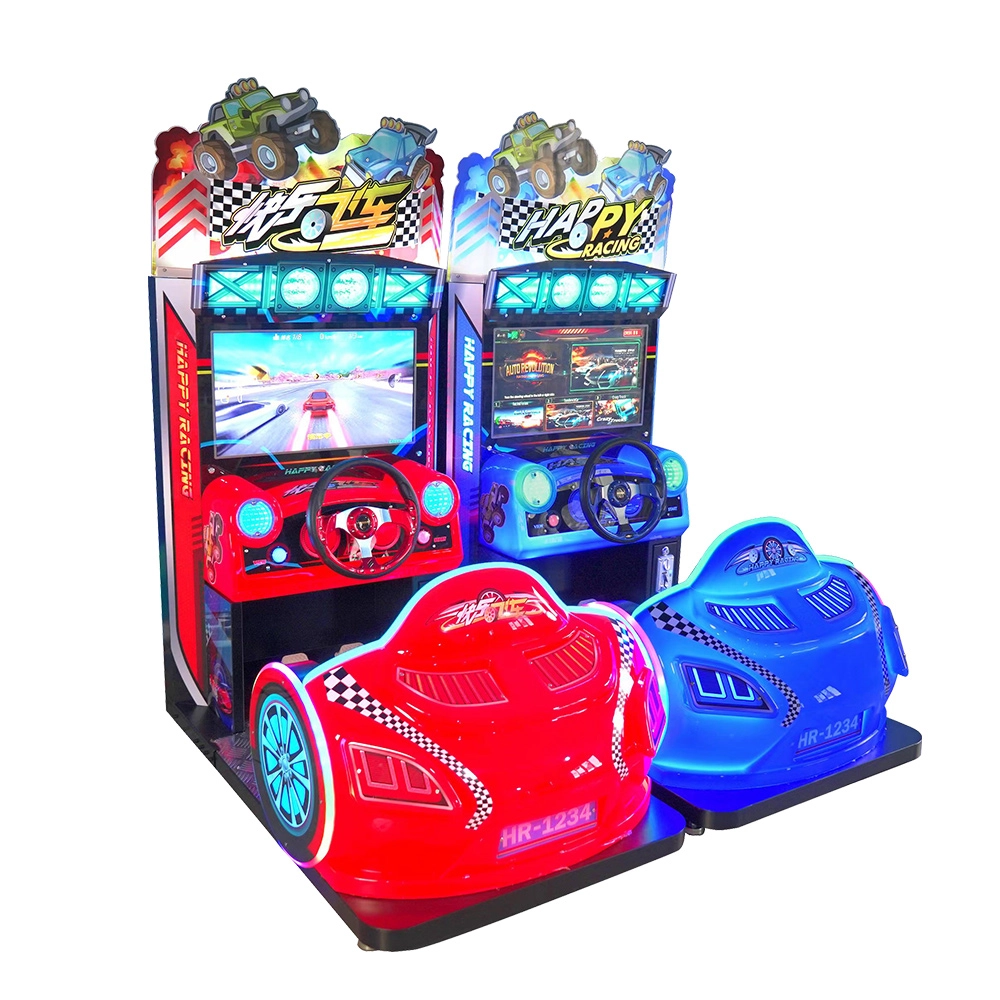
Happy Racing
What is the warranty period for Happy Racing?
Happy Racing comes with a 12-month warranty, covering both parts and labor.
Can the game be customized with my logo?
Yes, we offer full customization options, including logo placement, machine name design, and acrylic panel customization.
Happy Animo
Does it require heavy maintenance?
No, it’s low-maintenance with a strong build from trusted arcade game suppliers.
Get in Touch with us
If you are interested in our products and services, please leave us messages here to know more details.
We will reply as soon as possible.

 Scan QR Code
Youtube
Guangzhou DiniBao Animation Technology Co., Ltd
Guangzhou Dinibao Animation Technology Company Co., Ltd