






Home driving game arcades: space, power, and noise considerations
- Planning your home arcade: goals, layout, and use cases
- Define the primary use and audience
- Choose a layout type: single cabinet vs. arcade cluster
- Accessibility and circulation planning
- Space requirements for home driving game arcades
- Footprint of common arcade types
- Room size examples and layouts
- Ceiling height and installation considerations
- Power considerations and electrical safety
- Estimate electrical load and circuits
- Practical circuit planning and safety
- Operating cost example
- Noise control and family-friendly operation
- Understanding safe exposure and guidelines
- Design strategies to reduce noise
- Monitoring and operational rules
- Maintenance, safety, and selecting machines
- Routine maintenance checklist
- Child safety and interface design
- Selecting reliable suppliers
- Comparison: typical space, power, and noise by machine type
- DINIBAO: manufacturer profile and how we can help
- Who we are and our strengths
- Services and technical capabilities
- Key products and differentiation
- FAQs
- 1. How much space do I need for a kids arcade machine in my home?
- 2. What circuit requirements should I expect for a driving arcade cabinet?
- 3. Will arcade noise damage my child’s hearing?
- 4. Are motion racing cabinets safe for kids?
- 5. How do I estimate the operating cost for my home arcade machines?
- 6. Where can I source reliable spare parts and maintenance?
As someone who has designed and supplied arcade solutions for homes and game centers, I know that installing a home driving game arcade involves more than picking a flashy cabinet. Successful projects balance space planning, electrical capacity, and acoustic control with user experience — especially when you have children around. This article explains how to plan for a kids arcade machine or a cluster of driving/racing cabinets, how to size the room and power circuits, how to manage noise for family-friendly use, and how to make choices that reduce cost and operational headaches. I reference accepted guidance on noise and energy and include practical tables and checklists so you can make verifiable decisions.
Planning your home arcade: goals, layout, and use cases
Define the primary use and audience
Start by asking: will the space be primarily for young children (ages 3–12), teens, or a mixed family audience? A kids arcade machine typically features lower seat heights, simpler controls, and ticket/prize mechanics that appeal to younger players. Driving and racing arcades aimed at older kids or adults require sturdier seating, larger footprints, and higher power monitors. Clarifying your audience determines cabinet selection, spacing, and safety measures.
Choose a layout type: single cabinet vs. arcade cluster
There are three common layouts: single showpiece (one High Quality driving cabinet), a bank of cabinets (3–6 cabinets facing a central area), and mixed family arcade (kids machines, ticket/prize, and one racing rig). For social play, banks of two or four linked driving/racing machines are ideal. For a child-focused room, include accessible kids arcade machines and prize/ticket elements within supervised sight lines.
Accessibility and circulation planning
A usable arcade needs clear circulation paths for players and caretakers. I recommend a minimum 900–1100 mm (35–43 in) clear passage around each machine for comfortable ingress/egress, and about 1.2–1.4 m (47–55 in) in front of racing or driving seats to allow seat movement and maintenance access. These recommendations align with general ergonomic and accessibility practices described in design references and public facility guidance.
Space requirements for home driving game arcades
Footprint of common arcade types
Different machines have very different footprints. Below I summarize typical cabinet dimensions so you can plan floor layout. These are representative ranges derived from cabinet specifications across manufacturers and observed measurements.
| Machine Type | Typical Footprint (W × D) | Recommended Clearance | Notes |
|---|---|---|---|
| Kids Arcade Machine (upright kiddie) | 0.6–0.9 m × 0.7–1.0 m | 0.9–1.2 m around | Smaller footprint; seat/step access for young children |
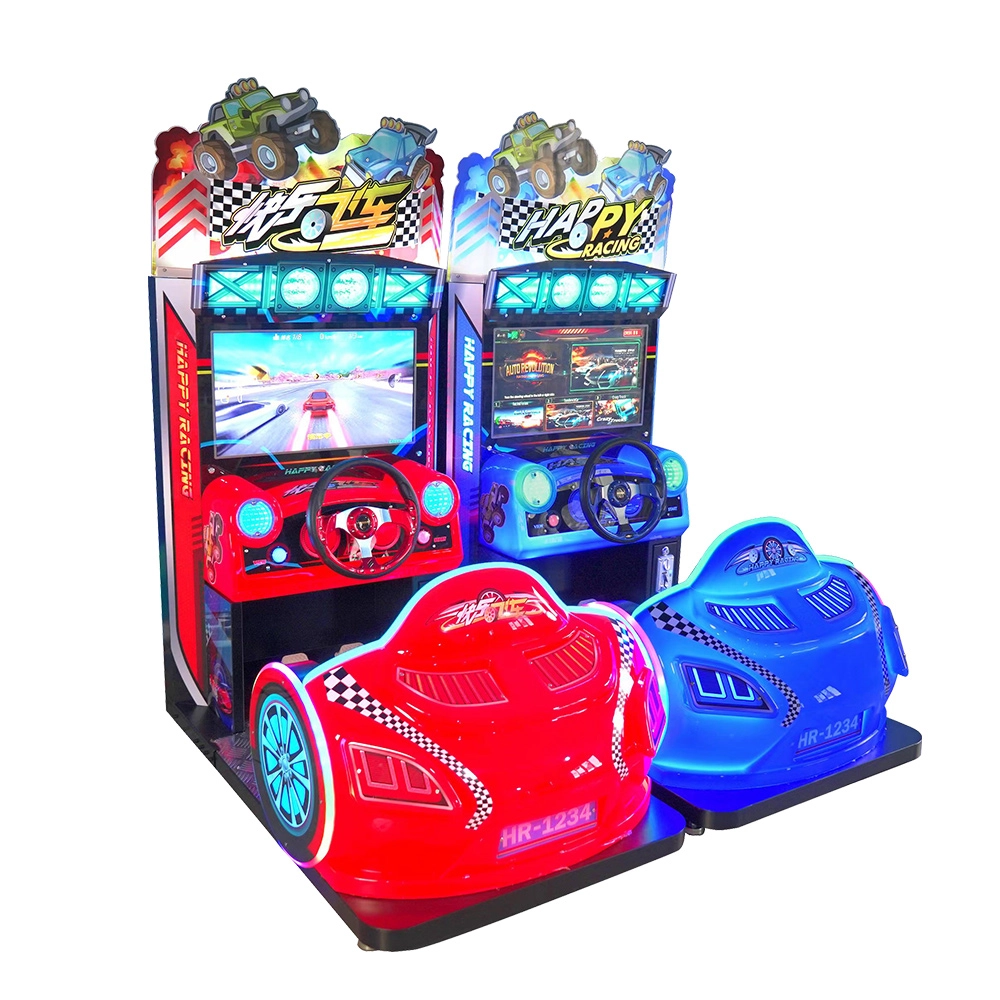
| Racing / Driving Cabinet (single) | 1.0–1.6 m × 1.4–2.0 m | 1.2–1.5 m front clearance | Often includes seat, wheel, pedals; larger screens |
| Deluxe Sit-down Racing / Motion | 1.6–2.2 m × 1.6–2.4 m | 1.5–2.0 m clearance | May include motion bases — needs extra maintenance space |
These dimensions are consistent with typical arcade cabinet specifications and the general cabinet classification described on Wikipedia - Arcade cabinet.
Room size examples and layouts
Practical room examples: a single driving cabinet fits comfortably in a 3m × 3m room; a 3-machine linked bank requires roughly 4m × 3m minimum with circulation. If you plan a kids play area plus one driving rig, allow 20–25 m² (215–270 ft²) to avoid crowding and to include seating for supervising adults.
Ceiling height and installation considerations
Most cabinets are under 2.0 m tall, but deluxe marquees or stacked signage can require higher ceilings. If you plan overhead lighting, VR systems, or motion cabinets, ensure ceiling heights ≥2.4 m. Also check doorways and stair clearance during delivery — many cabinets are transported on pallets or dollies.
Power considerations and electrical safety
Estimate electrical load and circuits
Arcade machines draw varying power. While exact consumption depends on components (PC, monitors, motors, lights), a practical rule of thumb I use when planning circuits is:
- Kids arcade machine (upright): 100–400 W
- Standard driving/racing cabinet: 300–800 W
- Deluxe motion/racing: 800–2000 W
To convert to current, use I (A) = Power (W) ÷ Voltage (V). For example, at 230 V a 1000 W rig draws ~4.35 A. Always allow a safety margin (25–30%) and calculate on continuous load, not just peak.
Practical circuit planning and safety
For home installations I recommend dedicated circuits for clusters of high-draw machines. A typical approach:
- Small kids arcade machines: group 2–3 per 15 A circuit (US) or 10–13 A (230 V regions), depending on power ratings.
- Racing banks or a motion rig: dedicate a 20 A (US) or 16–20 A (230 V) circuit.
- Install GFCI protection in areas where liquids may be present (basement game rooms, near refreshment areas).
For final circuit design consult a licensed electrician and follow local codes (for example, NFPA/National Electrical Code in the U.S. — see NFPA).
Operating cost example
To estimate running cost, multiply the machine’s wattage by hours of use and cost per kWh. Use the U.S. Energy Information Administration (EIA) or your local utility for current rates. For methodology see EIA - Electricity explained. Example: a 500 W driving cabinet used 5 hours/day consumes 2.5 kWh/day. At 0.15 USD/kWh it costs ~0.38 USD/day.
Noise control and family-friendly operation
Understanding safe exposure and guidelines
Noise from driving cabinets, speakers, and ambient crowding can be significant. Occupational and public health guidance are helpful: NIOSH recommends a maximum of 85 dB for an occupational 8-hour exposure to avoid hearing damage; WHO also provides guidance on environmental noise and its health impacts. See NIOSH - Noise and Hearing Loss and WHO - Noise.
Design strategies to reduce noise
Practical measures I apply in homes and small arcades:
- Choose cabinets with front-facing speakers and directional sound controls.
- Use soft finishes (carpet, acoustic panels, curtains) to reduce reverberation.
- Install sound-absorbing foam backed panels behind banks of machines; aim to reduce mid-to-high frequencies where game sound sits.
- Set maximum speaker levels for kids' machines and promote use of headphones for older players if appropriate.
Monitoring and operational rules
Implement rules for supervised play times for young children and schedule quiet hours if the arcade is in a shared home environment. Consider a simple sound meter app or a dedicated decibel meter to keep average levels below 70–75 dB for comfort and below 85 dB for prolonged exposure. For community or multi-family situations, reference WHO/NIOSH recommendations cited above.
Maintenance, safety, and selecting machines
Routine maintenance checklist
Keep a regular checklist: clean vents and fans monthly, inspect power cords for wear, tighten seats and mounting bolts quarterly, and test tickets/coin mechanisms for jams. Regular servicing prolongs life and avoids sudden outages during family gatherings.
Child safety and interface design
For a kids arcade machine, prioritize rounded edges, non-slip steps, seat belts where applicable, and easy-to-reach controls sized for small hands. Ensure prize or ticket dispensers have guards to prevent finger entrapment. Label maintenance panels clearly and lock them to prevent unsupervised access.
Selecting reliable suppliers
Choose suppliers with proven quality, spare parts availability, and clear warranty terms. Look for manufacturers who can provide installation guidance and local support. I recommend evaluating service lead times and shipping/installation logistics before purchase.
Comparison: typical space, power, and noise by machine type
| Machine Type | Footprint (m) | Estimated Power (W) | Typical SPL (dB at 1 m) | Use Case |
|---|---|---|---|---|
| Kids arcade machine (upright) | 0.6 × 0.8 | 100–350 | 60–75 | Young children, ticket/prize play |
| Standard driving cabinet | 1.2 × 1.6 | 300–800 | 70–85 | Family & teen play |
| Deluxe motion/racing | 1.8 × 2.0 | 800–2000 | 75–90 | Commercial-level thrill experience |
Notes: SPL = sound pressure level; dB ranges are typical peak or nominal values measured at 1 meter and will vary with speaker settings and room acoustics. Power ranges reflect typical electronics and optional lighting/motion systems. Always check manufacturer specifications for exact figures.
DINIBAO: manufacturer profile and how we can help
Who we are and our strengths
DINIBAO is located in Guangzhou City and has specialized in manufacturing and exporting game machines for 18 years. We provide one-stop purchasing solutions for arcade centers and home owners. We position ourselves as the only game machine company offering both competitive prices and high quality in the market. Our guiding principles are Quality is the life and co-development with customers. We support projects from concept through operation with end-to-end services.
Services and technical capabilities
We have a professional animation team and provide complete proposals including market research, project analysis, planning, program design, theme design, decoration design, operation, and management. Our global reach includes exports to more than 180 countries and installations in over 10,000 game centers. We cooperate with large local chains and maintain overseas branch offices in India, Chile, Thailand, Vietnam, Turkey, and the United Kingdom. DINIBAO also finds dealers worldwide to support after-sales and spare parts.
Key products and differentiation
DINIBAO’s product range includes Kids Arcade Machine, motorcycle arcade machine, racing arcade machine, arcade ticket machine, arcade air hockey table, Shooting Arcade machine, gashapon vending machine, and Arcade Prize Machine. Our competitive differences include tight quality control, rapid prototyping from our animation/design studio, and coordinated project support for arcade centers. Visit our website https://www.dinibao.com or contact us at game-machine@dinibao.com for quotes and project proposals.
FAQs
1. How much space do I need for a kids arcade machine in my home?
Plan for a machine footprint of about 0.6–0.9 m wide and 0.7–1.0 m deep, plus at least 0.9–1.2 m of clearance around it for safe access and supervision.
2. What circuit requirements should I expect for a driving arcade cabinet?
Expect 300–800 W typical consumption for a standard driving cabinet. For single cabinets, a dedicated 15–20 A circuit (US) or 10–16 A (230 V) is recommended; check local codes and consult an electrician for load calculations and safety devices.
3. Will arcade noise damage my child’s hearing?
Occasional moderate sound is fine, but sustained exposure above ~85 dB can risk hearing loss. Use speaker volume limits, acoustic treatment, or schedule supervised play sessions. Refer to NIOSH guidance.
4. Are motion racing cabinets safe for kids?
Motion cabinets provide immersive experiences but have moving parts that require age-appropriate use and supervision. For younger children choose fixed-seat kids arcade machines without motion, and ensure motion rigs come with manufacturer safety instructions and seat restrains where applicable.
5. How do I estimate the operating cost for my home arcade machines?
Multiply the machine wattage by hours of daily use and by your local electricity rate (kWh). For methodology reference EIA - Electricity explained and always check actual machine specifications for precise consumption.
6. Where can I source reliable spare parts and maintenance?
Buy from manufacturers with wide distribution and local dealer networks. DINIBAO offers spare parts support and overseas branches, helping reduce downtime for home and commercial clients.
If you want professional help sizing a home arcade, choosing a kids arcade machine, or getting a turnkey proposal (layout, power plan, acoustic treatment), contact DINIBAO at game-machine@dinibao.com or visit https://www.dinibao.com. We can provide site-specific advice, BOMs, and turnkey purchasing to get your home driving game arcade up and running.
References & further reading:
- Wikipedia - Arcade game
- Wikipedia - Arcade cabinet
- NIOSH - Noise and Hearing Loss Prevention
- WHO - Noise
- NFPA (for electrical safety and local code consultation)
- EIA - Electricity explained
How to Price Multiplayer Racing Simulator Play Sessions
Maximizing Revenue: Placement and Pricing Strategies for Arcades
Bulk Purchasing Strategies for Racing Arcade Machines and Parts

Secret Flight: Best-Selling Family Time Shooting Game Machine by DINIBAO
Questions you may concerned about
car baby racing
Is the gameplay safe?
Yes. The car seat and steering wheel are built for child comfort and safety, with no risk of accidents.
Sports star
Can the difficulty be adjusted?
Yes. Operators can fine-tune gameplay settings to balance challenge and reward.
Hit The Clown
Is Hit The Clown suitable for young children?
Yes, it uses soft balls and is completely safe for kids under supervision.
Amazing Race
Do you ship internationally?
Yes. As one of the trusted arcade game suppliers, we offer global shipping and technical support.

Get in Touch with us
If you are interested in our products and services, please leave us messages here to know more details.
We will reply as soon as possible.

 Scan QR Code
Youtube
Guangzhou DiniBao Animation Technology Co., Ltd
Guangzhou Dinibao Animation Technology Company Co., Ltd