







Financing and Leasing Options for Racing Simulators
- Understanding financing for high-end gaming equipment
- Why financing matters for multiplayer racing simulator projects
- Basic types of capital and operating expenditures
- Regulatory and accounting considerations
- Common financing and leasing options
- Traditional bank loans and equipment loans
- Specialized equipment leasing
- Vendor (manufacturer) financing and bundled offers
- How to evaluate and choose the right option
- Cashflow modeling and payback analysis
- Tax, depreciation and incentives
- Residual value, upgrades and technology risk
- Comparative table: financing options at a glance
- Practical procurement and operational considerations
- Vendor selection: warranties, maintenance and local support
- Negotiating contract terms
- Scaling multi-site rollouts
- Working with suppliers: the DINIBAO advantage
- About DINIBAO and product relevance
- Why supplier capability matters for financed projects
- Integrating vendor financing and service bundles
- Case examples and decision checklist
- Sample scenarios
- Scenario B (multi-site chain expansion): An established FEC chain wants 20 units across five sites. A syndicated bank loan or SBA-backed facility combined with bulk-purchase discounts and a manufacturer service agreement can optimize total cost of ownership and provide favorable depreciation/tax treatment.Decision checklist
- FAQ
- 1. Is it better to lease or buy a multiplayer racing simulator?
- 2. Can manufacturers like DINIBAO provide financing?
- 3. What documentation is typically required for equipment financing?
- 4. How long should the lease or loan term be for simulator equipment?
- 5. Are there tax benefits to leasing arcade equipment?
- 6. What are the main risks of financing arcade machines?
Multiplayer racing simulator installations combine high-ticket hardware, software licenses, custom cabinetry and networking infrastructure. For arcade owners, FECs (family entertainment centers) and esports venues, choosing the right financing or leasing path for multiplayer racing simulator rigs can be decisive for cashflow, profitability and scalability. This article analyzes the common funding vehicles—bank loans, equipment leases, vendor financing and public incentives—providing verifiable guidance, a practical comparison table, selection criteria and supplier considerations to help you make an informed procurement decision.
Understanding financing for high-end gaming equipment
Why financing matters for multiplayer racing simulator projects
High-quality multiplayer racing simulator systems often include motion platforms, force-feedback steering, multiple displays or VR headsets, specialized cabinets and race management software—each adding to capital expenditure. Financing spreads initial costs, enabling faster roll-out across locations and preserving working capital for operations and marketing. For multi-site rollouts, structured financing preserves flexibility for upgrades and expansion while maintaining liquidity.
Basic types of capital and operating expenditures
Understanding CAPEX vs OPEX is essential when choosing between buying and leasing. Purchasing is typically CAPEX: you own the asset, claim depreciation and can sell it later. Leasing may be treated as OPEX (operating lease) or CAPEX (capital/finance lease) depending on contract terms and accounting standards. This distinction affects taxes, balance sheets and debt covenants—consult your accountant. For U.S. operators, SBA guidance on loans and small-business financing is useful background: SBA funding programs.
Regulatory and accounting considerations
Accounting treatment for leases changed with IFRS 16 and ASC 842, which may require lessees to recognize most leases on the balance sheet. Check local accounting rules before selecting an operating vs finance lease. Equipment lessors and lenders often structure deals to be capital-efficient while meeting regulatory and tax objectives.
Common financing and leasing options
Traditional bank loans and equipment loans
Banks and credit unions provide term loans and equipment loans secured by the simulator equipment. Benefits include lower interest rates for qualified borrowers and predictable amortization. Banks typically require credit history, collateral and sometimes personal guarantees. Typical terms for equipment loans range from 2–7 years depending on equipment life and borrower credit.
Specialized equipment leasing
Equipment leasing firms or captive finance arms of manufacturers offer operating leases, finance leases and lease-to-own structures. Leases can minimize upfront cost and often include maintenance or upgrade options. For arcade machines and multiplayer racing simulator fleets, leases enable technology refresh cycles aligned with replacement value.
Vendor (manufacturer) financing and bundled offers
Many arcade machine manufacturers and distributors provide vendor financing or deferred-payment programs. Vendor financing can be attractive because suppliers understand product lifecycles and can bundle installation, warranty and local support into a single payment. When evaluating vendor offers, ensure rates, penalties and upgrade paths are transparent.
How to evaluate and choose the right option
Cashflow modeling and payback analysis
Quantify expected revenue per unit (ticket sales, timed play, events) and operating costs (staff, maintenance, floor space). Build a 3–5 year cashflow model comparing buy vs lease. Key metrics to calculate: payback period, net present value (NPV) using your weighted average cost of capital (WACC), and internal rate of return (IRR) for the investment. For multiplayer racing simulator setups, consider incremental earnings from multiplayer events, group bookings and cross-sell opportunities when calculating revenue uplift.
Tax, depreciation and incentives
Ownership allows depreciation (e.g., MACRS in the U.S.), which can reduce taxable income. Leasing payments may be fully deductible as operating expenses in many jurisdictions—useful for taxable businesses seeking to lower annual tax burden. Also explore local incentives for technology investment or tourism/entertainment development; municipal economic development programs sometimes offer grants or low-rate financing for projects that drive tourism.
Residual value, upgrades and technology risk
Sim racing hardware and software evolve rapidly. A lease with an upgrade clause mitigates obsolescence risk. If purchasing, model the residual value conservatively—secondary market for used arcade equipment can be limited. Vendors with refurbishment or trade-in programs reduce end-of-life risk.
Comparative table: financing options at a glance
| Option | Typical term | Typical cost / rate (market range) | Upfront cost | Best for |
|---|---|---|---|---|
| Bank equipment loan | 2–7 years | 4%–12% APR (depends on credit & market) | Down payment 0–20% common | Owners with good credit seeking ownership and depreciation |
| Equipment lease (operating) | 2–5 years | Equivalent lease rate ~5%–15% (varies) | Low to no upfront | Operators wanting lower initial outlay and upgrade flexibility |
| Vendor financing / deferred payment | 6 months–5 years | 0% promotional or 6%–18% afterward | Often minimal | Buyers needing bundled packages, installation and warranty |
| SBA / government-backed loan | 5–25 years (varies) | Competitive rates; program dependent | Lower down payment requirements | Small businesses seeking long-term financing |
| Merchant cash advance / short-term finance | Short (months to 2 years) | High effective rates; costly | Minimal | Emergency liquidity; not recommended for capital purchases |
Notes: Rate ranges are indicative and vary by lender, geography and credit profile. For authoritative small-business loan information see the U.S. SBA: https://www.sba.gov/funding-programs/loans. Industry leasing context can be referenced through the Equipment Leasing and Finance Association: https://www.elfaonline.org/.
Practical procurement and operational considerations
Vendor selection: warranties, maintenance and local support
When buying or leasing multiplayer racing simulator hardware, prioritize vendors who provide reliable global support, spare parts availability and clear SLAs. For operators outside major markets, supplier network depth is critical for uptime. The International Association of Amusement Parks and Attractions (IAAPA) publishes industry best practices and venue operating benchmarks that are useful background: IAAPA.
Negotiating contract terms
Key contract items to negotiate include: end-of-term options (purchase, return, renew), service-level agreements for uptime, who bears software update costs, indemnity for IP or software issues and clear escalation paths for support. For lease accounting and tax clarity, include explicit statements on ownership transfer and residual value treatment.
Scaling multi-site rollouts
For operators planning multiple locations, leverage bulk procurement discounts or master lease agreements that allow you to add units under the same terms as you expand. Consider staggered financing to align payments with expected cashflow ramp-up across sites—this reduces aggregated debt burden during early phases.
Working with suppliers: the DINIBAO advantage
About DINIBAO and product relevance
DINIBAO is located in Guangzhou City and has specialized in manufacturing and exporting game machines for 18 years. The company provides one-stop purchasing solutions for arcade centers, offering competitive pricing and claimed high quality across a broad product range including kids arcade machines, motorcycle arcade machines, racing arcade machines, arcade ticket machines, arcade air hockey tables, shooting arcade machines, gashapon vending machines and arcade prize machines. DINIBAO emphasizes “Quality is the life” and “co-development with customers” as core policies and supports customers with market research, project analysis, planning, program and theme design, decoration advice and operational management.
Why supplier capability matters for financed projects
For financed acquisitions, the supplier’s reputation, export reach and after-sales network matter as much as price. DINIBAO reports exports to over 180 countries and more than 10,000 game centers using its machines, and operates overseas branches and dealer networks in regions such as India, Chile, Thailand, Vietnam, Turkey and the United Kingdom. A supplier with this scale can often support bundled vendor financing, faster spare parts shipments and regional technical support—reducing downtime risk for lenders and operators alike.
Integrating vendor financing and service bundles
DINIBAO and similar manufacturers can bundle machines with installation and local project services. Such bundled offers are attractive to venues deploying multiplayer racing simulator networks because they simplify budgeting and procurement, and can be structured to include warranty and periodic maintenance—elements that both lenders and operators value when assessing creditworthiness and expected uptime.
Case examples and decision checklist
Sample scenarios
Scenario A (single-location startup): A new arcade wants two multiplayer racing simulator units. If the operator has limited initial capital, a vendor lease-to-own with a 24–36 month term and integrated warranty may deliver the best balance of low upfront cost and predictable payments.
Scenario B (multi-site chain expansion): An established FEC chain wants 20 units across five sites. A syndicated bank loan or SBA-backed facility combined with bulk-purchase discounts and a manufacturer service agreement can optimize total cost of ownership and provide favorable depreciation/tax treatment.Decision checklist
- Build a conservative revenue model per unit including downtime contingencies.
- Compare total cost over the intended holding period (lease payments vs loan amortization + residual value).
- Confirm local service, spare parts and warranty terms.
- Review accounting and tax impact with your accountant (IFRS/ASC rules for leases).
- Negotiate end-of-term options and upgrade paths for software and hardware.
FAQ
1. Is it better to lease or buy a multiplayer racing simulator?
There is no universal answer. Leasing reduces upfront cost and can include upgrades and maintenance, which is helpful if you expect rapid tech turnover. Buying gives you ownership, potential tax depreciation benefits and better resale control. Choose based on cashflow, tax position and expected holding period.
2. Can manufacturers like DINIBAO provide financing?
Many manufacturers offer vendor financing or can connect customers with finance partners. DINIBAO provides one-stop solutions and may offer bundled procurement and project services; confirm financing availability and terms directly with the supplier.
3. What documentation is typically required for equipment financing?
Lenders usually require business financials (profit & loss, balance sheet), credit history, business plan or pro forma showing projected revenue for the simulator units, equipment quotes, and sometimes personal guarantees for small businesses.
4. How long should the lease or loan term be for simulator equipment?
Term selection should align with expected useful life and cashflow. Common terms are 2–5 years for leases and 3–7 years for equipment loans. For shorter equipment lifecycles, consider shorter leases with upgrade clauses.
5. Are there tax benefits to leasing arcade equipment?
Often yes—operating lease payments are frequently deductible as business expenses, which can lower taxable income. However, tax treatment varies by jurisdiction and lease type, so consult your tax advisor for specifics.
6. What are the main risks of financing arcade machines?
Primary risks include technology obsolescence, insufficient revenue to cover payments, inadequate vendor support for repairs and parts, and poor contract terms (e.g., penalties or restrictive end-of-term clauses). Mitigate these via conservative financial modeling and strong service agreements.
If you need assistance modeling cashflows, comparing lease vs buy scenarios, or reviewing supplier proposals (including DINIBAO's offerings), contact DINIBAO for product details, quotations and project consulting. DINIBAO's one-stop purchasing service covers market research, project analysis, planning, program design and post-sale support for arcade centers worldwide.
Contact / View products: Reach out to DINIBAO to request quotes, service packages and financing options for multiplayer racing simulators and other arcade equipment. Invest in the right financing structure to maximize uptime, ROI and guest experience.
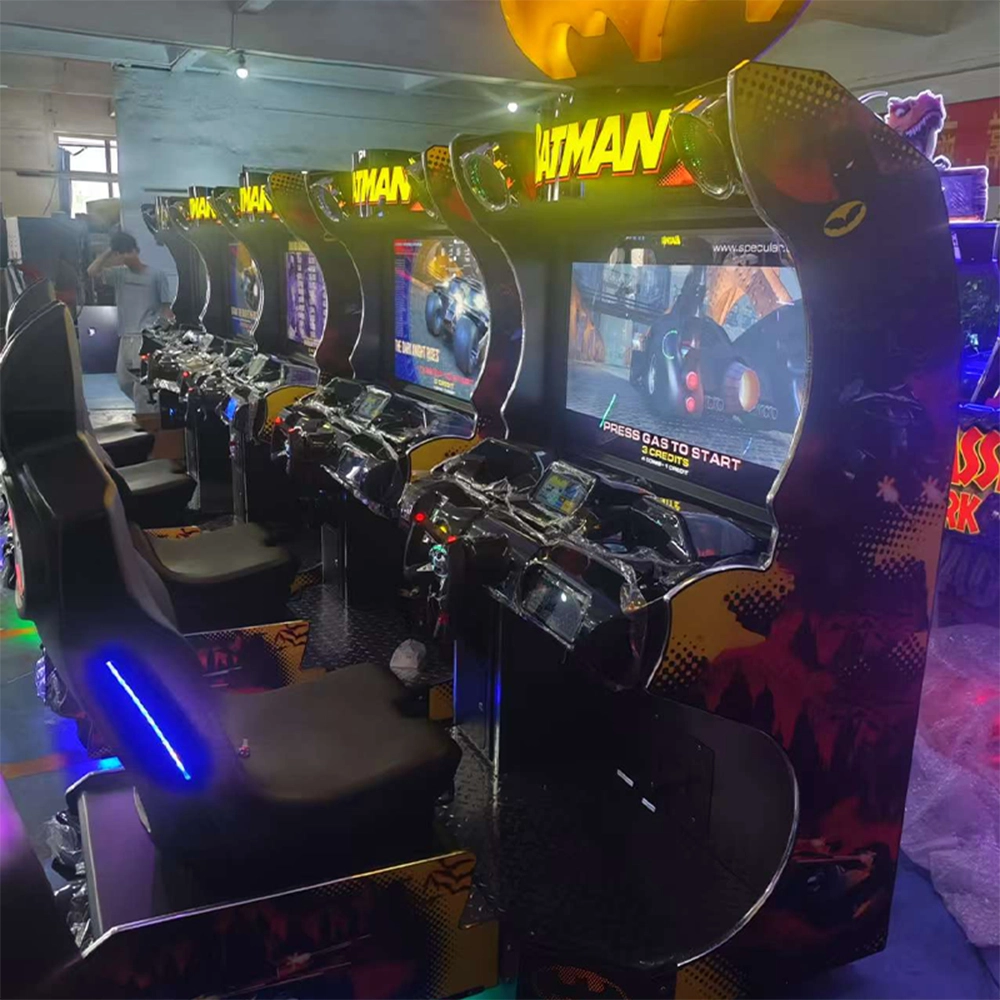
Batman Moto GP Simulator — The Ultimate 42" Motorcycle Arcade Experience
Top Arcade Machines for Business: Best Models for High ROI

Immersive Dual-Seat Drift Experience: Extreme-Speed Whirlwind Motion Racing Game
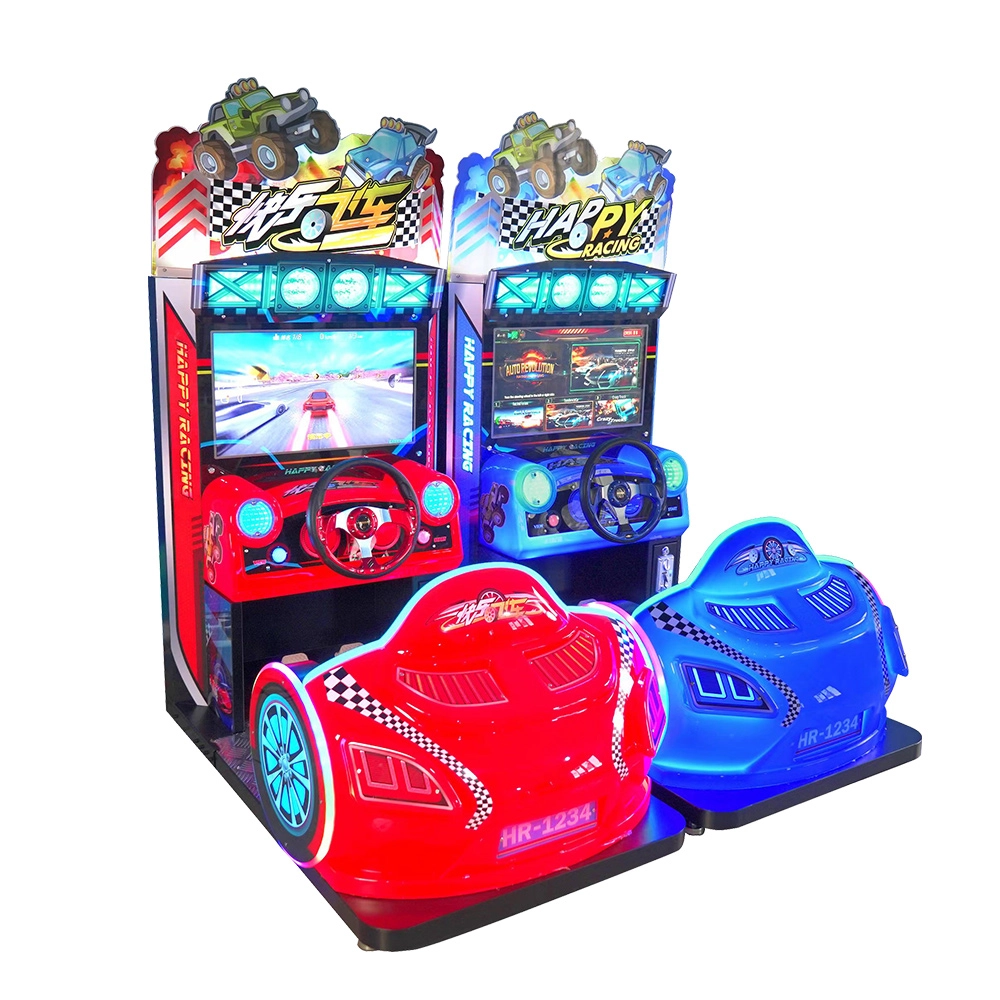
Top-Rated Arcade Multiplayer Racing Cabinets to Buy
Questions you may concerned about
Space Guard
Does Space Guard require a large space?
No, it has a compact footprint suitable for various venue layouts.
Train Baby
How is hygiene ensured?
The toy guns are sanitized between uses, ensuring clean and safe play for every child.
Cupid's Arrow
How do I get support if something goes wrong with my machine?
Our customer service team provides full technical support via phone, email, and online assistance. We also offer spare parts and maintenance services to keep your machine in top condition.
beat beans
Does the game offer ticket redemption?
Absolutely! Players are rewarded with tickets based on their scores, which encourages repeat play.

Get in Touch with us
If you are interested in our products and services, please leave us messages here to know more details.
We will reply as soon as possible.

 Scan QR Code
Youtube
Guangzhou DiniBao Animation Technology Co., Ltd
Guangzhou Dinibao Animation Technology Company Co., Ltd