








Esports Events with Multiplayer Racing in Arcades
- Why arcades remain vital for competitive racing
- Social presence and spectator engagement
- Hardware fidelity: the multiplayer racing simulator effect
- Local latency and fairness
- Designing multiplayer racing esports events in arcades
- Venue layout and infrastructure
- Match formats, seeding and bracket design
- Rules, penalties and integrity
- Technology and game selection
- Choosing the right multiplayer racing simulator
- Networking, timing and synchronization
- Commercial viability and operations
- Sponsorships, prize pools and audience monetization
- Monetization, retention and season design
- Cost comparison: arcade vs home sim vs console
- How DINIBAO supports multiplayer racing events and arcade operations
- Products, services and one-stop solutions
- Design, planning and global reach
- Competitive differentiation and technical strength
- Operational checklist for launching an arcade multiplayer racing esports event
- Pre-event
- Event day
- Post-event
- Frequently Asked Questions (FAQ)
- 1. What is a multiplayer racing simulator and how is it different from regular racing games?
- 2. Can small arcades run competitive esports events with limited space?
- 3. What technical requirements are critical for fair racing tournaments?
- 4. How much does it cost to outfit an arcade with multiplayer racing simulators?
- 5. How do I choose the right game and cabinet for my player base?
- 6. Are there standard rulesets I can borrow for race adjudication?
Multiplayer racing simulator events in arcades leverage purpose-built hardware, local social competition and spectator-friendly setups to deliver esports that are both accessible and authentic. For operators and event planners, understanding control fidelity, networking reliability, venue layout and monetization is critical to staging repeatable, scalable tournaments that attract players and sponsors. This article walks through the operational, technical and commercial considerations for successful multiplayer racing simulator esports in arcades and provides practical guidance, comparisons and answers to frequent operator questions.
Why arcades remain vital for competitive racing
Social presence and spectator engagement
Arcades offer a distinct advantage over online or home-based events: physical proximity. Local multiplayer racing tournaments turn passive players into active spectators. The crowd dynamics—cheering, immediate reactions, and side-by-side comparisons—heighten competition and create shareable moments. This social environment is a major driver of retention and repeat visits for arcade centers, and it amplifies sponsor value by producing more camera-friendly action and local brand impressions.
Hardware fidelity: the multiplayer racing simulator effect
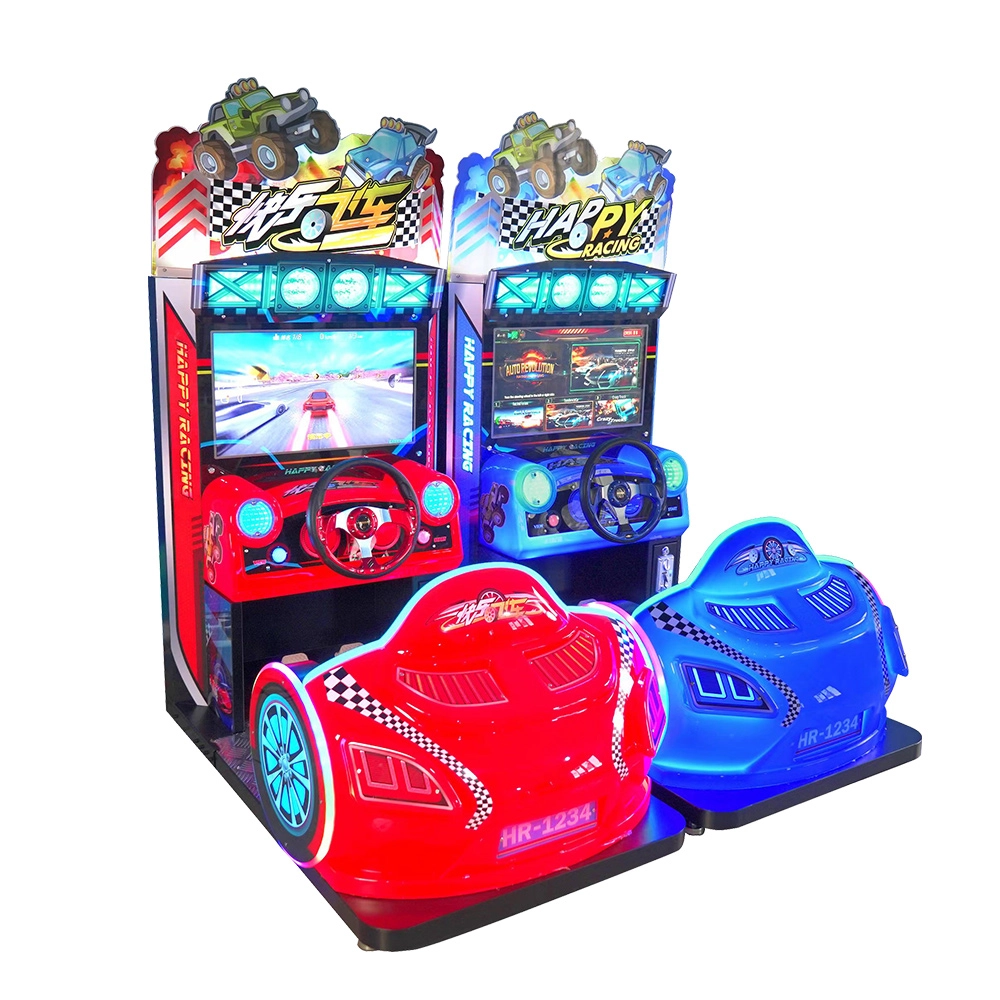
Dedicated arcade racing cabinets and multiplayer rigs provide consistent controllers, force feedback (or simulated tactile feedback), and fixed ergonomics that reduce variability between competitors. That uniformity is essential when running ranked matches and maintaining fairness. A well-calibrated multiplayer racing simulator cabinet can offer predictable handling and timing—advantages not always available in diverse home setups with different wheels, pedals and displays.
Local latency and fairness
For any competitive racing event, latency is a decisive factor. Local lan setups inside an arcade reduce network jitter and give organizers deterministic race timing. This makes arcades favorable for sprint and endurance formats where hundredths of a second matter. Tournament organizers should measure frame-to-frame input lag and network latency during setup and document acceptable thresholds for match certification.
Designing multiplayer racing esports events in arcades
Venue layout and infrastructure
Successful events start with the venue blueprint. Consider sightlines for spectators, dedicated player zones with consistent lighting, and independent power and network runs for each simulator. Typical checklist items:
- Stable power circuits for each cabinet and UPS for tournament servers.
- Wired LAN with managed switches and QoS for race traffic.
- Physical spacing to allow camera angles and safe spectator flow.
ISO or local building codes may apply when hosting large crowds; consult local authorities as needed.
Match formats, seeding and bracket design
Common formats for arcade multiplayer racing include round-robin pools, time-trial qualifiers and double-elimination brackets. For community events, a mix of time trials for seeding plus short head-to-head races keeps sessions short and engaging. For larger tournaments, consider dividing participants into groups with top qualifiers advancing to knockouts. Use clear tie-break rules (lap time, head-to-head result, fastest single lap) and publish them before registration.
Rules, penalties and integrity
Define rules for false starts, contact and track cutting. Use race replay logs (many multiplayer racing simulators provide telemetry or race replay files) to adjudicate disputes. For high-stakes events, deploy impartial referees to review incidents. For official-level play, reference rule frameworks used by established organizations such as the International Esports Federation (IESF) and adapt them to the arcade environment.
Technology and game selection
Choosing the right multiplayer racing simulator
Not all racing titles are equally suited to arcade esports. Operators should prefer titles with:
- Robust local multiplayer modes (LAN or offline splits) and configurable rulesets.
- Telemetry and replay capabilities for dispute resolution.
- Active support or modability for track and car variations if needed.
Examples of simulation and arcade-style racing categories are discussed in the broader sim racing overview on Wikipedia. For arcade venues, balance realism with accessibility—too steep a learning curve can reduce participation.
Networking, timing and synchronization
For simultaneous multiplayer events (4, 8 or more cabinets), synchronization between machines is essential. Best practices include:
- Use a dedicated tournament server or LAN-hosted master to avoid internet latency.
- Implement NTP or PTP for precise time alignment across systems.
- Monitor packet loss and provide fallback reconnection procedures.
When cloud services are used (for live streaming, leaderboards or account auth), split responsibilities so that race-critical logic runs locally and non-critical services run in the cloud.
Commercial viability and operations
Sponsorships, prize pools and audience monetization
Arcade-based esports can attract local sponsors (car dealerships, energy drinks, local retail chains) and national brands looking for experiential marketing. Typical revenue streams include entry fees, ticketing for spectators, branded events, food & beverage, broadcast rights (local streaming), and prize sponsorship. Documented ROI for sponsors often focuses on footfall increase and social media reach generated by event highlights.
Monetization, retention and season design
Design league seasons or recurring weekly cups to build a community. Offer membership punch cards, season passes, and loyalty rewards redeemable on play time or prizes. Event cadence can be weekly open cups leading to monthly majors with higher stakes; this funnel keeps casual players engaged while providing a competitive ladder for dedicated racers.
Cost comparison: arcade vs home sim vs console
The table below summarizes typical strengths, weaknesses and cost ranges. Cost ranges are indicative; final prices depend on brand, customization and region.
| Platform | Strengths | Weaknesses | Typical Cost Range (per lane) |
|---|---|---|---|
| Arcade multiplayer racing cabinet | Uniform hardware, spectator-friendly, robust support | Higher upfront cost, requires floor space | $5,000 – $50,000 |
| Home sim rig (DIY or pro rig) | Customizable, high realism options | Hardware variance, harder to standardize for tournaments | $1,000 – $15,000 |
| Console/PC - casual | Low cost, accessible | Less realistic, lower spectator appeal | $300 – $2,000 |
These ranges align with industry observations and manufacturer price lists. For turnkey arcade procurement and installation, operators should budget for transport, installation, interior fit-out and warranties.
How DINIBAO supports multiplayer racing events and arcade operations
Products, services and one-stop solutions
DINIBAO, located in Guangzhou City, has specialized in manufacturing and exporting game machines for 18 years. DINIBAO provides one-stop purchasing solutions for arcade centers and is positioned as a supplier that balances competitive pricing with consistent quality. Their product range aligns directly with arcade esports needs: racing arcade machines, motorcycle arcade machines, kids arcade machines, ticket redemption machines, arcade air hockey tables, shooting machines, gashapon vending machines and arcade prize machines. The company emphasizes Quality is the life and co-development with customers as core policies.
Design, planning and global reach
DINIBAO offers more than hardware: a professional animation team and design capability that supports market research, project analysis, program design, theme and decoration design, operation and management solutions—providing operators with a complete proposal for opening or upgrading a multiplayer racing space. DINIBAO reports exports to over 180 countries and installation in more than 10,000 game centers, plus partnerships with chains and overseas branch offices in India, Chile, Thailand, Vietnam, Turkey and the United Kingdom. For inquiries, DINIBAO can be reached via their website https://www.dinibao.com or by email at game-machine@dinibao.com.
Competitive differentiation and technical strength
DINIBAO differentiates itself by offering balance of price and quality, an in-house animation and design team for bespoke themes, and global after-sales support through overseas branches and dealer networks. For operators running multiplayer racing simulator events, DINIBAO’s turnkey approach reduces integration time: hardware is optimized for arcade conditions, and professional services help scope events, from floorplan and spectator areas to promotion and operations manuals.
Operational checklist for launching an arcade multiplayer racing esports event
Pre-event
- Choose a multiplayer racing simulator that supports local LAN hosting and telemetry.
- Verify each cabinet's calibration and input latency.
- Prepare rules, seeding, bracket templates and referee guidelines.
- Set up streaming and social media hooks to capture highlights.
Event day
- Allow warm-up sessions and provide rental peripherals if needed.
- Record and backup race logs and replays promptly.
- Provide clear signage for spectators and safe queuing for competitors.
Post-event
- Publish results and highlight reels; use them to recruit for future events.
- Collect player feedback and telemetry for tuning difficulty and fairness.
- Review sponsor KPIs and produce a post-event report.
Frequently Asked Questions (FAQ)
1. What is a multiplayer racing simulator and how is it different from regular racing games?
A multiplayer racing simulator emphasizes physics fidelity, telemetry, and standardized hardware for competitive play. Unlike single-player arcade titles that prioritize immediate accessibility, simulators focus on realistic handling, configurable setups and race data useful for adjudication and training. See general sim racing information on Wikipedia.
2. Can small arcades run competitive esports events with limited space?
Yes. Small arcades can run compact events by using fewer lanes with rapid match formats (time trials for seeding + short heats). Rotate players frequently, livestream matches to maximize reach, and schedule events outside peak revenue hours to avoid customer displacement.
3. What technical requirements are critical for fair racing tournaments?
Key requirements are consistent input devices, low-latency local networking, synchronized timing (NTP/PTP), and replay/telemetry for dispute resolution. A managed LAN and a local master server for race logic significantly reduce external network variability.
4. How much does it cost to outfit an arcade with multiplayer racing simulators?
Costs vary by cabinet complexity and customization. As a guideline, mid-range arcade racing cabinets typically fall between $5,000 and $20,000 per lane including cabinet, monitor and basic installation. Additional costs include flooring, LAN, streaming equipment and branding. DINIBAO offers a range of machines and one-stop procurement options; contact them at https://www.dinibao.com or game-machine@dinibao.com for quotes.
5. How do I choose the right game and cabinet for my player base?
Balance realism and accessibility: if your audience skews casual, prefer arcade-style titles with simple handling; for enthusiast communities, choose simulators with richer physics and telemetry. Test machines in beta events, collect player feedback, and use retention metrics to refine selections.
6. Are there standard rulesets I can borrow for race adjudication?
Yes. Many esports organizations publish rule frameworks; adapt them for your scale. For local events, keep rules concise and publish them in advance. For larger events, consider adopting or referencing standards from bodies like the International Esports Federation.
Ready to launch your multiplayer racing esports program or upgrade your arcade fleet? Contact DINIBAO for machine options, site planning, and turnkey solutions. Explore product lines and request a consultation at https://www.dinibao.com or email game-machine@dinibao.com. DINIBAO’s experience in manufacturing, export, design and on-the-ground service can shorten your time-to-market and improve event reliability.
Software Updates and DLC for Racing Simulator Cabinets
Top 10 Motorcycle Arcade Machine Manufacturers and Supplier Brands in 2026
Top 10 arcade prize machines manufacturers and suppliers
Arcade Hockey Table ROI: How to Maximize Revenue
Questions you may concerned about
Basketball machine
What is a basketball arcade machine?
A basketball arcade machine is a coin-operated amusement game that allows players to shoot basketballs into a hoop within a limited time to score points. It’s popular in arcades, FECs, and sports-themed venues.
Happy Animo
How large is the machine?
It has a compact footprint, making it suitable for smaller spaces.
Air hockey machine
How many players can use it at the same time?
Most standard air hockey tables are designed for 2 players, but some models are built for 4-player or team play.
Maze treasure hunter
Is this game based on skill or luck?
Maze Treasure Hunter is a 100% skill-based redemption game. Players must use timing and coordination to control the maze — no randomness involved.

Get in Touch with us
If you are interested in our products and services, please leave us messages here to know more details.
We will reply as soon as possible.

 Scan QR Code
Youtube
Guangzhou DiniBao Animation Technology Co., Ltd
Guangzhou Dinibao Animation Technology Company Co., Ltd