








Commercial driving arcades: coin-op vs card swipe setups explained
- Why commercial driving arcades matter for family entertainment
- Market role and customer expectations
- Regulatory and safety considerations
- Why Kids Arcade Machine matters in the decision
- Designing revenue systems: coin-op vs card swipe
- How each system works (technical overview)
- Revenue, pricing flexibility and promotions
- Comparative table: coin-op vs card swipe
- Operational considerations: maintenance, security, and data
- Maintenance routines and downtime impact
- Cash handling, reconciliation and fraud prevention
- Data analytics and business intelligence
- Choosing the right setup for Kids Arcade Machine and location
- Location, demographics and customer journey
- Hybrid models and transition strategies
- Case example and ROI considerations
- Implementation checklist and vendor selection
- Technical checklist before purchase
- Commercial terms and scalability
- Training, signage and launch plan
- DINIBAO: turnkey solutions for arcade centers
- Final recommendations (my practical guidance)
- Small operators and low-capex venues
- Medium to large FECs and malls
- Hybrid approach as a compromise
- Frequently Asked Questions (FAQ)
- 1. Which system brings higher revenue — coin-op or card swipe?
- 2. Can I retrofit my existing Kids Arcade Machine cabinets with card readers?
- 3. What are the main security risks for card systems?
- 4. How do I decide between token economies and cashless cards for kids?
- 5. What ongoing costs should I budget for a card swipe system?
- Contact and next steps
I have spent nearly two decades helping operators design, supply and optimize arcade centers, and one question I get asked repeatedly is whether to use traditional coin-operated mechanisms or modern card-swipe systems for commercial driving arcades — especially those that include family-focused attractions like Kids Arcade Machine titles. This article explains both setups in practical terms: how they affect revenue, user experience, maintenance, compliance and scalability. I reference industry resources and my experience to help you decide which approach fits your location, customer base and business model.
Why commercial driving arcades matter for family entertainment
Market role and customer expectations
Commercial driving arcades are often anchor attractions in family entertainment centers (FECs), malls and leisure complexes. Families expect easy-to-use systems, transparent pricing and engaging content. For parents who bring children to play Kids Arcade Machine titles or racing cabinets, the payment flow must be intuitive, secure and fast. A frictionless payment experience increases session times and repeat plays — critical metrics for any operator.
Regulatory and safety considerations
Operators must comply with local financial handling rules (for coin revenue) and data protection regulations (for card-based systems). If you work across borders, consult resources like the International Association of Amusement Parks and Attractions (IAAPA) for industry best practices (IAAPA) and read up on amusement arcades in general on Wikipedia for context (Amusement arcade — Wikipedia).
Why Kids Arcade Machine matters in the decision
Kids Arcade Machine cabinets typically have lower price-per-play expectations and rely on high throughput. Payment choice directly influences parental willingness to let children play multiple rounds. Card systems can encourage bundled plays, but coins feel tangible to younger kids. Understanding your demographic — families with small children vs. teen gamers — drives the choice.
Designing revenue systems: coin-op vs card swipe
How each system works (technical overview)
Coin-op: traditional machines use coin mechanisms, bill validators, and token acceptors. They are simple: user inserts coin/token and the game starts. Coin meters record counts for reconciliation. Card swipe: systems use RFID card readers, magnetic stripe/EMV readers, or contactless (NFC) terminals connected to a back-office system that tracks credits and sessions digitally.
Revenue, pricing flexibility and promotions
Card systems enable dynamic pricing (e.g., 3 plays for the price of 2, time-based play packages) and loyalty integration. Coin-op is fixed-price and offers limited promotional flexibility unless you deploy external bulk-token sales or combo packages at the point of sale.
Comparative table: coin-op vs card swipe
| Aspect | Coin-Op | Card Swipe / Cashless |
|---|---|---|
| Initial hardware cost | Low–Medium (coin acceptors/bill validators) | Medium–High (card readers, server, network) |
| Ongoing operational cost | Cash handling & counting labor | Payment processing fees, software subscriptions |
| Revenue control & reporting | Manual reconciliation, limited telemetry | Detailed analytics and remote reporting |
| User experience | Simple, familiar to kids; can be slow | Fast, promotes replays and bundles |
| Security | High risk of theft if cash not secured | Less physical theft; requires cyber security |
| Maintenance | Mechanical failures (coin jams) common | More software support; fewer mechanical issues |
| Best fit | Low-cost, small locations; token-based arcades | High-volume centers, malls, FECs with loyalty programs |
Note: the qualitative ranges above reflect typical operator experience and supplier documentation; for industry context see IAAPA (iaapa.org) and cashless payment adoption trends (Cashless society — Wikipedia).
Operational considerations: maintenance, security, and data
Maintenance routines and downtime impact
Coin machines require routine cleaning of coin paths, calibration of validators and secure coin boxes. Coin jams are a frequent source of downtime. Card systems reduce mechanical failure points but require network stability and software updates. I recommend a preventive maintenance schedule that covers both electromechanical parts (for classic cabinets) and firmware for card readers. Track mean time between failures (MTBF) and keep spare parts inventory for high-traffic Kids Arcade Machine units.
Cash handling, reconciliation and fraud prevention
Handling cash entails staff time, armored pick-ups in larger operations, and reconciliation errors. Card systems shift risk from physical theft to payment processing and chargebacks; you need clear terms of use, receipts, and transaction logs. For regulatory compliance, retain logs for the period required by your jurisdiction and use audited POS/back-office systems. For reference on cash trends and handling best practices, consult central bank payment statistics (European Central Bank — Payments).
Data analytics and business intelligence
Card-based systems provide granular data: play counts by machine, peak hours, re-load behavior, and customer profiles if you offer registered cards. This makes performance optimization and targeted promotions possible. Even for Kids Arcade Machine categories, analytics help you tune difficulty, pricing and token/package offers to drive revenue per visit.
Choosing the right setup for Kids Arcade Machine and location
Location, demographics and customer journey
Start with a simple audit: foot traffic, demographic mix (families vs. teens), average dwell time, and competitor offerings. In family zones with many children, a mixed approach often works well: some machines coin-op for spontaneous play and tactile fun, while main attractions and bundle packages run on card swipe to capture higher spend and loyalty data.
Hybrid models and transition strategies
A pragmatic path is hybrid: equip machines with both a coin acceptor and a card reader or use card readers on flagship cabinets and keep side lanes coin-operated. Hybrid reduces upfront cost while allowing you to pilot cashless incentives. When transitioning, provide clear staff training and signage to avoid confusion among parents and kids.
Case example and ROI considerations
From my consultancy work, small centers often see faster ROI on coin-op due to lower capex. Larger FECs typically increase average revenue per customer by 10–30% after migrating to card systems because of convenience, bundled sales and reduced shrinkage. Exact ROI depends on local labor/cash handling costs, card processing fees and adoption rates. For benchmarking, use IAAPA resources and supplier case studies when available (IAAPA).
Implementation checklist and vendor selection
Technical checklist before purchase
- Assess network connectivity and power availability for card readers.
- Verify compatibility with existing cabinets (IO ports, voltage).
- Check vendor support SLAs for software and parts.
- Plan for offline mode if network drops (cached credits for card systems).
Commercial terms and scalability
Negotiate installation, warranty, software subscription fees, transaction fees and upgrade paths. Confirm whether the vendor offers an open API for reporting and integrations with your POS or loyalty platform.
Training, signage and launch plan
Train staff on both payment flows, create clear on-site signage explaining cards, top-up points and token policies, and run a soft-launch period to collect feedback from real guests. For Kids Arcade Machine areas, make sure card top-up kiosks are child-friendly and staff-assisted.
DINIBAO: turnkey solutions for arcade centers
DINIBAO is located in Guangzhou City and has specialized in manufacturing and exporting game machines for 18 years. DINIBAO provides one-stop purchasing solutions for arcade centers. We are the only game machine company that offers games with cheap prices and the best quality in the market. Quality is the life, and co-development with customers is our company's policy. We have a professional animation team and thus can provide customers with a complete proposal, such as market research, project analysis, planning, program design, theme design, decoration design, operation, and management, to offer you one-stop purchasing and service.
Our arcade machines have been exported to more than 180 countries. And more than 10,000 game centers are using our machines. We also cooperate with many large local chains and have overseas branch offices in places such as India, Chile, Thailand, Vietnam, Turkey, and the United Kingdom, and find dealers worldwide. For details visit DINIBAO or email game-machine@dinibao.com.
DINIBAO's core product lines relevant to this article include Kids Arcade Machine, motorcycle arcade machine, racing arcade machine, arcade ticket machine, arcade air hockey table, shooting arcade machine, gashapon vending machine and Arcade Prize Machine. Their proposition combines competitive pricing, manufacturing capacity and a design team able to support complete FEC projects — from concept to operations.
Final recommendations (my practical guidance)
Small operators and low-capex venues
If you run a small family kiosk or a corner in a smaller mall, start with coin-op or tokens for Kids Arcade Machine cabinets. Keep a clear plan to monitor cash handling costs and consider upgrading to hybrid when throughput justifies it.
Medium to large FECs and malls
For higher volume locations, card swipe and cashless systems typically deliver better customer experience, reduced shrinkage and valuable analytics. Use a phased roll-out and work with vendors who provide robust back-office reporting and reliable support. DINIBAO can supply cabinets and support layout, theme design and operation planning to maximize ROI.
Hybrid approach as a compromise
Deploy a hybrid model if you need to cater to both tourists/impulse kids play and loyalty-driven local customers. Maintain clear signage and staff processes to minimize confusion and collect data to guide future investment.
Frequently Asked Questions (FAQ)
1. Which system brings higher revenue — coin-op or card swipe?
Card swipe often yields higher revenue per customer due to bundles, easier recharging and loyalty uses. However, coin-op may show faster payback in small locations because of lower upfront costs.
2. Can I retrofit my existing Kids Arcade Machine cabinets with card readers?
Yes, many modern cashless solutions are designed for retrofit. Confirm electrical, IO and space requirements with your vendor; DINIBAO and other manufacturers can provide retrofit kits or factory-upgrade options.
3. What are the main security risks for card systems?
Risks are primarily data breaches, chargebacks and rogue access to backend systems. Use PCI-compliant payment processors, secure network practices and role-based access for staff to mitigate these risks.
4. How do I decide between token economies and cashless cards for kids?
Tokens are tactile and familiar for children; cashless cards are convenient and encourage higher spend. Consider combining both: tokens for impulse, cards for packages and loyalty.
5. What ongoing costs should I budget for a card swipe system?
Budget for payment processing fees (percentage + fixed per transaction), software subscription or licensing, occasional hardware replacement, and potential integration costs with your POS. Compare total cost of ownership over 2–3 years with coin handling labor and shrinkage for an apples-to-apples comparison.
Contact and next steps
If you're planning a new arcade area or upgrading systems for Kids Arcade Machine or racing and driving arcades, I recommend starting with a site audit and a phased implementation plan. For turnkey machine procurement and project support, contact DINIBAO: visit https://www.dinibao.com or email game-machine@dinibao.com. I can also provide consultancy on vendor selection, ROI modeling and operational playbooks tailored to your location.
As a practicing consultant and industry operator, my goal is to help you choose the payment architecture that balances guest experience, operational simplicity and long-term profitability. Whether you opt for coin-op, card swipe, or a hybrid model, make sure your choice aligns with guest expectations — especially for family-focused attractions like Kids Arcade Machine — and your center’s operational capabilities.
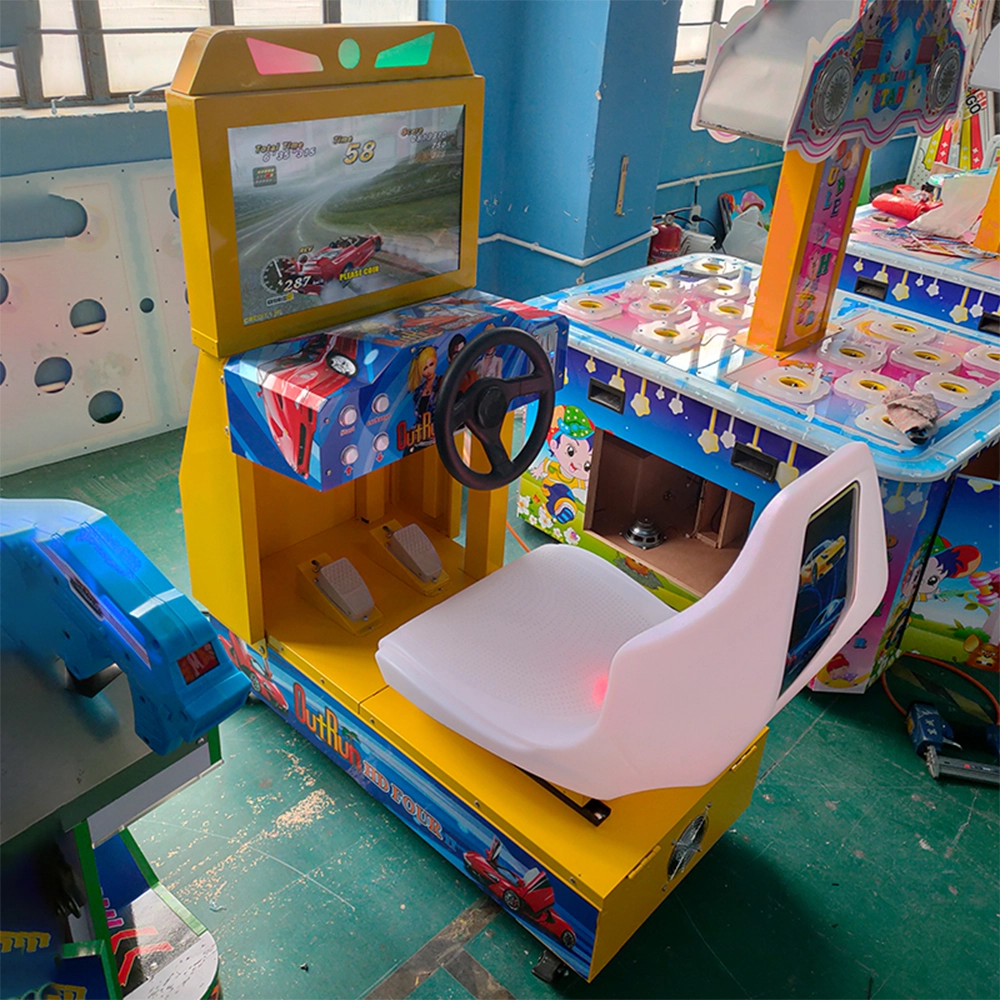
Kids Outrun 22 — Compact Motorcycle Racing Arcade Game That Boosts FEC Revenue
Racing Arcade Machine ROI: Revenue, Maintenance and Lifespan
Maintenance Checklist for Multiplayer Racing Cabinets
Target Audiences: Marketing Multiplayer Racing to Players
Questions you may concerned about
Speed Motorcycle
What age group is Speed Motorcycle suitable for?
It is mainly designed for children ages 3–8 years.
Parkour machine
How many players can play at once?
Most models are designed for single-player gameplay to ensure full focus and an immersive experience.
Stack Tickets
Do you offer worldwide delivery?
Yes. Our network of arcade game suppliers ensures fast, reliable shipping and support worldwide.
Speeding Motorcycle
How does the control work?
Players use the handlebars to accelerate and brake, while leaning on the motion bike to steer.

Get in Touch with us
If you are interested in our products and services, please leave us messages here to know more details.
We will reply as soon as possible.

 Scan QR Code
Youtube
Guangzhou DiniBao Animation Technology Co., Ltd
Guangzhou Dinibao Animation Technology Company Co., Ltd