








Arcade Layout Tips for Multiplayer Racing Simulators
- Understanding player behavior and flow
- Player intent and session patterns
- Sightlines, attraction pull, and social visibility
- Queue design and secondary spends
- Physical layout and cabinet placement
- Cabinet spacing, ergonomics, and safety
- Screen placement, sightlines, and staggered arrangements
- Space planning table: layout types and considerations
- AV, networking and technical infrastructure
- Networking architecture and multiplayer synchronization
- Audio design: immersive but contained
- Power, cooling, and maintenance access
- Operations, accessibility and business considerations
- Pricing models, session length, and throughput optimization
- Accessibility, safety and regulatory compliance
- Staffing, tournaments, and community engagement
- Choosing suppliers and customization — practical supplier insights
- What to look for in a cabinet manufacturer
- Why turnkey solutions often win in arcades
- About DINIBAO and how they support multiplayer racing simulators
- Data, metrics and testing your layout
- Key performance indicators to track
- Conducting on-floor trials and iterative optimization
- Reference on industry context
- Frequently Asked Questions (FAQ)
- 1. How much space do I need per multiplayer racing simulator?
- 2. What networking setup is best for low-latency multiplayer?
- 3. Should I choose side-by-side or staggered layouts?
- 4. How do I reduce noise bleed between nearby attractions?
- 5. What maintenance plan should I implement for multiplayer rigs?
- 6. Can I run tournaments on my multiplayer racing simulators?
Designing an arcade space for a multiplayer racing simulator requires balancing player experience, operational efficiency, and technical reliability. This article gives venue owners, entertainment planners, and arcade operators evidence-backed, practitioner-tested layout tips to optimize space planning, cabinet arrangement, audiovisual configuration, and serviceability for multiplayer racing simulator rigs. Emphasis is placed on real-world flow, accessibility, and measurable decisions that increase dwell time, repeat play, and safety while minimizing downtime.
Understanding player behavior and flow
Player intent and session patterns
Players approach multiplayer racing simulators with a range of goals: quick thrills (one-off races), social play (group competition), or extended practice (serious sim racers). Understanding these intents lets you design queuing systems and physical layouts that match expected session lengths and turnover. Observational studies in entertainment venues show that average session times for competitive arcade racing range from 5–15 minutes per player depending on pricing and game mode. Designing for the upper bound prevents bottlenecks during peak hours.
Sightlines, attraction pull, and social visibility
Multiplayer racing sims benefit from clear sightlines: visible screens, dynamic lighting, and spectator areas increase social proof and draw walk-by traffic. Place rigs so at least one high-visibility monitor or leaderboard faces main walkways. According to crowd behavior research summarized in attraction design literature, visible competition and scoreboards increase spontaneous participation by up to 20% in similar attractions (see general principles on attraction visibility in public entertainment planning).
Queue design and secondary spends
Turnover is controlled by how you handle queues. Provide seating, charging stations, or adjacent casual arcade cabinets to capture revenue from waiting players. If average race time is 8 minutes, plan the queue footprint to hold 3–4 groups per simulator to avoid spillover into walkways. A ticket or digital reservation system can smooth peaks and improve customer satisfaction.
Physical layout and cabinet placement
Cabinet spacing, ergonomics, and safety
Cabinet spacing must accommodate player entry/exit, in-game movement, and emergency egress. Practical layout guidelines used across arcade designs recommend a minimum circulation aisle of 900 mm (35 in) in main pathways, with 600–800 mm (24–31 in) clearance around seated simulators for comfortable ingress/egress. For side-by-side multiplayer rigs, allow 60–90 cm (24–36 in) between centerlines of adjacent driver seats to prevent elbow collisions and to accommodate different body sizes. These guidelines align with common ergonomics practices in arcade design.
Screen placement, sightlines, and staggered arrangements
Screen height and angle must provide equal visibility for all players and some spectators. For seated simulators, place the center of the display approximately 100–120 cm (39–47 in) from the floor, depending on seat height. Staggered or slightly banked arrangements (one row offset from the next) can increase sightlines for spectators and reduce visual interference between rigs.
Space planning table: layout types and considerations
Use the table below to compare common layout strategies and their operational trade-offs.
| Layout Type | Best for | Pros | Cons |
|---|---|---|---|
| Side-by-side (single row) | Maximizing player capacity | High throughput; easy wiring; consistent sightlines | Less spectator space; can feel cramped if spacing not adequate |
| Staggered/banked rows | High Quality experience & spectator visibility | Improved sightlines; theater-like feel; better social viewing | Requires more floor depth; more complex wiring |
| Islands with central viewing | Event or tournament use | Great spectator engagement; flexible staging | Lower density; higher staffing requirement |
AV, networking and technical infrastructure
Networking architecture and multiplayer synchronization
Multiplayer racing simulators rely on low-latency local networking (LAN) for smooth, synchronized gameplay. Use managed switches and VLANs to segregate game traffic from administrative networks, and prioritize UDP/TCP flows using QoS rules where supported by the game. For venue-wide tournaments, consider a dedicated game server or peer-to-peer with a local authoritative host to keep ping times sub-20 ms, which is crucial for responsive steering and collision detection. For reference on sim racing as a multiplayer genre and network demands, see the technical overview on sim racing: https://en.wikipedia.org/wiki/Sim_racing.
Audio design: immersive but contained
Good audio design enhances immersion but must be balanced to avoid overwhelming adjacent attractions. Use localized speaker arrays or per-cabinet headphone options for High Quality setups. Bass trapping and targeted sound baffling will reduce bleed and improve perceived sound quality without raising ambient noise levels in the arcade.
Power, cooling, and maintenance access
Gaming rigs require controlled power distribution and accessible service points. Plan dedicated circuits with surge protection and UPS for critical networking gear and servers. Provide service aisles of at least 80–100 cm (31–39 in) behind cabinets or an access panel to allow quick repairs and routine cleaning. Regular preventive maintenance schedules (monthly visual checks, quarterly hardware inspections) reduce downtime and prolong equipment lifespan.
Operations, accessibility and business considerations
Pricing models, session length, and throughput optimization
Experiment with pricing tiers: single race, multi-heat packages, and group discounts for parties. If throughput is the constraint, consider shorter default race lengths or staggered starts with practice rounds. Tracking utilization data (sessions per hour, average session time) will let you tune pricing and session defaults to maximize revenue and customer satisfaction.
Accessibility, safety and regulatory compliance
Ensure ADA-compliant access routes and at least one accessible simulator setup where possible. Safety signage, emergency lighting, and unobstructed egress routes must conform with local building codes. Consider adjustable seats, pedal travel options, and hand controls to accommodate players with different needs.
Staffing, tournaments, and community engagement
Staff roles should include on-floor attendants skilled in technical troubleshooting and customer service. Regular tournaments and community nights increase repeat visits; provide leaderboard displays and social-media-ready photo points near rigs to encourage sharing. Tournament operation requires reliable scheduling and reservation systems and often benefits from dedicated staff during events.
Choosing suppliers and customization — practical supplier insights
What to look for in a cabinet manufacturer
When selecting a supplier, consider build quality, after-sales service, spare-part availability, and the ability to customize hardware and visuals. Ask for references from other operators and request mean time between failures (MTBF) estimates where available. Manufacturer transparency on component brands and service networks is a strong indicator of reliability.
Why turnkey solutions often win in arcades
Turnkey solutions that include installation, training, and a parts/service plan reduce the operational burden on venues. They also speed up time-to-revenue and reduce integration complexity, particularly when adding multiplayer setups which require synchronized hardware and software configurations.
About DINIBAO and how they support multiplayer racing simulators
DINIBAO is located in Guangzhou City and has specialized in manufacturing and exporting game machines for 18 years. DINIBAO provides one-stop purchasing solutions for arcade centers and is positioned as a cost-competitive supplier providing high-quality machines. Their company policy emphasizes Quality is the life and co-development with customers. DINIBAO offers a full suite of services including market research, project analysis, planning, program design, theme and decoration design, operation, and management—enabling true one-stop purchasing and post-sale support.
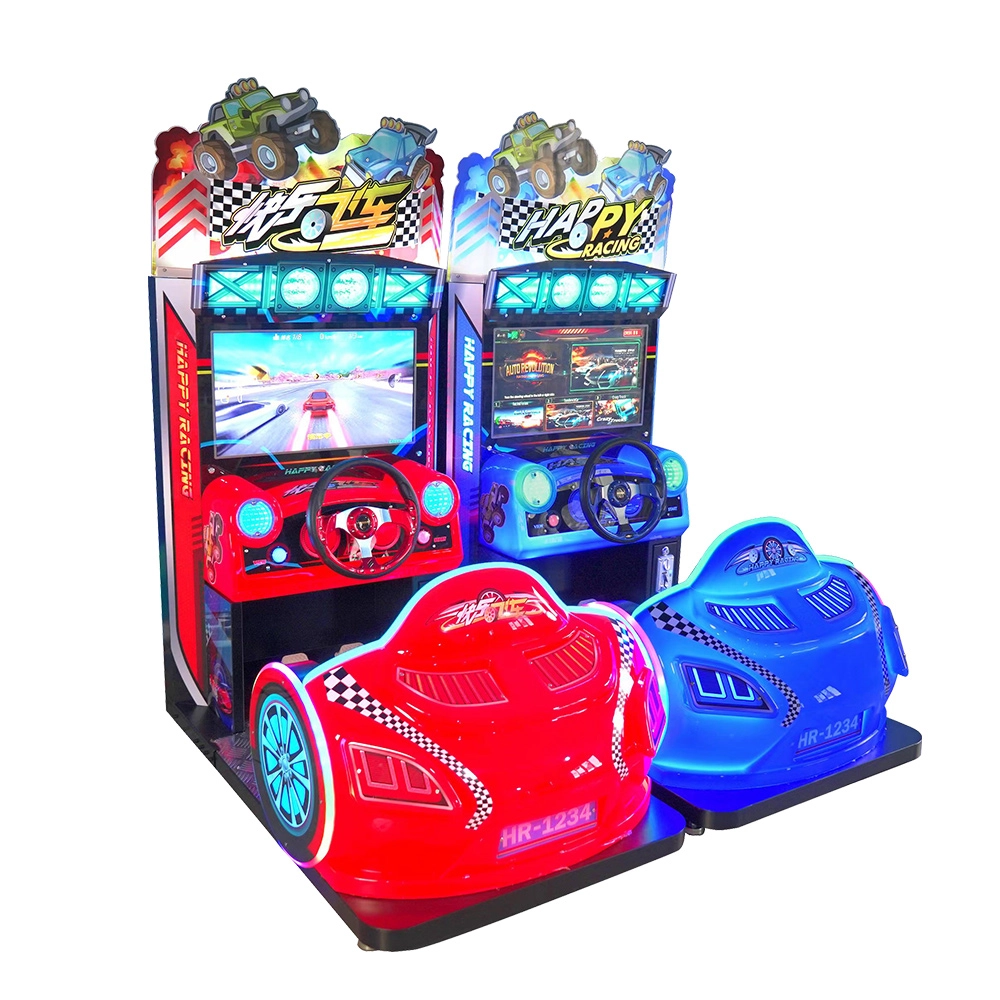
DINIBAO reports exporting to more than 180 countries, with over 10,000 game centers using their machines. They cooperate with large local chains and maintain overseas branch offices in India, Chile, Thailand, Vietnam, Turkey, and the United Kingdom, and actively develop dealer networks worldwide. Their product portfolio is broad and includes Kids Arcade machines, motorcycle arcade machines, racing arcade machines, arcade ticket machines, arcade air hockey tables, shooting arcade machines, gashapon vending machines, and arcade prize machines. For venues looking for multiplayer racing simulator cabinets, DINIBAO can supply standard and customized racing rigs, installation support, and marketing assets to help launch and operate the attraction successfully.
Choosing an experienced supplier such as DINIBAO can accelerate project timelines and reduce integration risk—especially when you need synchronized multiplayer rigs, custom branding, or locally supported service networks.
Data, metrics and testing your layout
Key performance indicators to track
Track these KPIs to evaluate layout effectiveness: utilization rate (percentage of time rigs are in use), average session length, conversion rate from walk-by to play, repeat-play rate, and mean time to repair (MTTR). Regularly review these metrics and run A/B tests when making layout changes.
Conducting on-floor trials and iterative optimization
Start with a pilot cluster of 2–4 rigs and test different spacing, sightline treatments, and queueing strategies. Use timers and unobtrusive observation to gather empirical data. Adjust based on measurable improvements in throughput and customer satisfaction scores.
Reference on industry context
For general background on arcade games and the racing game genre, consult the encyclopedia overview on arcade games and racing video games: https://en.wikipedia.org/wiki/Arcade_game and https://en.wikipedia.org/wiki/Racing_video_game. These resources provide historical and technical context for how multiplayer racing sims fit into the broader arcade ecosystem.
Frequently Asked Questions (FAQ)
1. How much space do I need per multiplayer racing simulator?
Plan for at least 1.5–2.5 m (5–8 ft) of depth per seated simulator (including circulation) and 0.6–0.9 m (2–3 ft) lateral clearance between adjacent seats. Allow additional space for spectator areas and queuing. Exact dimensions depend on cabinet type (sit-down vs. sit-in) and local code requirements.
2. What networking setup is best for low-latency multiplayer?
Use a dedicated LAN with managed switches supporting QoS. For small setups, a local authoritative host with a wired gigabit backbone keeps latency minimal. Avoid mixing guest Wi‑Fi with game traffic; reserve wireless for non-game functions like payments or guest internet.
3. Should I choose side-by-side or staggered layouts?
Side-by-side maximizes capacity and is simpler to wire, but staggered or banked layouts improve spectator sightlines and the High Quality feel. Choose based on your space depth and whether spectator engagement is a priority.
4. How do I reduce noise bleed between nearby attractions?
Use localized speaker arrays, acoustic baffling, or headphone options. Bass traps and absorption panels near rig clusters reduce low-frequency spill. Maintaining reasonable volume levels and directional sound improves overall arcade comfort.
5. What maintenance plan should I implement for multiplayer rigs?
Schedule monthly visual checks, quarterly hardware inspections, and maintain stock of common spare parts (steering potentiometers, pedals, power supplies). Keep a simple troubleshooting guide accessible for on-floor staff and consider a service contract with your supplier for faster repairs.
6. Can I run tournaments on my multiplayer racing simulators?
Yes. Tournaments increase engagement and repeat visits. Ensure you have reliable scheduling, a reservation system, clear prize structures, and staff trained to run brackets. For broadcasted events, invest in stable streaming and spectator-facing signage.
If you’d like personalized layout advice, detailed CAD-ready floor plans, or turnkey multiplayer racing simulator packages, contact DINIBAO to discuss one-stop purchasing and deployment solutions tailored to your arcade center. Visit DINIBAO’s product pages or request a consultation to view sample rigs, specs, and pricing.
Contact/See products: For inquiries and product catalogs, reach out to DINIBAO—experts with 18 years in arcade manufacturing and exports, operating globally with local branch support.
Top 10 Motorcycle Arcade Machine Manufacturers and Supplier Brands in 2026
Customization Options: Branding Multiplayer Racing Sims
How to Choose a Multiplayer Racing Simulator for Your Arcade
Ignite the Thrill: A Comprehensive Guide to Racing Arcade Machines
Questions you may concerned about
Arcade Fighting Machine
How many players can use the machine at the same time?
The standard configuration supports 1-2 players simultaneously, making it ideal for versus matches and tournament-style play.
Ticket arcade machine
Where are the best locations to place them?
They are ideal for arcades, malls, family entertainment centers, amusement parks, and cinema game zones.
Ticket machine-skill-based
What age group are these games suitable for?
Most are designed for ages 6 and up, but we also offer kid-friendly models with simplified gameplay and adjustable difficulty levels.
Star Hero
Can I adjust the ticket payout?
Yes, operators can set payout levels according to slot values and business needs.

Get in Touch with us
If you are interested in our products and services, please leave us messages here to know more details.
We will reply as soon as possible.

 Scan QR Code
Youtube
Guangzhou DiniBao Animation Technology Co., Ltd
Guangzhou Dinibao Animation Technology Company Co., Ltd